You Feel Colder As You Age: The Science Reason Why
Older people report feeling colder, enough that it is clearly happening, but why has been a mystery. Until now.
Older people report feeling colder, enough that it is clearly happening, but why has been a mystery. Until now.

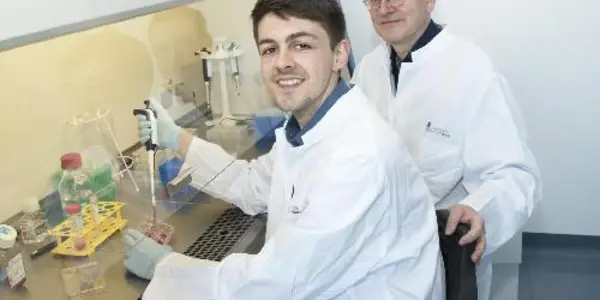
Brown fat cells can burn fat to generate heat. University of Bonn researchers have discovered a new method to measure the activity of brown fat cells in humans and mice. The researchers showed that microRNA-92a can be used as an indirect measure for the activity of energy consuming brown fat cells. They showed that a small blood sample was sufficient. Results were published in Nature Communications, a well-known scientific journal.
People who want to lose weight often encounter boundaries: No matter what diet they try, the pounds won't drop. Being overweight and obese can have severe health consequences, and has shown to increase a person's chance of developing type-2-diabetes or cardiovascular diseases.

A computer algorithm that can tell whether you are happy or sad, angry or expressing almost any other emotion would be a boon to the games industry. New research published in the International Journal of Computational Vision and Robotics describes such a system that is almost 99 percent accurate.
Hyung-Il Choi of the School of Media, at Soongsil University, in Seoul, Korea, working with Nhan Thi Cao and An Hoa Ton-That of Vietnam National University, in Ho Chi Minh City, explain that capturing the emotions of players could be used in interactive games for various purposes, such as transferring the player's emotions to his or her avatar, or activating suitable actions to communicate with other players in various scenarios including educational applications.

Boulder, Colo., USA: Every day, all around the world, millions of people contemplate a very simple question with a very complex answer: which wine? In this month's issue of GSA Today, Gregory Retallack (University of Oregon) and Scott Burns (Portland State University) examine the link between the taste of wine and soil properties.
In the world of chemistry, one minus one almost always equals zero.
Young gay and bisexual men under the age of 26 are six times more likely to attempt suicide or self-harm compared to men in that group aged over 45, and twice as likely to be depressed or anxious, according to a paper in the Journal of Public Health.
New research from Denmark, Canada and the US involving more than 300,000 individuals suggests that patients do not need to check their cholesterol levels on an empty stomach. So far fasting has been required before cholesterol and triglyceride measurement in all countries except Denmark, where non-fasting blood sampling has been used since 2009.

Coral reefs face many threats. Ocean acidification, algal takeover caused by overfishing and exploding populations of harmful microbes all jeopardize the health of the world's most productive and diverse marine ecosystems.
The reefs are not defenseless, however. Like humans, they have a type of immune system that helps protect them. A new study published today in the Proceedings of the Royal Society B has found that one particular molecule found in reef ecosystems plays a similar immunological role in corals as it does in humans. From an evolutionary standpoint, this suggests the molecule's immune function dates back at least 550 million years.
A new Cochrane Review, published in the Cochrane Library today, suggests that yoga may have a beneficial effect on symptoms and quality of life in people with asthma, but effects on lung function and medication use are uncertain.
Asthma is a common chronic disease affecting about 300 million people worldwide. The many typical symptoms of asthma include wheezing, coughing, chest tightness and shortness of breath.
Yoga has gained global popularity as a form of exercise with general life-style benefits, and recent studies have investigated the potential of yoga to relieve asthma-related problems.
Researchers have created a programmable DNA thermometer that 20,000 times smaller than a human hair, using a discovery made 60 years ago - that DNA molecules that encode our genetic information can unfold when heated.
"In recent years, biochemists also discovered that biomolecules such as proteins or RNA (a molecule similar to DNA) are employed as nanothermometers in living organisms and report temperature variation by folding or unfolding," says senior author Prof. Alexis Vallée-Bélisle of the University of Montreal. "Inspired by those natural nanothermometers, which are typically 20,000x smaller than a human hair, we have created various DNA structures that can fold and unfold at specifically defined temperatures."
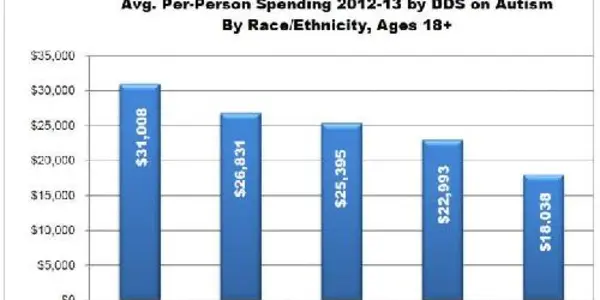
(SACRAMENTO, Calif.) -- Whites with autism spectrum disorder (ASD) in California receive more state funding than Hispanics, African Americans, Asians and others, new research from UC Davis Health System has found. The study also showed that state spending on ASD increases dramatically with age.
Previous evaluations of the state's investment in ASD services have not included adults, a major oversight, according to lead author Paul Leigh, professor of public health sciences and researcher with the Center for Healthcare Policy and Research at UC Davis.

Happiness. It's something we all strive for, but how do we measure it--as a country? A global community?
Researchers at the University of Iowa are turning to social media to answer these questions and more. In a study published in March in the journal PLOS One, UI computer scientists used two years of Twitter data to measure users' life satisfaction, a component of happiness.
Chao Yang, lead author on the study and a graduate of the UI Department of Computer Science, says this study is different from most social media research on happiness because it looks at how users feel about their lives over time, instead of how they feel in the moment.
ANN ARBOR, Mich. -- Why does one person who tries cocaine get addicted, while another might use it and then leave it alone? Why do some people who kick a drug habit manage to stay clean, while others relapse? And why do some families seem more prone to addiction than others?
The road to answering these questions may have a lot to do with specific genetic factors that vary from individual to individual, a new study in rats suggests.
Of course, an animal study can't explain all the factors that contribute to differences in addiction among humans. But the findings reveal new information about the roles played by both inherited traits and addiction-related changes in the brain.