You Feel Colder As You Age: The Science Reason Why
Older people report feeling colder, enough that it is clearly happening, but why has been a mystery. Until now.
Older people report feeling colder, enough that it is clearly happening, but why has been a mystery. Until now.


E-cigarettes, battery-powered devices that heat a liquid nicotine solution, have been sold in the United States since 2007 and are marketed as an option to help smokers kick the habit. Instead of a nicotine patch or chewing gum, e-cigarette users inhale the vapor.It's obviously safer than smoking but anti-cigarette advocates in the United States of America are also against this 'vaping' because of the presence of cigarette companies as investors. Originally, smoking awareness was to get people to get rid of smoking but a campaign against a smoking cessation product means it is more of a desire to get rid of certain companies.

A systematic review of the genomes of patients with ALK-negative anaplastic large cell lymphoma (ALCL), a particularly aggressive form of non-Hodgkin's lymphoma, shows that many cases of the disease are driven by alterations in the JAK/STAT3 cell signaling pathway. The study also demonstrates, in mice implanted with human-derived ALCL tumors, that the disease can be inhibited by compounds that target this pathway, raising hopes that more effective treatments might soon be developed.

A team of astronomers studied the simultaneous collision of four galaxies in the galaxy cluster Abell 3827 and could trace out where the mass lies within the system and compare the distribution of the dark matter with the positions of the luminous galaxies.
Although dark matter cannot be seen, the team could deduce its location using a technique called gravitational lensing. The collision happened to take place directly in front of a much more distant, unrelated source. The mass of dark matter around the colliding galaxies severely distorted spacetime, deviating the path of light rays coming from the distant background galaxy -- and distorting its image into characteristic arc shapes.
A remote gas planet has been detected about 13,000 light-years away, making it one of the most distant planets known.The Poland-based Optical Gravitational Lensing Experiment (OGLE) Warsaw Telescope at the Las Campanas Observatory in Chile scans the skies for planets using a method called microlensing. A microlensing event occurs when one star happens to pass in front of another, and its gravity acts as a lens to magnify and brighten the more distant star's light. If that foreground star happens to be orbited by a planet, the planet might cause a blip in the magnification. For a new study in Astrophysical Journal the researchers combined that with data from NASA's Spitzer Space Telescope.
Like virtual water and virtual emissions, looking at organic food through a prism of implicit benefits translated into estimated dollars makes it look a lot more economically viable than it otherwise might appear.The new estimate says that organic farming systems do a better job of capitalizing on nature's services than they are credited with, and natural processes that aid farming and that can substitute for costly fossil fuel-based inputs are cost-effective.
A new study has found that after just five days of eating a high-fat diet, the way in which the body's muscle processes nutrients changes.When food is eaten, the level of glucose in the blood rises. The body's muscle is a major clearinghouse for this glucose. It may break it down for energy, or it can store it for later use. Since muscle makes up about 30 percent of our body weight and it is such an important site for glucose metabolism, if normal metabolism is altered, it can have consequences on the rest of the body and can lead to health issues.
By identifying and comparing the sequences of more than 400 receptors in the genomes of two fruit flies and three mosquito species, entomologists have unlocked one of the hormonal mechanisms that allow mosquitoes to produce eggs. They identified a single gene for a receptor with an unknown function within the species distribution.
The one common element in recent American weather has been its diversity. The West Coast has been drier than usual while the East Coast has had more snow. Fish are swimming into new waters and so hungry seals that don't follow them aare washing up on California beaches.
A long-lived patch of warm water off the West Coast, about 1 to 4 degrees Celsius (2 to 7 degrees Fahrenheit) above normal, is part of what's wreaking much of this mayhem, according to two papers Geophysical Research Letters. No, that warm blob was not caused by climate change, though it has many of the same effects for West Coast weather.
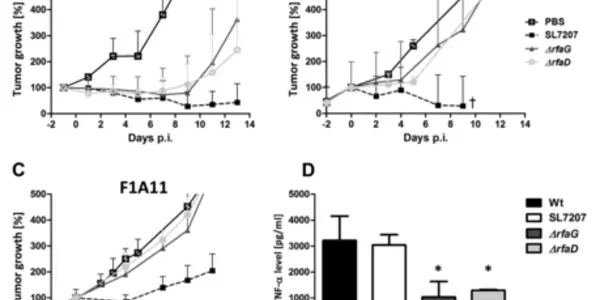
On one side of the political spectrum in America and across a broader swath of Europe, science is controversial - especially genetic engineering. But genetic engineering has been done since humans first deduced they could shape the natural world, if anything it has gotten precise in a way that was never possible before.Now it mean even help fight against cancer - and it may do so using Salmonella, more famous as a bacteria that lives in intestines.
Titan, Saturn's largest moon, is one of the most Earthlike places in the solar system. It has a thick, hazy atmosphere and surface rivers, mountains, lakes and dunes, which is why the Cassini-Huygens is studying it. But sometimes new data bring new mysteries, such as the seemingly wind-created sand dunes spotted by Cassini near the moon's equator, and the contrary winds just above.
It's become a popular idea among endurance athletes that salt consumption during competition will help, but a new study finds no evidence that is true. A small kernel of truth is involved in the belief, the authors write in the the Journal of Sports Science and Medicine - that there are sodium losses due to sweat during exercise and our bodies function on a principle of thermoregulation - but then some endurance athletes have taken that to believe they should consume large quantities of salt or other electrolyte supplements containing sodium during training and competition to improve performance.

When you look at a primate or neanderthal skull and compare it to modern humans, it is immediately noticeable that we have a feature they are missing.In fact, it's missing from all other species: A chin.Why do we? A new study finds that our chins didn't come from mechanical forces such as chewing, but instead results from an evolutionary adaptation involving face size and shape, possibly linked to changes in hormone levels as we became more societally domesticated. If true, it would settle a debate that's gone on for more than a century, and anthropology would have solved it rather than biology.