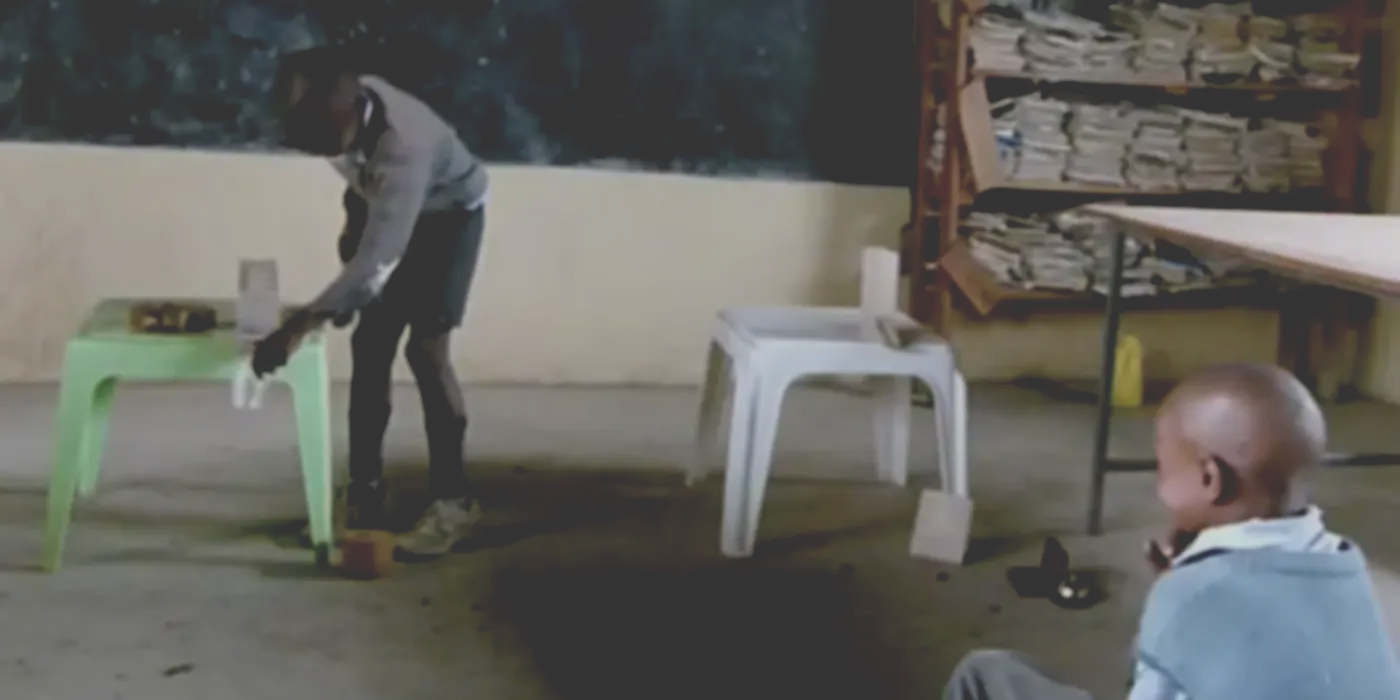
Kids Helping Kids Is Universal - But Cultures Help Differently
A simple game reveals a universal instinct in kids
A simple game reveals a universal instinct in kids


It is estimated that 5% of women experience two clinical miscarriages and approximately 1% suffer three or more losses.
Researchers at the University of Warwick and University Hospitals Coventry and Warwickshire (UHCW) NHS Trust have found that body clock genes could affect women's ability to have children. The study pinpoints how body clock genes are temporarily switched off in the lining of the womb to allow an embryo to implant. Timing of this event is critical for pregnancy.
While a debate was raging between scientists and government regulators on how best to explain to patients the risks of participating in clinical research studies that compare standardized treatments, a team of bioethicists boldly went where no experts had gone before -- to the public.
The response? Keep it simple, but always ask permission, even when the research only involves gathering data from anonymized medical records.
A liquid form of marijuana shows promise as a treatment for children with severe epilepsy, according to a study released today which involved 213 people, ranging from toddlers to adults, with a median age of 11 who had severe epilepsy that did not respond to other treatments.
Participants had Dravet syndrome and Lennox-Gastaut syndrome, epilepsy types that can lead to intellectual disability and lifelong seizures, as well as 10 other types of severe epilepsy.

A real-world analysis of human behavior finds that men treat online giving as a competitive enterprise: Men will donate four times more money to an attractive female fundraiser if they feel like they are in competition with another male, which evolutionary psychologists contend is a subconscious sexual mandate based on biology.
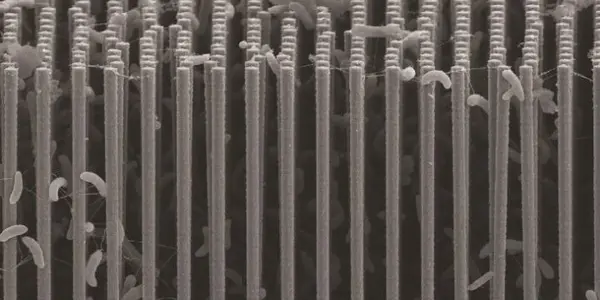
A breakthrough in artificial photosynthesis has been achieved with the development of a hybrid system of semiconducting nanowires and bacteria that can capture carbon dioxide emissions before they are vented into the atmosphere and then, powered by solar energy, convert that carbon dioxide into valuable chemical products, including biodegradable plastics, pharmaceutical drugs and liquid fuels. The system mimics the natural photosynthetic process by which plants use the energy in sunlight to synthesize carbohydrates from carbon dioxide and water but this artificial photosynthetic system synthesizes the combination of carbon dioxide and water into acetate, the most common building block today for biosynthesis.
The humanities are considered the least discriminatory academic discipline - known cases of discrimination do not reach statistical significance - but women and minorities are still collectively ignored at 1.4 times the rate of Caucasian males when seeking guidance about their futures.
In a recent study, scientists have presented a new technique that significantly reduces the halo effect that is generated when using multi-focal. contact and intra-ocular, lenses and looking at bright point sources in dark conditions.Presbyopia is a result of natural aging and stems from a gradual thickening and decrease in elasticity of the lens inside the eye. Corrective lenses used to address presbyopia often lead to a halo effect. This is basically a glow or color light pattern observed when looking at a bright source of light in front of a dark background. It is mostly experienced at night when people see halos around street lamps and car headlights, and it can make driving at night unsafe or even impossible in extreme cases.
Botulinum toxin, produced by the bacterium Clostridium botulinum, is one of the most poisonous biological substances known, but in true' the dose makes the poison' fashion, Botulinum neurotoxin serotype A , commonly known as Botox - took C. botulinum
from being known for the serious paralytic illness Botulism to smoothing out wrinkles due to its paralytic effect.It's been used for decades with no serious side effects and outside cosmetic surgery is also useful for the treatment of over-active muscles and spasticity, because it promotes local and long-term paralysis, but a new study has found that some of the toxin is transported via our nerves back to the central nervous system.
Since the Cambrian Explosion, ecosystems have suffered repeated mass extinctions, 5 of which wiped out half of all species: The Cretaceous–Paleogene extinction, the Triassic–Jurassic extinction, the Permian–Triassic extinction, the Late Devonian extinction and the Ordovician–Silurian extinction.20 years ago, a sixth major extinction was put forth in the Middle Permian (262 million years ago) in China. This Capitanian extinction was known only from equatorial settings and it was not recognized as an actual global crisis and was instead considered just one of many lesser mass extinctions. David P.G. Bond and colleagues provide the first evidence for severe Middle Permian losses amongst brachiopods in northern paleolatitudes (Spitsbergen).
Melanoma, an aggressive form of skin cancer, has been increasing in incidence in adults over the past 40 years.
Pediatric melanoma is rare (5 or 6 children per million) but some studies indicate that incidence has been increasing. A new study in The Journal of Pediatrics found that is not so, and the incidence of pediatric melanoma in the United States decreased from 2004-2010.
A newly developed assay may help investigators identify novel drug candidates to protect kidney cells and prevent or treat chronic kidney disease (CKD).
CKD affects more than 13% of adults in the United States, with diabetes, hypertension and atherosclerosis being common risk factors. Most patients rely on antihypertensive medications for treatment, and there are no therapies available that directly and specifically target the kidney.
A team led by Vineet Gupta, PhD and Jochen Reiser, MD, PhD (Rush University Medical Center) has now developed a system that can be used to identify novel drug candidates that protect the function of kidney podocytes, cells that are critical for filtering the blood. Damage to these cells is a hallmark of CKD.
Bournemouth University’s new Institute for Studies in Landscape and Human Evolution (ISLHE) – is exploring how techniques for documenting ancient footprints can help forensic scientists understand modern-day crime scenes.Professor Matthew Bennett, Head of the Institute for Studies in Landscape and Human Evolution, explained why the research is needed. “Footwear impressions can provide an important source of evidence from crime scenes. They can help to determine the sequence of events and – if distinctive – can even link a suspect to multiple crime scenes.