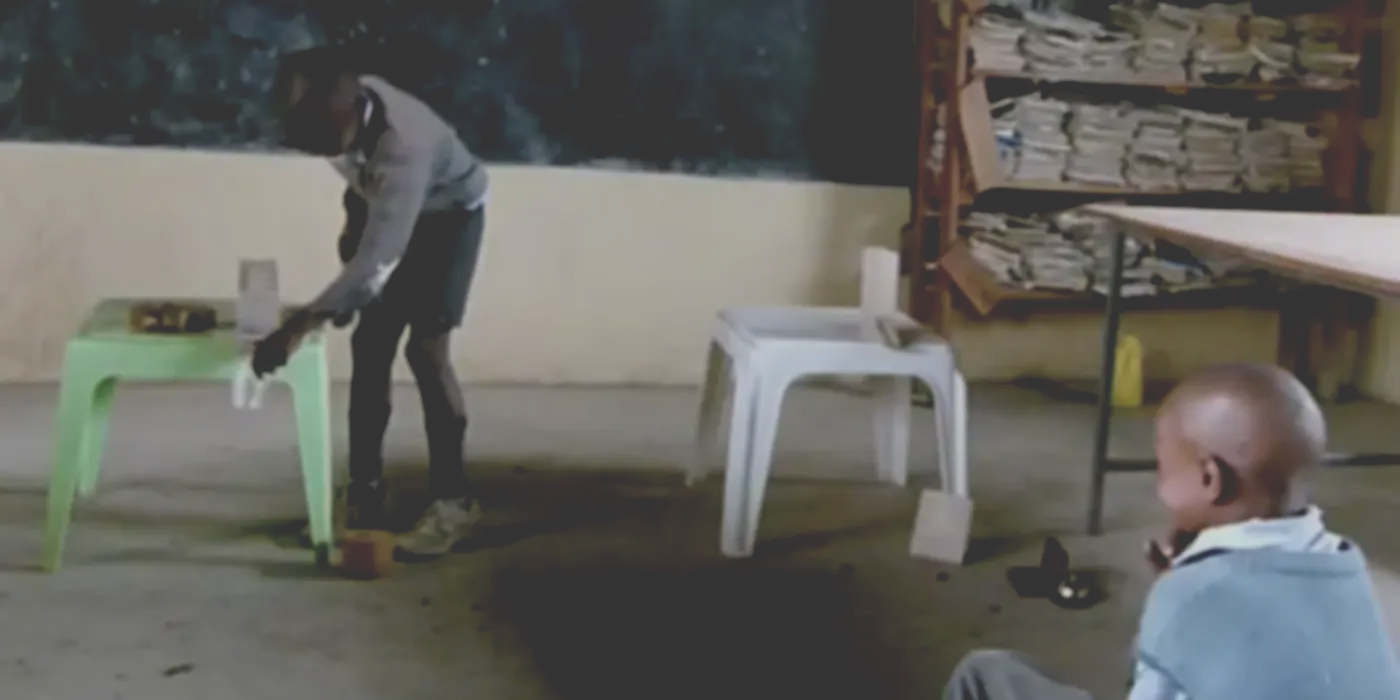
Kids Helping Kids Is Universal - But Cultures Help Differently
A simple game reveals a universal instinct in kids
A simple game reveals a universal instinct in kids


Patients with carpal tunnel syndrome are more than twice as likely to have migraine headaches, according to data derived from nearly 26,000 Americans responding to a national health survey. Among other questions, participants were asked whether they had had carpal tunnel syndrome during the past year or "severe headache or migraine" during the past three months. Patients with carpal tunnel syndrome have symptoms such as hand numbness and weakness, resulting from pressure on the median nerve in the wrist. The association also runs in the other direction, with migraine patients having higher odds of carpal tunnel syndrome, say Dr. Huay-Zong Law and colleagues of University of Texas Southwestern Medical Center at Dallas.
To combat possible climate change due to greenhouse gases, a mix of alternative energy sources (except nuclear for the United States) and geoengineering schemes have been proposed. One idea proposes that ocean pipes could facilitate direct physical cooling of the surface ocean by replacing warm surface ocean waters with colder, deeper waters. A new study from a group of Carnegie scientists determines that these types of pipes could actually increase global warming quite drastically.

In 1670, the greatest astronomers, including Cassini and Hevelius, the father of lunar cartography, documented the appearance of a new star in the skies. Hevelius described it as nova sub capite Cygni — a new star below the head of the Swan — and now it is officially known it by the name Nova Vulpeculae 1670. It lies within the boundaries of the modern constellation of Vulpecula (The Fox), just across the border from Cygnus (The Swan) and is also referred to as Nova Vul 1670 and CK Vulpeculae, its designation as a variable star. Historical accounts of novae are rare and Nova Vul 1670 is both the oldest recorded nova and the faintest nova when later recovered.
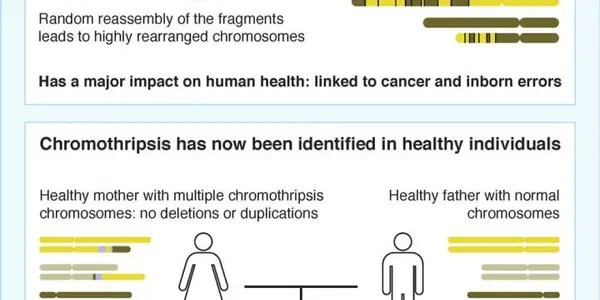
In a complex system like the human body, it's no surprise things can sometimes go wrong in development but evolution has made the system rather forgiving. When children inherit chromosomes from their parents, some minor genetic changes frequently occur without consequence but chromothripsis - chromosomal shattering - has been linked to severly affected children of healthy mothers in a small study.

Each day we are bombarded with branding and repetitive advertising. Is it feasible that we dutifully soak up visuals and messages and store them accurately?An experiment tested the concept by examining our memory of the ubiquitous Apple logo and our perceived ability for recall. Apple has long been a logo recognized the world over and now it is riding a wave of unparalleled fan adulation, with people standing in line for hours just to overpay for phones, tablets and watches and the aesthetic self-identification the logo brings.
Most animals have a dorso-ventral (back-to-belly) body axis which determines the position of the central nervous system - dorsal in humans, ventral in insects.
Though there are obviously morphological differences, the same signaling molecules of bone morphogenetic protein (BMP) molecules establishes the dorso-ventral axis including the central nervous system in both insects and vertebrates, which led to the conclusion that this molecular mechanism was already present in the common ancestor.
Tracing the origin of the dorso-ventral axis has not been easy but sea anemones have provided some answers.
Incessant mountain rain, snow and melting glaciers in a comparatively small region of land that hugs the southern Alaska coast and empties fresh water into the Gulf of Alaska would create the sixth largest coastal river in the world if it emerged as a single stream, a recent study shows.
Since it's broken into literally thousands of small drainages pouring off mountains that rise quickly from sea level over a short distance, the totality of this runoff has received less attention, scientists say. But research that's more precise than ever before is making clear the magnitude and importance of the runoff, which can affect everything from marine life to global sea level.
Trauma is responsible for more global deaths annually than HIV, malaria and tuberculosis combined. Yet healthcare systems in many countries are missing out on life-saving treatments learnt on the battlefield, according to a review by King's College London and published today in the Journal of the Royal Society of Medicine.
Medical advancements made by the military in times of conflict, are increasingly seen in the hospitals of high income countries but are being missed in poorer countries, where trauma is the leading cause of death in young people. Many innovations by frontline doctors in stabilising and treating severely wounded soldiers could be adapted for use in other healthcare settings.
Using melatonin could provide more and better quality sleep compared to using an eye mask and earplugs in a simulated noisy and illuminated environment, according to research published in open access journal Critical Care. This study was carried out on healthy subjects but could have future implications for intensive care unit (ICU) patients.
Melatonin is the hormone secreted by the body to regulate sleep, usually in periods of darkness. Synthetically produced melatonin is used to boost the body's own melatonin levels to treat some sleep disorders, and sometimes as a means of overcoming jet lag. In ICUs, disturbances throughout the night, caused by noise and light, have been linked to slower recovery. This has led clinicians to investigate ways of reducing sleep disturbances.
Canadian taxpayers could save billions by the introduction of a universal public drug plan to provide prescriptions to all Canadians, according to a paper in the Canadian Medical Association Journal. Canada is the only developed country with universal health insurance that does not also offer universal prescription drug coverage.
A phase 3 trial of brentuximab vedotin (BV), the first new drug for Hodgkin lymphoma in over 30 years, shows that adults with hard-to-treat Hodgkin lymphoma given BV immediately after stem cell transplant survived without the disease progressing for twice as long as those given placebo (43 months vs 24 months).
The findings, published in The Lancet, are potentially practice changing for this young cancer population who have exhausted other treatment options and for whom prognosis is poor.
"No medication available today has had such dramatic results in patients with hard-to-treat Hodgkin lymphoma"*, says lead author Craig Moskowitz, a Professor of Medicine at Memorial Sloan Kettering Cancer Center, New York, USA.
The country of France recently sided with environmental donors and mandated that new buildings must have solar panels or plants on the roof. Though the science is unclear, the belief is that this will naturally cool buildings or, in the case of planets, retain rainwater, reduce problems with runoffs and favor biodiversity.Since environmentalists also once insisted that coral reefs should be built from tires, and that ending up costing 100X as much as it saved, politicians only agreed to partial coverings and only on new buildings in commercial zones. Time will tell if the plan is helping or if it is just a political placebo, like biofuels and wind energy.