Kids Helping Kids Is Universal - But Cultures Help Differently
A simple game reveals a universal instinct in kids
A simple game reveals a universal instinct in kids


Researchers from Paragon Vision Sciences, Innovega, Pacific Sciences and Engineering, EPFL and the University of California, San Diego and Rockwell Collins have developed a novel method to electronically switch the wearer's view between normal vision and telescopic - a wink.That kind of switching functionality is crucial for the lenses to be widely useful for non-AMD sufferers who would still like to be able to have magnification "on demand", like if they want to read something.The obvious problem is that we 'wink' every second, but they are instead blinks.Problem solved, in a new prototype system. The electronic glasses use a small light source and light detector to recognize winks and ignore blinks.

The U.S. Department of Agriculture's (USDA) Animal and Plant Health Inspection Service (APHIS) announced approval of the first two nonbrowning apple varieties, Arctic Golden and Arctic Granny apples.
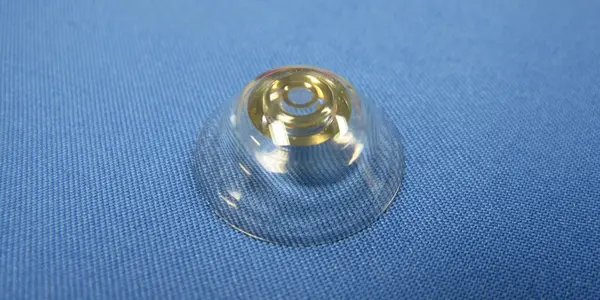
An estimated 285 million people are visually impaired worldwide and age-related macular degeneration alone is the leading cause of blindness among older adults. There may be some new hope, in the form of prototype telescopic contact lenses. Eric Tremblay from EPFL in Switzerland says the first iteration of the telescopic contact lens--which magnifies 2.8 times--was announced in 2013. Since then the scientists behind the DARPA-funded project have been fine-tuning the lens membranes and developing accessories to make the eyewear smarter and more comfortable for longer periods of time, and thus more usable in every day life.

Known as the ‘Heart of Voh’ for its proximity to the Voh commune, a mining colony controlled by the French, these Mangrove swamps along the coast of New Caledonia in the southwest Pacific Ocean formed this natural structure, caused by changes in vegetation cover. Photographer Yann Arthus-Bertrand made it famous by using a photograph of the heart on the cover of a book, The Earth from the Air.This false-color satellite image of the heart-shaped formation was captured by the Korea Aerospace Research Institute’s Kompsat-2 satellite on 1 April 2009. No undead lichs had to be sent to their final resting place to obtain it.
Despite the claims of people selling books on ascension into being robots or diet fads, you are not going to live forever. It used to be life was truly short and now we are in a period where life is much longer but after the age of 65 it is not better, it is instead a slow steady decline toward death.The goal cannot be to try and live forever, nature has built in too many biological landmines to control that, but to live healthier until we do die. First, we'd have to agree on what this 'successful' aging would look like, without wellness psychobabble.
Researchers have discovered a molecular ‘switch’ that controls replication and transcription of mitochondria DNA, a key finding that could influence the development of targeted therapies for cancer, developmental processes related to fertility and aging. Mitochondria are organelles located outside the nucleus of nearly every cell in humans. While most of the cell’s DNA is inside the nucleus, mitochondria maintain their own DNA and contribute a small number of genes that are essential for cellular respiration and energy generation.
Extreme mechano-sensitive neurons of tactile-foraging ducks fit the bill for touch research.
When we reach out to touch something, our nervous system converts the mechanical input from our fingers contacting an object into an electrical signal in the brain. The process, known as mechanosensation, is one of our fundamental physiological processes, on par with sight and smell. But how it works on a cellular level remains poorly understood, holding back development of effective treatments for mechanosensory disorders like chronic pain.
Now, a team of researchers from the Yale University School of Medicine has identified a new model organism that may help elucidate the cellular mechanisms behind mechanosensation: the ordinary duck.
Darwin's finches, inhabiting the Galápagos archipelago and Cocos island, constitute an iconic model for studies of speciation and adaptive evolution. A team of scientists from Uppsala University and Princeton University has now shed light on the evolutionary history of these birds and identified a gene that explains variation in beak shape within and among species. The study is published today in Nature, on the day before the 206th anniversary of the birth of Charles Darwin.
Among blood donors with normal hemoglobin levels, low-dose oral iron supplementation, compared with no supplementation, reduced the time to recovery of the postdonation decrease in hemoglobin concentration in donors with low or higher levels of a marker of overall iron storage (ferritin), according to a study in the February 10 issue of JAMA.
Many people buy and wear clothing from prestigious brands as a way to express and distinguish themselves. However, a new study from the University of Missouri has found that people who are more sensitive to how others perceive them are actually more likely to avoid clothing with large logos, even if the clothing is from a prestigious brand. Eunjin Kim, a doctoral candidate in the MU School of Journalism, says it is important for companies to understand this brand avoidance behavior when marketing their products to consumers.
Drinking red grape juice or wine - in moderation - could improve the health of overweight people by helping them burn fat better, according to a new study coauthored by an Oregon State University researcher.
The findings suggest that consuming dark-colored grapes, whether eating them or drinking juice or wine, might help people better manage obesity and related metabolic disorders such as fatty liver.
Neil Shay, a biochemist and molecular biologist in OSU's College of Agricultural Sciences, was part of a study team that exposed human liver and fat cells grown in the lab to extracts of four natural chemicals found in Muscadine grapes, a dark-red variety native to the southeastern United States.
A novel class of materials that enable a safer, cheaper, and more energy-efficient process for removing greenhouse gas from power plant emissions has been developed by a multi-institution team of researchers. The approach could be an important advance in carbon capture and sequestration (CCS).
The team, led by scientists from Harvard University and Lawrence Livermore National Laboratory, employed a microfluidic assembly technique to produce microcapsules that contain liquid sorbents encased in highly permeable polymer shells. They have significant performance advantages over the carbon-absorbing materials used in current CCS technology.