News Articles

News Account

News Account

News Releases From All Over The World, Right To You
RSS Feed
Good Morning! Did You Sleep Poorly Because Of Your Genes?

Good Morning! Did You Sleep Poorly Because Of Your Genes?

A new paper suggests 47 links between our genetic code and the quality, quantity and timing of our sleep. The correlation was created using 85,670 participants of UK Biobank and 5,819 individuals from three other studies, who wore accelerometers (e.g. Fitbit) which recorded activity levels continuously. They wore the accelerometers continuously for seven days which provides more accuracy than people who write how well they slept diaries. . 

What Brain Images Of The Three-Million-Year Old Lucy Species Just Revealed

What Brain Images Of The Three-Million-Year Old Lucy Species Just Revealed

Brain volume changes during evolution have shown how modern human brains diverged from the brains of our closest primate cousin, the chimpanzee, and a new study takes that a step further. CT-scans of three-million-year old brain imprints inside fossil skulls of the species Australopithecus afarensis (famous for "Lucy" and "Selam" from Ethiopia's Afar region) reveals that while Lucy's species had an ape-like brain structure, the brain took longer to reach adult size, suggesting that infants may have had a longer dependence on caregivers, a human-like trait.

Oxygen Overshoot: The Mass Extinction Of 75 Percent Of Life On Earth

Oxygen Overshoot: The Mass Extinction Of 75 Percent Of Life On Earth

Billions of years ago, an extinction occurred that dwarfed the event that wiped out the dinosaurs 65 million years ago. Its history is written in Canadian rocks and show Earth lost nearly 75 percent of its plant and animal species.But it had a benefit for us. The die-off of microorganisms that shaped the Earth's atmosphere paved the way for larger animals to thrive.Given the current coronavirus pandemic, the third of the last 17 years, not to mention annual flu and the other infectious diseases we face, it may seem that microbes are unstoppable, but even when biology on Earth was comprised entirely of microbes, they still had enormous die-off events. How to detect life before complex life even existed

'Whiskey Webs' Could Be Used To Identify Counterfeit Spirits

'Whiskey Webs' Could Be Used To Identify Counterfeit Spirits

When a drop of liquid evaporates, solids are left behind in a pattern that depends on what the liquid is, what solids are in it and the environmental conditions. You may have seen a 'coffee ring' when overflow deposits solids along the edge of the puddle as it evaporates. The same things happen with other beverages. Stuart Williams and colleagues previously found that drops of diluted American whiskeys -- but not their Scotch or Canadian counterparts -- formed webbed patterns when dried on a glass surface, and there were hints that the pattern was distinctive for different brands of whiskey.

Lung Cancer Trials From Industry Aren't More Biased, But They Are Better

Lung Cancer Trials From Industry Aren't More Biased, But They Are Better

Clinical trials in the modern regulatory environment are so expensive that many companies with a product that is going into a phase III clinical trial will just sell out to a Big Pharma company that can afford it. It's a necessary, yet somehow despised, business. Academics have claimed bias in clinical studies conducted by industry sponsors.

Why Some Prostate Cancers Are More Aggressive

Why Some Prostate Cancers Are More Aggressive

Why are some prostate cancers are more aggressive and result in death when others can be treated? The answer could mean more optimal treatment; aggressive forms could still get the full treatment while less harmful forms can get a less damaging approach.

Here's How Long Coronavirus Remains Infectious On Cardboard, Metal And Plastic

Here's How Long Coronavirus Remains Infectious On Cardboard, Metal And Plastic

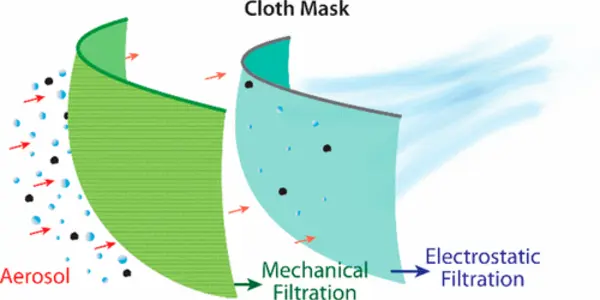
A new study claims the recent form of coronavirus, SARS-CoV-2, that causes the COVID-19 disease remains far longer in aerosol form than other experiments showed and up to 3 days on some surfaces.

The study says the virus is detectable for up to three hours in aerosols, up to four hours on copper, up to 24 hours on cardboard and up to two days on plastic and stainless steel. This is far longer than other studies of viruses in aerosols, which found them for 45 minutes.

18% Fewer Deaths Since 2013: Melanoma Treatment Has Been A Huge Public Health Victory

18% Fewer Deaths Since 2013: Melanoma Treatment Has Been A Huge Public Health Victory

In the 1980s, as tanning beds became a craze, melanoma rates began to climb. Since cancer often takes time to develop deaths due to melanoma peaked in 2013 but thanks to immunotherapy, less risky behavior, and earlier detection, rates dropped 18 percent within three years after.This is a fantastic public health victory. People still die, but that is from metastatic melanoma, the aggressive form that spreads from the skin to other organs, such as the lung, liver, or brain.

Social Bonding, Vampire Bat Style: They Groom And Share Blood

Social Bonding, Vampire Bat Style: They Groom And Share Blood

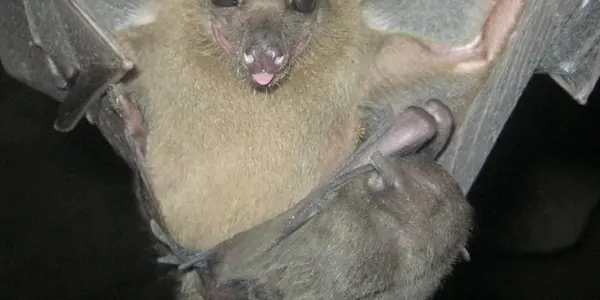
Social bonding in vampire bats is no surprise, they have roommates. What is uncommon is that they demonstrate behavior some might call friendship; unrelated vampire bats engage in social grooming and food sharing to form life-saving bonds that can last a lifetime. Vampire bats sustain themselves on only blood, and if a bat is unable to feed for 3 days, it runs the risk of starving. Like early man, they have a 'boom and bust' foraging lifestyle, so they either hit it big and get a large blood meal or they're starved for that night. If they starve three nights in a row there is a high chance they'll die but vampire bats with close social ties can be rescued from the brink. 

Elpistostege Fish Fin Fossil And Evolution Of The Human Hand

Elpistostege Fish Fin Fossil And Evolution Of The Human Hand

An ancient Elpistostege fish fossil has revealed how the human hand evolved from fish fins, the missing evolutionary link in the 'fish to tetrapod transition', as fish began to foray in habitats such as shallow water and land during the Late Devonian period millions of years ago.