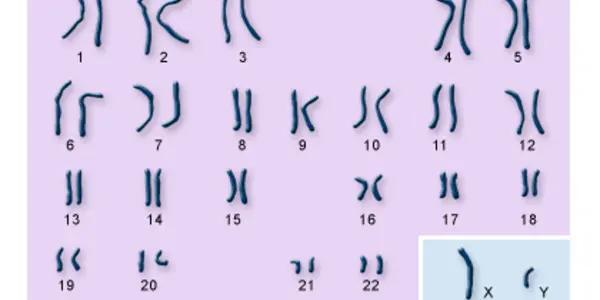
In high school biology you learned that in humans, a normal cell contains 23 pairs of chromosomes; 22 autosomes, which are the same in both males and females, while in the 23rd, the sex chromosomes, females have two copies of the X chromosome while males have one X and one Y.Their differences don't stop there. Chromosome pairs are numbered according to size, pair 1 being largest and 23 the smallest. And the Y is tiny compared to the X. X contains thousands of genes critical for life while the Y provides the instructions for initiating male development and making sperm.Exactly how they work together during meiosis, the form of cell division that creates sperm and egg, contains a science mystery.