News Articles

News Account

News Account

News Releases From All Over The World, Right To You
RSS Feed
Wuhan To Europe To America - The Evolutionary Paths Of SARS-CoV-2

Wuhan To Europe To America - The Evolutionary Paths Of SARS-CoV-2

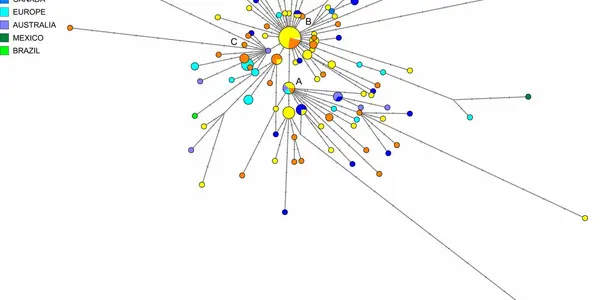
The early "evolutionary paths" SARS-CoV-2, the 2019 coronavirus that leads to COVID-19 in humans have been traced using phylogenetic network techniques and shows how it spread from Wuhan to Europe and America.While there are too many rapid mutations in coronaviruses, they are in the same family as the common cold, to ever find a Patient Zero or even a settled family tree, analysis of the first 160 complete virus genomes to be sequenced from human patients show the original spread of the new coronavirus through its mutations. 

Evolution Could Make Future Viruses Even Weirder: Some Have The Building Blocks For Their Own Metabolism

Evolution Could Make Future Viruses Even Weirder: Some Have The Building Blocks For Their Own Metabolism

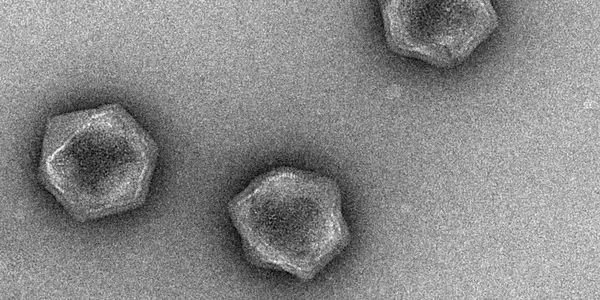
Though they are called giant viruses they're still among the tiniest denizens of the microbiome. A few genes' worth of DNA or RNA folded into a shell so small you need an electron microscope to see it, more like a stripped-down husk of an organism. Giant viruses are ten times the size of their more compact cousins and with hundreds or even thousands of genes, so unlike the rest of the family that until first cataloged in 1992, researchers had dismissed them as bacteria. 

Free Trade Has Created Greater Food System Sustainability - Lack Of Farmers Puts Wealthy Countries At Risk

Free Trade Has Created Greater Food System Sustainability - Lack Of Farmers Puts Wealthy Countries At Risk

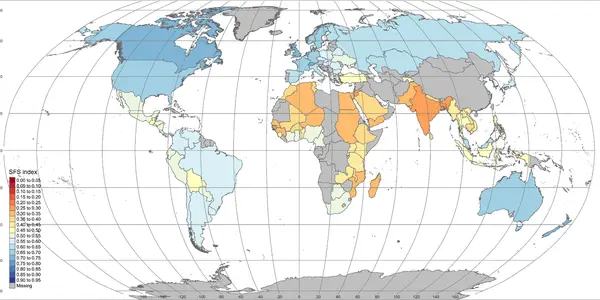
The locally grown effort was always fine for people fortunate enough to be born into agriculturally rich areas but for everyone else it historically meant famine, poor diets, or high costs.Modern agriculture and free markets changed all that. A new study finds that as the world has increased its standard of living - there are fewer people in poverty than ever in history and it continues to drop fast - it can lead to concern about food system sustainability. As people get wealthier, they move out of rural areas and into cities, but as we have seen during the SARS-CoV2 panic, when 2 percent of people provide all of the food there is less food system stability. Unless there is a large free trade market.

Good Morning! Did You Sleep Poorly Because Of Your Genes?

Good Morning! Did You Sleep Poorly Because Of Your Genes?

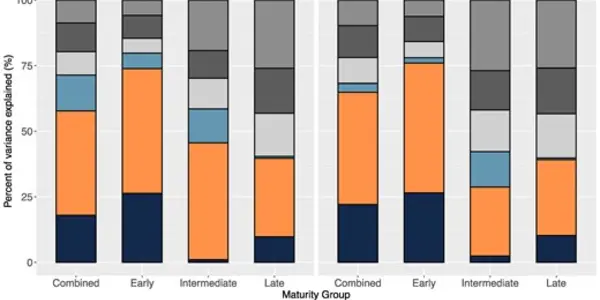
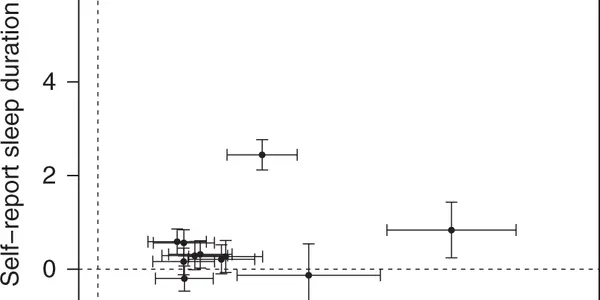
A new paper suggests 47 links between our genetic code and the quality, quantity and timing of our sleep. The correlation was created using 85,670 participants of UK Biobank and 5,819 individuals from three other studies, who wore accelerometers (e.g. Fitbit) which recorded activity levels continuously. They wore the accelerometers continuously for seven days which provides more accuracy than people who write how well they slept diaries. . 

What Brain Images Of The Three-Million-Year Old Lucy Species Just Revealed

What Brain Images Of The Three-Million-Year Old Lucy Species Just Revealed

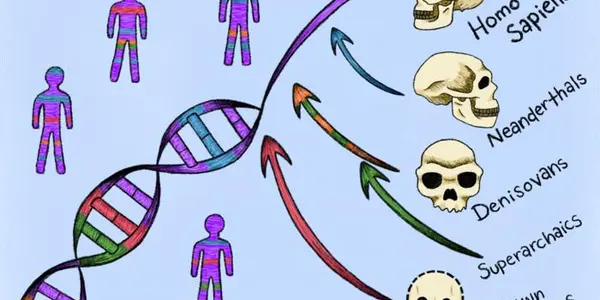
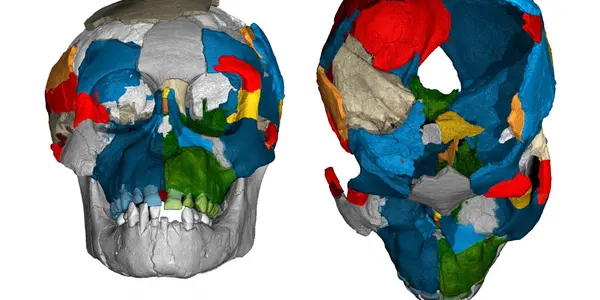
Brain volume changes during evolution have shown how modern human brains diverged from the brains of our closest primate cousin, the chimpanzee, and a new study takes that a step further. CT-scans of three-million-year old brain imprints inside fossil skulls of the species Australopithecus afarensis (famous for "Lucy" and "Selam" from Ethiopia's Afar region) reveals that while Lucy's species had an ape-like brain structure, the brain took longer to reach adult size, suggesting that infants may have had a longer dependence on caregivers, a human-like trait.

Oxygen Overshoot: The Mass Extinction Of 75 Percent Of Life On Earth

Oxygen Overshoot: The Mass Extinction Of 75 Percent Of Life On Earth

Billions of years ago, an extinction occurred that dwarfed the event that wiped out the dinosaurs 65 million years ago. Its history is written in Canadian rocks and show Earth lost nearly 75 percent of its plant and animal species.But it had a benefit for us. The die-off of microorganisms that shaped the Earth's atmosphere paved the way for larger animals to thrive.Given the current coronavirus pandemic, the third of the last 17 years, not to mention annual flu and the other infectious diseases we face, it may seem that microbes are unstoppable, but even when biology on Earth was comprised entirely of microbes, they still had enormous die-off events. How to detect life before complex life even existed

'Whiskey Webs' Could Be Used To Identify Counterfeit Spirits

'Whiskey Webs' Could Be Used To Identify Counterfeit Spirits

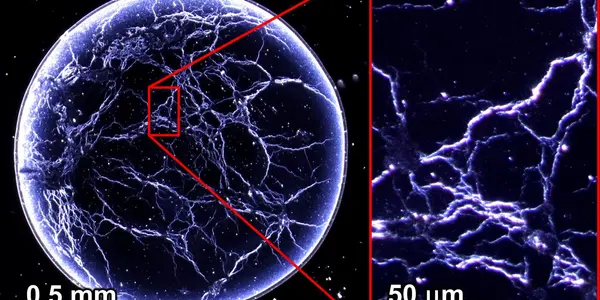
When a drop of liquid evaporates, solids are left behind in a pattern that depends on what the liquid is, what solids are in it and the environmental conditions. You may have seen a 'coffee ring' when overflow deposits solids along the edge of the puddle as it evaporates. The same things happen with other beverages. Stuart Williams and colleagues previously found that drops of diluted American whiskeys -- but not their Scotch or Canadian counterparts -- formed webbed patterns when dried on a glass surface, and there were hints that the pattern was distinctive for different brands of whiskey.

Lung Cancer Trials From Industry Aren't More Biased, But They Are Better

Lung Cancer Trials From Industry Aren't More Biased, But They Are Better

Clinical trials in the modern regulatory environment are so expensive that many companies with a product that is going into a phase III clinical trial will just sell out to a Big Pharma company that can afford it. It's a necessary, yet somehow despised, business. Academics have claimed bias in clinical studies conducted by industry sponsors.

Why Some Prostate Cancers Are More Aggressive

Why Some Prostate Cancers Are More Aggressive

Why are some prostate cancers are more aggressive and result in death when others can be treated? The answer could mean more optimal treatment; aggressive forms could still get the full treatment while less harmful forms can get a less damaging approach.

Here's How Long Coronavirus Remains Infectious On Cardboard, Metal And Plastic

Here's How Long Coronavirus Remains Infectious On Cardboard, Metal And Plastic

A new study claims the recent form of coronavirus, SARS-CoV-2, that causes the COVID-19 disease remains far longer in aerosol form than other experiments showed and up to 3 days on some surfaces.

The study says the virus is detectable for up to three hours in aerosols, up to four hours on copper, up to 24 hours on cardboard and up to two days on plastic and stainless steel. This is far longer than other studies of viruses in aerosols, which found them for 45 minutes.