You Feel Colder As You Age: The Science Reason Why
Older people report feeling colder, enough that it is clearly happening, but why has been a mystery. Until now.
Older people report feeling colder, enough that it is clearly happening, but why has been a mystery. Until now.

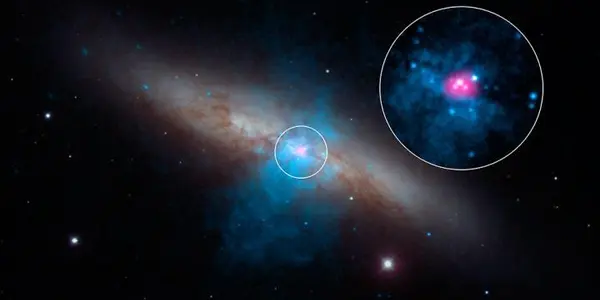
A once-in-a-century supernova, dubbed SN2014J, in a the nearby galaxy Messier 82 - the Cigar Galaxy - 12 million light-years away has been spotted; a pulsating dead star beaming with the energy of about 10 million suns. The object, previously thought to be a black hole because it is so powerful, is in fact a pulsar - the incredibly dense rotating remains of a star.
Dom Walton, a postdoctoral scholar at Caltech who works with NuSTAR data, says that with its extreme energy, this first ultraluminous pulsar takes the top prize in the weirdness category. Pulsars are typically between one and two times the mass of the sun. This new pulsar presumably falls in that same range but shines about 100 times brighter than theory suggests something of its mass should be able to.

Despite the publicity of high-profile celebrities having their iPhones hacked and private pictures distributed across the Internet, a new paper confirms that substantial numbers of teens are sexting – sending and receiving explicit sexual images via cellphone. Though the behavior is widely studied, the potentially serious consequences of the practice led the researchers to more accurately measure how frequently teens are choosing to put themselves at risk in this fashion.

The NASA satellites, Tropical Rainfall Measuring Mission (TRMM) and Terra, have provided data on clouds, rainfall and the diameter of the eye of Super Typhoon Vongfong as it turned north in the Northwestern Pacific Ocean.
Typhoon Vongfong formed on October 2nd, 2014 in the southeast of Guam. Typhoon Phanfone, that recently pummeled Japan, formed near the same area in the western Pacific Ocean.

What could the natural diversity and beauty of plant leaves have in common with the violin, one of mankind's greatest musical inventions? More than you think.
Dan Chitwood, Ph.D., assistant member, Donald Danforth Plant Science Center in St. Louis, Missouri
spends most of his time exploring genetic and molecular mechanisms underlying diversity in plant morphology - how leaf shapes are formed and what that means for a plant to grow and thrive. He also studies how leaf shapes change as plant species evolve to adapt in different environments. Research into why a desert-adapted tomato species can survive with little water, for example, sheds light on how leaf architecture affects the efficiency of plant water use.
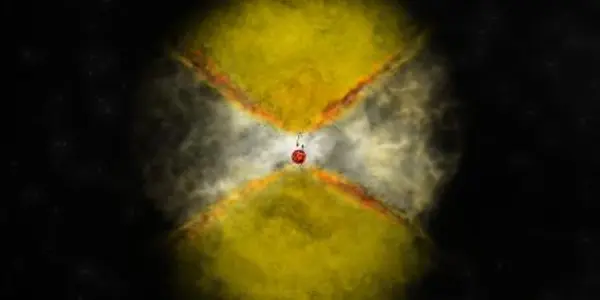
Gamma rays are the highest-energy form of radioactive waves known in the universe but how they're made and where they come from have been something of a mystery.
Using highly detailed radio telescope images, a team of astronomers have pinpointed the location where an explosion on the surface of a star, known as a nova, emitted gamma rays. A nova occurs in a star that is part of a binary system – two stars orbiting one another. One star, known as a dense white dwarf, steals matter from the other and the interaction triggers a thermonuclear explosion that flings debris into space.
It was from this explosion from a system known as V959 Mon, located some 5,000 light years from Earth, that the researchers think the gamma rays were emitted.

"Keeping up with the Joneses" is a colloquialism for developing world desire to have the same or better status in society than peers. If someone gets a new car, you get a new car.
In some people, status is so important they suffer psychological distress if they lack status.
But it isn't just for the middle class in Western nations, say anthropologists at U.C. Santa Barbara, who found that the same need exists among the Tsimane, an egalitarian society of forager-farmers in the Bolivian Amazon.
Adolescence is often a turbulent time for both genders, marked by biological changes and substantially increased rates of depressive symptoms.
But girls seem to take it a lot harder and a new paper in Clinical Psychological Science believes this gender difference may be the result of girls' greater exposure to stressful interpersonal events, making them more likely to ruminate, and contributing to their risk of depression.
The Royal Swedish Academy of Sciences has awarded the 2014 Nobel Prize in Chemistry to Eric Betzig of Janelia Research Campus, Howard Hughes Medical Institute, Stefan W. Hell of the Max Planck Institute for Biophysical Chemistry and William E. Moerner of Stanford University “for the development of super-resolved fluorescence microscopy”.Optical microscopy was once held back by a limitation: that it could never obtain a better resolution than half the wavelength of light. Helped by fluorescent molecules the Nobel Laureates in Chemistry 2014 ingeniously circumvented this limitation and brought optical microscopy into the nanodimension.

Pre-school kids have a lot to learn. They often don't even know how to tie their shoelaces or count to 100. But that is an applications issue. When it comes to skepticism, even kids at age 5 show critical thinking skills.
A new study published in PLOS ONE finds that by the age of five, children become wary of information provided by people who make overly confident claims.
Dr. Patricia Brosseau-Liard, a
Concordia University
postdoctoral fellow, recruited 96 four- and five-year-olds and then with University of British Columbia psychologists Tracy Cassels and Susan Birch had the youngsters weigh two important cues to a person's credibility — prior accuracy and confidence — when deciding what to believe.

A new study has pinpointed working memory as a cause of learning difficulties in people with schizophrenia.
Working memory is known to be affected in 1 percent of the population who have schizophrenia, but it has been unclear whether that has a specific role in making learning more difficult, said Brown University postdoctoral researcher Anne Collins, lead author of the paper
in the Journal of Neuroscience.
Though numerous experts and policy makers have called for hospitals to screen patients for methicillin-resistant Staphylococcus aureus (MRSA) infections and isolate anyone testing positive to prevent the spread "Superbugs" in healthcare settings, it's too economically burdensome. Several states have enacted laws requiring patients be screened for MRSA upon admission but two new abstracts, scheduled for presentation on Friday at IDWeek, the annual scientific meeting for infectious disease specialists, found universal MRSA screening and isolation of high-risk patients will help prevent MRSA infections but may be too economically burdensome for an individual hospital to adopt.
Sauropods, large, long-necked plant-eating dinosaurs such as Diplodocus and Brachiosaurus, are the largest animals to have ever walked the Earth, with the biggest weighing 80 tons.
Clearly, a single creature the size of 11 elephants would have needed vast amounts of food. How did multiple sauropod species live alongside one another in prehistoric ecosystems between 210 and 65 million years ago?
New research from the University of Bristol and the Natural History Museum, London details the community of the Late Jurassic Morrison Formation, a distinctive sequence of sedimentary rock in the western United States from which over 10 species of sauropod are known.