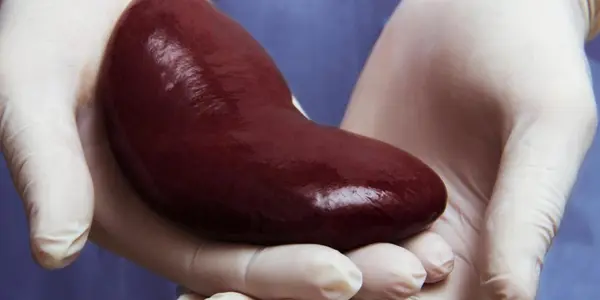
You Feel Colder As You Age: The Science Reason Why
Older people report feeling colder, enough that it is clearly happening, but why has been a mystery. Until now.
Older people report feeling colder, enough that it is clearly happening, but why has been a mystery. Until now.


America now has a services funding problem that has plagued Europe for a time - nowhere near enough workers to pay for people getting government money.
Though there are now 2 workers to pay for Baby Boomer social security, compared to 42 when the system started, a new study advocates even fewer babies and more economic slowdown. But it will pay off, say scholars from the University of California, Berkeley and the East-West Center in Hawaii.
A high amount of methane, the main component of natural gas, is escaping from the Four Corners region in the U.S. Southwest, according to a new study.
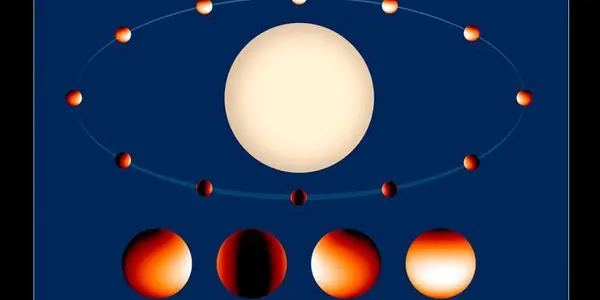
A team of scientists using NASA's Hubble Space Telescope to make the most detailed global map yet of the glow from a giant, oddball planet orbiting another star, an object twice as massive as Jupiter and hot enough to melt steel, called WASP-43b.
WASP-43b is a world of extremes, where winds howl at the speed of sound from a 3,000-degree-Fahrenheit dayside to a pitch-black nightside when temperatures plunge to a relatively cool 1,000 degrees Fahrenheit, still hot enough to melt silver.
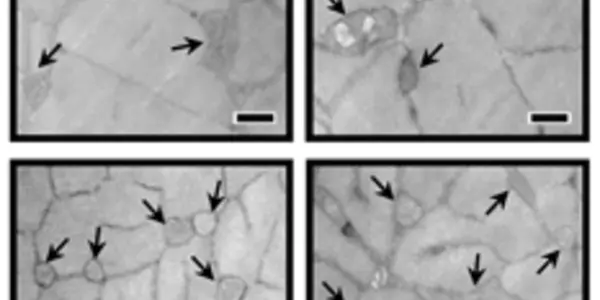
Young mice with the rodent equivalent of a rare autism spectrum disorder (ASD) called Rett syndrome that were fed a diet supplemented with the synthetic oil triheptanoin had physical and behavioral symptoms that were less severe after being on the diet - and they lived longer than mice on regular diets.
Researchers involved in the study think that triheptanoin improved the functioning of mitochondria, energy factories common to all cells. Since mitochondrial defects are seen in other ASDs, the researchers say, the experimental results offer hope that the oil could help not just people with Rett syndrome, but also patients with other, more common ASDs.
Cancer-driving genomic aberrations in localized lung cancer appear are so consistently present across tumors that a single biopsy of one region of the tumor is likely to identify most of them, according to a new paper.
The study addresses the challenge of what scientists call genomic heterogeneity, the presence of many different variations that drive tumor formation, growth and progression, and likely complicate the choice and potential efficacy of therapy.
A landmark study of renal cell cancer in 2012 found that most cancer-promoting variations were not present across all regions of those tumors, so biopsy of a single region would not provide a good representation of cancer genes important in the genesis of any given tumor.
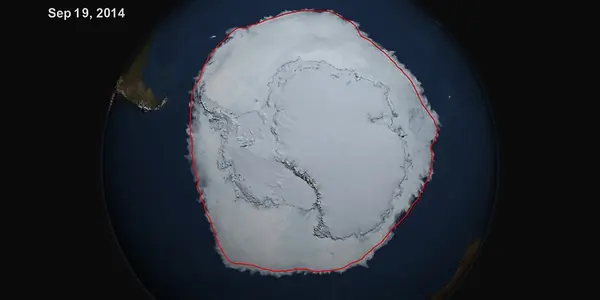
Antarctic sea ice reached a new record high extent this year, covering more of the southern oceans than it has since scientists began a long-term satellite record to map sea ice extent in the late 1970s. The Antarctic sea ice extent exceeded 7.72 million square miles (20 million square kilometers) for the first time since 1979, according to the National Snow and Ice Data Center. The ice extent stayed above this benchmark extent for several days. The average maximum extent between 1981 and 2010 was 7.23 million square miles (18.72 million square kilometers).
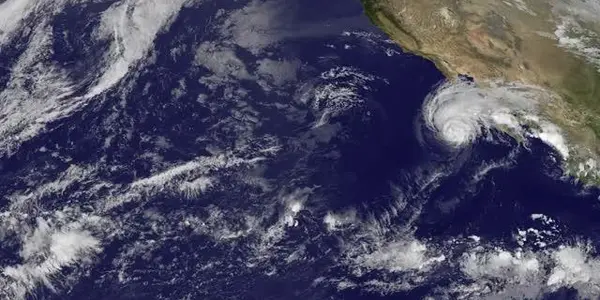
Tropical Storm Simon, once a hurricane, is expected to bring heavy rain to portions of the central Plains and Midwest on today and tomorrow. Since it is not hitting New York City during presidential election season, it won't be called a SuperStorm and get much national media attention.
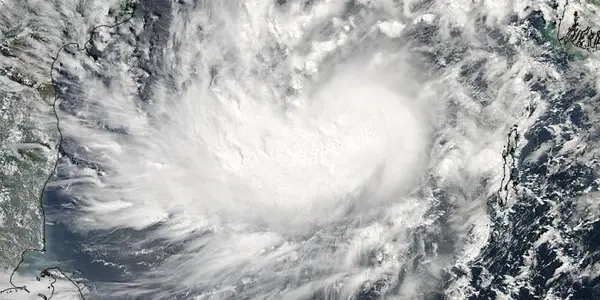
Tropical Cyclone Hudhud formed on Oct. 8th and began moving from east to west across the Bay of Bengal in the Northern Indian Ocean.
NASA's Aqua satellite flew over Hudhud today and took a picture of the storm that showed it was still somewhat elongated, but more organized than the previous day. The Moderate Resolution Imaging Spectroradiometer (MODIS) instrument aboard NASA's Aqua satellite provided the hint of a developing eye.
Warnings for winds, rain and surf are already in effect for the northern Andhra Pradesh coast and south Odisha coastline of eastern India as Hudhud approaches.
No matter what type of chemotherapy you attack a tumor with, many cancer cells resort to the same survival tactic: They start eating themselves. This autophagy process happens when two proteins pair up and switch it on this process, according to a new paper.
"This gives us a therapeutic avenue to target autophagy in tumors," says Brigham Young University chemistry professor Josh Andersen. "The idea would be to make tumors more chemo-sensitive. You could target these proteins and the mechanism of this switch to block autophagy, which would allow for lower doses of chemotherapy while hopefully improving patient outcomes."
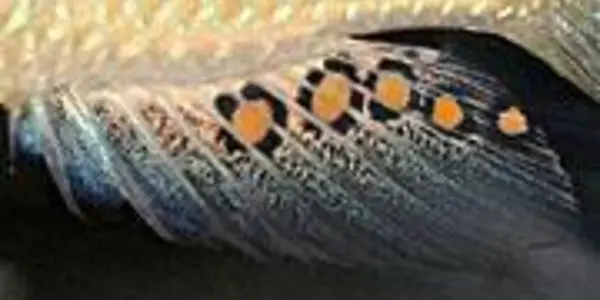
The evolution of new traits with novel functions has long been studied by evolutionary biology and a new study of the color markings of cichlid fish has shed some new light on it.
Swiss scientists writing in Nature Communications show what triggered these evolutionary innovations, namely: a mobile genetic element in the regulatory region of a color gene.
Sometimes organic food kills and there is nothing more natural than locally-hunted wild meat bought at a local market.
Now it turns out that ebola, as with many emerging infections, may have arisen due to the practice of eating wild meat known as 'bushmeat', say a team of researchers led by the University of Cambridge and the Zoological Society of London. They surveyed almost 600 people across southern Ghana about their bat bushmeat consumption – and how people perceive the risks associated with the practice.
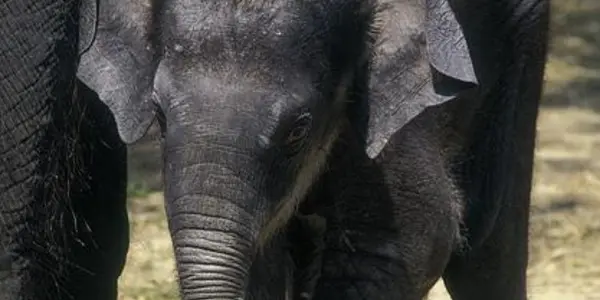
Elephants are among the most intelligent non-humans, arguably on par with chimpanzees, and both African and Asian elephants are endangered.
In 1995, 16-month old Kumari, the first Asian elephant born at the National Zoo in Washington, DC, died of a mysterious illness. In 1999, Gary Hayward of Johns Hopkins University and collaborators published their results identifying a novel herpesvirus, EEHV1 as the cause of Kumari's sudden death. They now show that severe cases like this one are caused by viruses that normally infect the species, rather than by viruses that have jumped from African elephants, which was their original hypothesis.