News Releases

News Releases

The latest from the scientific community across the world. These are unedited and unfiltered so caveat emptor, even though this is all free.
RSS Feed
Deadly parasite's rare sexual dalliances may help scientists neutralize it

Deadly parasite's rare sexual dalliances may help scientists neutralize it

St. Louis, April 6, 2009 — For years, microbiologist Stephen Beverley, Ph.D., has tried to get the disease-causing parasite Leishmania in the mood for love. In this week's Science, he and colleagues at the National Institutes of Health report that they may have finally found the answer: Cram enough Leishmania into the gut of an insect known as the sand fly, and the parasite will have sex.

Public trust doctrine could aid management of US oceans

Public trust doctrine could aid management of US oceans

DURHAM, N.C. -- Since Congress lifted a moratorium on offshore drilling last year, federal lawmakers have grappled with the issue of how best to regulate U.S. ocean waters to allow oil, wave and wind energy development, while sustainably managing critical fisheries and marine animal habitats.
A new policy paper, published April 10 in Science by a team of Duke University experts, argues that establishing a public trust doctrine for federal waters could be an effective and ethical solution to this and similar conflicts.

Research sheds new light on inflammatory disease

Research sheds new light on inflammatory disease

Scientists at the University of Liverpool have found that understanding the precise timing of communication between cells that coordinate the body's response to disease could be key to new drug developments.
Researchers, in collaboration with AstraZeneca and the Universities of Manchester and Warwick, are investigating the NF-kappa-B signalling system, which governs the responses within cells to stimuli such as stress and infection. It plays a central role in conditions such as cancer, inflammatory bowel disease, rheumatoid arthritis and asthma.

UNC study: Scientists identify chemical compound that may stop deadly brain tumors

UNC study: Scientists identify chemical compound that may stop deadly brain tumors

CHAPEL HILL – Researchers at the University of North Carolina at Chapel Hill School of Medicine have identified a compound that could be modified to treat one of the most deadly types of cancer, and discovered how a particular gene mutation contributes to tumor growth.
The findings and potential treatment apply to a type of brain tumor called secondary glioblastoma multiforme (GBM). GBMs are part of a larger group of brain tumors called malignant gliomas, which is the type of cancer Senator Edward Kennedy suffers from.

Penn biologists discover how 'silent' mutations influence protein production

Penn biologists discover how 'silent' mutations influence protein production

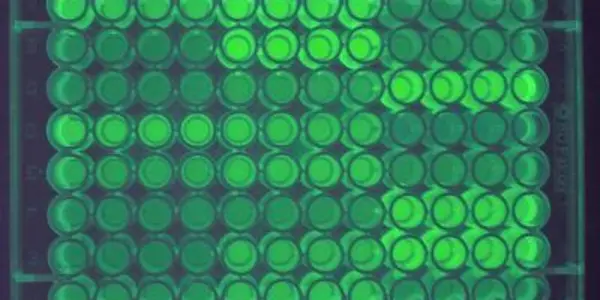
PHILADELPHIA -– Biologists at the University of Pennsylvania have revealed a hidden code that determines the expression level of a gene, providing a way to distinguish efficient genes from inefficient ones. The new research, which involved creating hundreds of synthetic green-glowing genes, provides an explanation for how a cell "knows" how much of each protein to make, providing just the right amount of protein to maintain homeostasis yet not too much to cause cell toxicity.
In the study, Penn biologists analyzed how protein levels are governed by synonymous, or silent, mutations within the protein-coding region.

Monitoring Yellowstone earthquake swarms

Monitoring Yellowstone earthquake swarms

The Seismological Society of America (SSA) is an international scientific society devoted to the advancement of seismology and its applications in understanding and mitigating earthquake hazards and in imaging the structure of the earth.

Digging up evidence of 400-year-old global trade and wealth

Digging up evidence of 400-year-old global trade and wealth

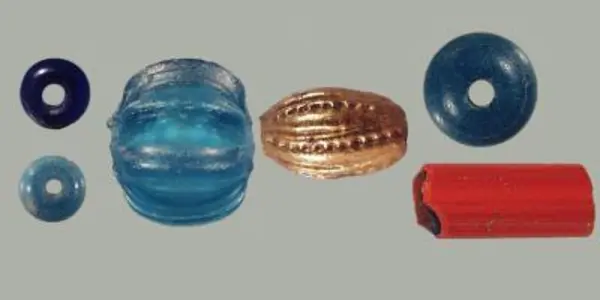
French and Chinese blue glass, Dutch layered glass, Baltic amber: roughly 70,000 beads manufactured all over the world have been excavated at one of the Spanish empire's remotest outposts, the Santa Catalina de Guale Mission. The beads were found as part of an extensive, ongoing research project led by a team of scientists from the American Museum of Natural History on St. Catherines Island off the coast of Georgia. Comprising the largest repository ever from Spanish Florida, the beads enlighten archaeologists about past trade routes and provide clues to the social structure and wealth of the people.

Scientists pinpoint the 'edge of space'

Scientists pinpoint the 'edge of space'

Where does space begin? Scientists at the University of Calgary have created a new instrument that is able to track the transition between the relatively gentle winds of Earth's atmosphere and the more violent flows of charged particles in space – flows that can reach speeds well over 1000 km/hr. And they have accomplished this in unprecedented detail.
Data received from the U of C-designed instrument sent to space on a NASA launch from Alaska about two years ago was able to help pinpoint the so-called edge of space: the boundary between the Earth's atmosphere and outer space.
With that data, U of C scientists confirmed that space begins 118 km above Earth and the results were published this week in the Journal of Geophysical Research.

Device protects transplanted pancreatic cells from the immune system

Device protects transplanted pancreatic cells from the immune system

LA JOLLA, Calif., April 9, 2009—Scientists at Burnham Institute for Medical Research (Burnham) and the University of California San Diego (UC San Diego) School of Medicine have demonstrated in mice that transplanted pancreatic precursor cells are protected from the immune system when encapsulated in polytetrafluorethylene (PTFE). The study, which suggests a new approach to treating Type 1 diabetes, was published online on April 8 in the journal Transplantation.

MIT: New insights into perception

MIT: New insights into perception

CAMBRIDGE, Mass. -- In the classic waterfall illusion, if you stare at the downward motion of a waterfall for some period of time, stationary objects — such as rocks — appear to drift upward. MIT neuroscientists have found that this phenomenon, called motion aftereffect, occurs not only in our visual perception but also in our tactile perception, and that these senses actually influence one another. Put another way, how you feel the world can actually change how you see it — and vice versa.

New insight into an old reaction: Adenylylation regulates cell signaling

New insight into an old reaction: Adenylylation regulates cell signaling

A new study reveals the importance of adenylylation in the regulation of cell signaling from bacteria to higher organisms. The research, published by Cell Press in the April 10th issue of the journal Molecular Cell, provides new insight into bacterial pathogenesis and opens intriguing avenues for exploring post-translational modifications in eukaryotic cells.
Immunoglobulin binding protein A (IbpA) is a large fibrillar surface antigen that is produced by the respiratory pathogen Histophilus somni and has been implicated in virulence and host toxicity. One section of IbpA is similar to YopT, a known cytotoxic effector, while a separate domain resembles Bordetella pertussis filamentous hemagglutinin, which mediates attachment to host cells.