News Releases

News Releases

The latest from the scientific community across the world. These are unedited and unfiltered so caveat emptor, even though this is all free.
RSS Feed
Novel method predicts impact of a covert anthrax release

Novel method predicts impact of a covert anthrax release

A new statistical method that can estimate the origin and time of an aerosolized release of the pathogen causing anthrax, following detection of the first few cases has been developed by researchers from the Medical Research Council (MRC) Centre for Outbreak Analysis and Modelling at Imperial College London in collaboration with the Health Protection Agency's Microbial Risk Assessment group.
The method, described in an article published April 10 in the open-access journal PLoS Computational Biology, predicts where the most critically affected areas will be following the release of this highly pathogenic agent, which may enable preventative treatment of individuals at risk and protection from the disease.

Research shows sharp rise in hospital admissions for children's dental care

Research shows sharp rise in hospital admissions for children's dental care

Researchers from Peninsula Dental School and the UCL Eastman Dental Institute have used data from the Hospital Episodes Statistics resource to identify a marked increase in the number of hospital admissions for children with caries and other dental conditions, between 1997 and 2006.
The study, which is to be published in the British Dental Journal on 11th April 2009, revealed that there were 517,885 NHS 'episodes of care' for children with dental conditions in the nine-year period. Of these, over half were for dental caries and 80 per cent involved extractions.

Scorpion biodiversity

Scorpion biodiversity

Scorpions possess resistance to high temperatures and the ability to conserve water for long periods of time, and as a result thrive in hot and arid parts of the world. But is this global distribution also seen at a more local level? Reporting in the open-access, peer-reviewed journal PLoS ONE April 9, Doctoral student Shmuel Raz and colleagues at the University of Haifa, Israel now show that this is indeed the case, even when European-like and African-like habitats were separated by no more than 100 metres.

First results from Penn's balloon-borne telescope BLAST

First results from Penn's balloon-borne telescope BLAST

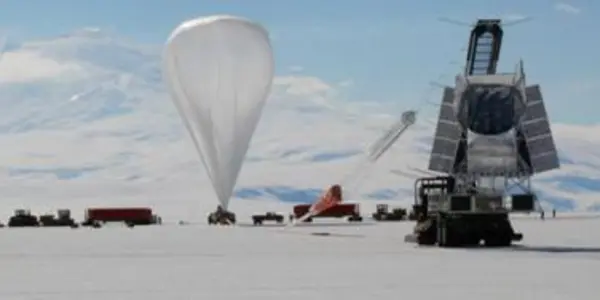
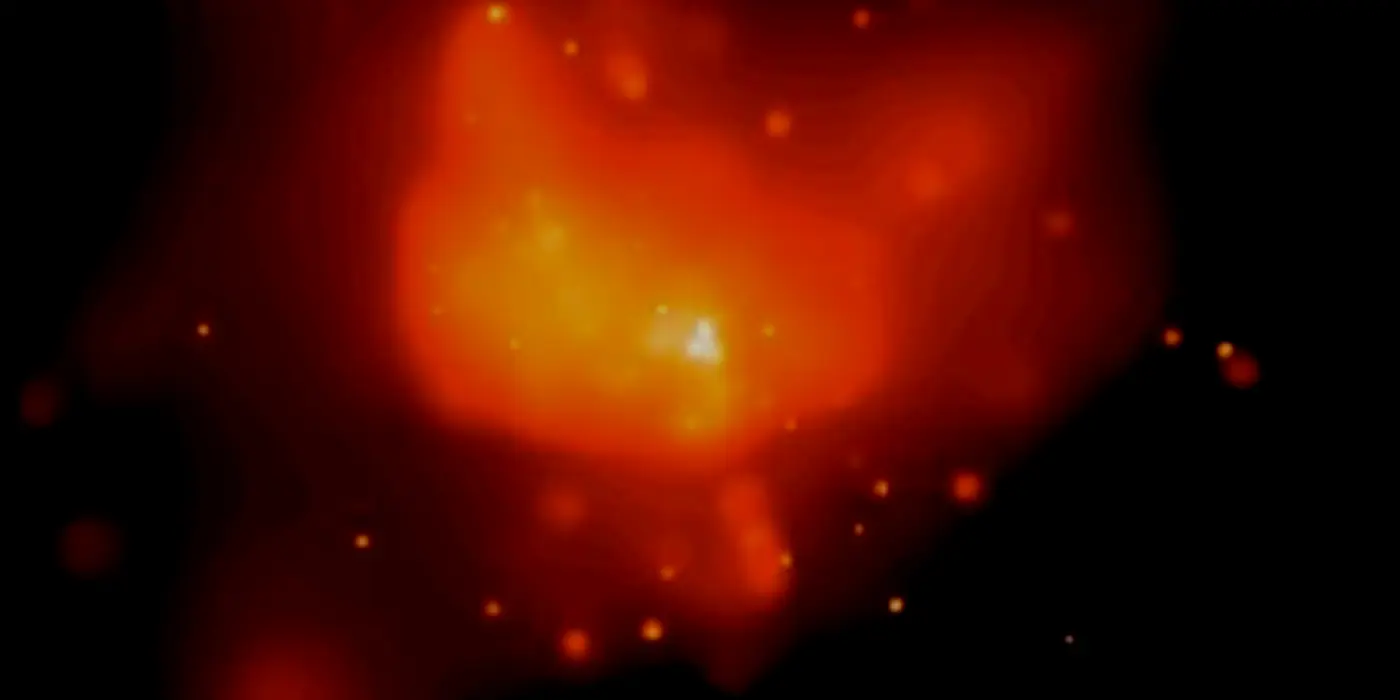
PHILADELPHIA –- After two years spent analyzing data from BLAST, the Balloon-borne Large-Aperture Sub-millimeter Telescope, physicists are releasing the first results.
The study, published in the current issue of Nature, reveals that the Far Infrared Background, or FIRB, originates from individual galaxies some 7 to 10 billion light years away.
The telescope, designed by a collaboration led by the University of Pennsylvania, collected data 120,000 feet above Antarctica in 2006. Flying the telescope above much of the atmosphere allowed the BLAST team to observe the distant universe at wavelengths nearly unattainable from the ground. The study has uncovered dust-enshrouded galaxies that hide about half of the cosmic starlight.

Physicists discover important step for making light crystals

Physicists discover important step for making light crystals

COLUMBUS, Ohio -- Ohio State University researchers have developed a new strategy to overcome one of the major obstacles to a grand challenge in physics.
What they've discovered could eventually aid high-temperature superconductivity, as well as the development of new high-tech materials.
In 2008, the Defense Advanced Research Projects Agency (DARPA) chose three multi-university teams to tackle an ambitious problem: trap atoms inside a light crystal -- also called an "optical lattice" -- that can simulate exotic materials and answer fundamental questions in physics.
The deadline for the first phase of the challenge -- June 2009 -- is fast approaching, and the teams have been unable to make the atoms cold enough for their experiments to work.

Pitt, Berkeley researchers reconstruct seashells to model nervous system function

Pitt, Berkeley researchers reconstruct seashells to model nervous system function

PITTSBURGH—The enchantingly colored seashells that lend beaches their charm could also provide information about how the brain converts memories and sensory information into action, according to research from the University of California at Berkeley and the University of Pittsburgh published online April 7 in the Proceedings of the National Academy of Sciences (PNAS).

Gene fusion discovery may lead to improved prostate cancer test

Gene fusion discovery may lead to improved prostate cancer test

NEW YORK (April 9, 2009) -- A newly discovered gene fusion is highly expressed in a subset of prostate cancers, according to a study by researchers at Weill Cornell Medical College. The findings, reported in the April 1 issue of Cancer Research, may lead to more accurate tests for prostate cancer. The gene fusion biomarker is also a different type of fusion than researchers have found in cancer previously and may represent an entirely new mechanism that cancer cells use to outgrow their healthy neighbors.

Biological FM signal maintains inflammation in cancer, asthma and other diseases

Biological FM signal maintains inflammation in cancer, asthma and other diseases

A study published tomorrow (10 April) in Science examines a key player in conditions such as cancer, inflammatory bowel disease, rheumatoid arthritis and asthma and has shown that cells use a sophisticated communication system to coordinate responses to infection and maintain inflammation in the body. This system is now a target for designing drugs to treat these conditions.

Genes from tiny algae shed light on big role managing carbon in world's oceans

Genes from tiny algae shed light on big role managing carbon in world's oceans

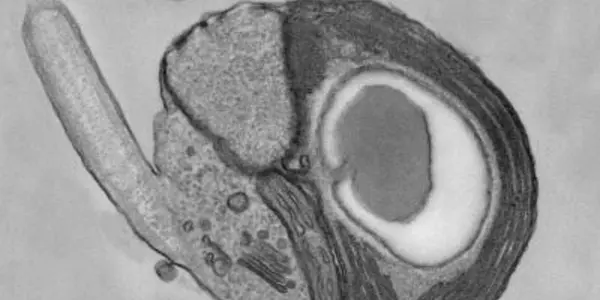
WALNUT CREEK, Calif.— Scientists from two-dozen research organizations led by the U.S. Department of Energy (DOE) Joint Genome Institute (JGI) and the Monterey Bay Aquarium Research Institute (MBARI) have decoded genomes of two algal strains, highlighting the genes enabling them to capture carbon and maintain its delicate balance in the oceans. These findings, from a team led by Alexandra Z. Worden of MBARI and published in the April 10 edition of the journal Science, will illuminate cellular processes related to algae-derived biofuels being pursued by DOE scientists.

Solomon Islands earthquake sheds light on enhanced tsunami risk

Solomon Islands earthquake sheds light on enhanced tsunami risk

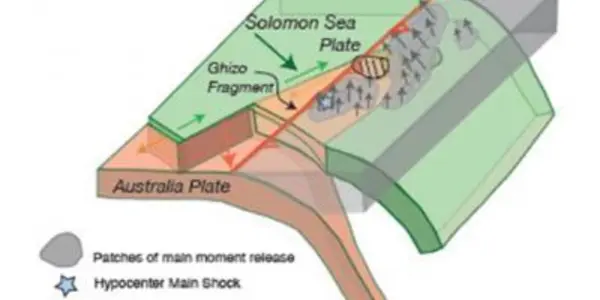
The 2007 Solomon Island earthquake may point to previously unknown increased earthquake and tsunami risks because of the unusual tectonic plate geography and the sudden change in direction of the earthquake, according to geoscientists.

On April 1, 2007, a tsunami-generating earthquake of magnitude 8.1 occurred East of Papua New Guinea off the coast of the Solomon Islands. The subsequent tsunami killed about 52 people, destroyed much property and was larger than expected.

"This area has some of the fastest moving plates on Earth," said Kevin P. Furlong, professor of geoscience, Penn State. "It also has some of the youngest oceanic crust subducting anywhere."

Life sticks: UC San Diego bioengineer's sticky insights published in journal Science

Life sticks: UC San Diego bioengineer's sticky insights published in journal Science

Sticky is good. A University of California, San Diego bioengineer is the first author on an article in the journal Science that provides insights on the "stickiness of life." The big idea is that cells, tissues and organisms hailing from all limbs of the tree of life respond to stimuli using basic biological "modules." For example, the researchers outlined similar strategies across biology for fulfilling the tasks of "sticking together" (cell-cell interactions), "sticking to their surroundings" (cell-extracellular matrix [ECM] interactions), and responding to forces.