News Releases

News Releases

The latest from the scientific community across the world. These are unedited and unfiltered so caveat emptor, even though this is all free.
RSS Feed
Colon cancer shuts down receptor that could shut it down

Colon cancer shuts down receptor that could shut it down

AUGUSTA, Ga. – Though a high-fiber diet has long been considered good for you and beneficial in staving off colon cancer, Medical College of Georgia researchers have discovered a reason why: roughage activates a receptor with cancer-killing potential.
Researchers report in the April issue of Cancer Research that the GPR109A receptor is activated by butyrate, a metabolite produced by fiber-eating bacteria in the colon. The receptor puts a double-whammy on cancer by sending signals that trigger cell death, or apoptosis, and shutting down a protein that causes inflammation, a precursor to cancer.

Scripps research scientists model 3-D structures of proteins that control human clock

Scripps research scientists model 3-D structures of proteins that control human clock

In an Early Edition issue of The Proceedings of the National Academy of Sciences (PNAS) on April 9, 2009, the researchers report that they have been able to determine the molecular structure of a plant photolyase protein that is surprisingly similar to two cryptochrome proteins that control the "master clock" in humans and other mammals. They have also been able to test how structural changes affect the function of these proteins.

Active optical clock proposal

Active optical clock proposal

The Institute of Quantum Electronics, School of Electronics Engineering and Computer Science at Peking University has proposed the concept, principles and techniques of an active optical clock. 

Mathematics and climate change

Mathematics and climate change

Providence, RI---In 1994, University of Utah mathematician Ken Golden
went to the Eastern Weddell Sea for the Antarctic Zone Flux
Experiment. The sea's surface is normally covered with sea ice, the
complex composite material that results when sea water is frozen.
During a powerful winter storm, Golden observed liquid sea water
welling up and flooding the sea ice surface, producing a slushy
mixture of sea water and snow that freezes into snow-ice. With his
mathematician's eyes he observed this phenomenon and said to himself:
"That's percolation!"

When cancer cells can't let go

When cancer cells can't let go

Like a climber scaling a rock face, a migrating cancer cell has to keep a tight grip on the surface but also let go at the right moment to move ahead. Chan et al. reveal that the focal adhesion kinase (FAK) coordinates these processes to permit forward movement. The study will be published online April 13 (www.jcb.org) and will appear in the April 20 print issue of the Journal of Cell Biology.

American Chemical Society Weekly PressPac -- April 8, 2009

American Chemical Society Weekly PressPac -- April 8, 2009

ARTICLE # 1 FOR IMMEDIATE RELEASE
Solving the mystery of what puts sperm "in the mood"
Journal of Proteome Research
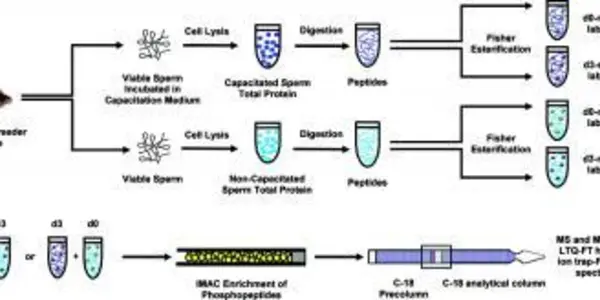
In a potential advance toward a male contraceptive pill and new treatments for infertility, researchers are reporting the identification of key biochemical changes that put sperm "in the mood" for fertilization. Their study, which addresses a long-standing biological mystery, appears in ACS' Journal of Proteome Research, a monthly publication.

Racial disparities persist in the treatment of lung cancer

Racial disparities persist in the treatment of lung cancer

Black patients suffering from lung cancer are less likely to receive recommended chemotherapy and surgery than white lung cancer patients, a disparity that shows no signs of lessening. That is the conclusion of a new study published in the May 15, 2009 issue of CANCER, a peer-reviewed journal of the American Cancer Society. The study's findings indicate that efforts are needed to provide appropriate treatments for black patients and to educate them about the value of those treatments.

Study of neighborhoods points to modifiable factors, not race, in cancer disparities

Study of neighborhoods points to modifiable factors, not race, in cancer disparities

While cities have shown considerable racial disparities in cancer survival, those racial disparities virtually disappear among smaller populations, such as neighborhoods within that city. The finding comes from a new analysis published in the May 15, 2009 issue of CANCER, a peer-reviewed journal of the American Cancer Society. The study examined breast and prostate cancer survival rates at different geographic levels, and the results suggest that there are significant societal factors at the root of cancer-related racial disparities.

HIV pays a price for invisibility

HIV pays a price for invisibility

Mutations that help HIV hide from the immune system undermine the virus's ability to replicate, show an international team of researchers in the April 13 issue of the Journal of Experimental Medicine. The study was published online on March 23.
When HIV infects a cell, a complex of human immune proteins called HLA (short for human leukocyte antigen) alert killer T cells by displaying bits of the virus on the surface of the cell. The T cells recognize these HIV fragments and mobilize an attack.

New insights into progressive hearing loss

New insights into progressive hearing loss

In parallel studies in human and mouse, two groups of researchers have come to the same conclusion: that a new kind of gene is associated with progressive hearing loss. The new gene - called a microRNA - is a tiny fragment of RNA that affects the production of hundreds of other molecules within sensory hair cells of the inner ear.
The research provides important new genetic understanding of a condition that is common in humans but remains poorly understood.

The Uneven Propagation Of Earthquake Waves

The Uneven Propagation Of Earthquake Waves

Propagation of earthquake waves within the Earth is not uniform. Experiments indicate that the velocity of shear waves (s-waves) in Earth's lower mantle between 660 and 2900 km depth is strongly dependent on the orientation of ferropericlase. In the latest issue of "Science" (Vol. 325, 10.04.2009), researchers from the German Research Center for Geosciences GFZ, the Karlsruhe Institute of Technology, the University of Bayreuth, and Arizona State University report unexpected properties of ferropericlase, which is presumably the second most abundant mineral of the lower mantle.