News Releases

News Releases

The latest from the scientific community across the world. These are unedited and unfiltered so caveat emptor, even though this is all free.
RSS Feed
Dartmouth Medical School gene targeting discovery opens door for vaccines and drugs

Dartmouth Medical School gene targeting discovery opens door for vaccines and drugs

Hanover, NH--In a genetic leap that could help fast track vaccine and drug development to prevent or tame serious global diseases, DMS researchers have discovered how to destroy a key DNA pathway in a wily and widespread human parasite. The feat surmounts a major hurdle for targeting genes in Toxoplasma gondii, an infection model whose close relatives are responsible for diseases that include malaria and severe diarrhea.

Measuring the immeasurable: New study links heat transfer, bond strength of materials

Measuring the immeasurable: New study links heat transfer, bond strength of materials

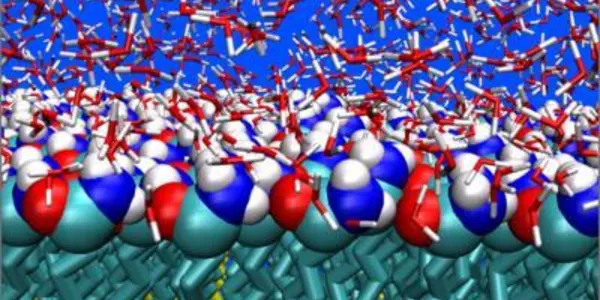
Troy, N.Y. – The speed at which heat moves between two materials touching each other is a potent indicator of how strongly they are bonded to each other, according to a new study by researchers at Rensselaer Polytechnic Institute.
Additionally, the study shows that this flow of heat from one material to another, in this case one solid and one liquid, can be dramatically altered by "painting" a thin atomic layer between materials. Changing the interface fundamentally changes the way the materials interact.

High-tech speed bump detects damage to army vehicles

High-tech speed bump detects damage to army vehicles

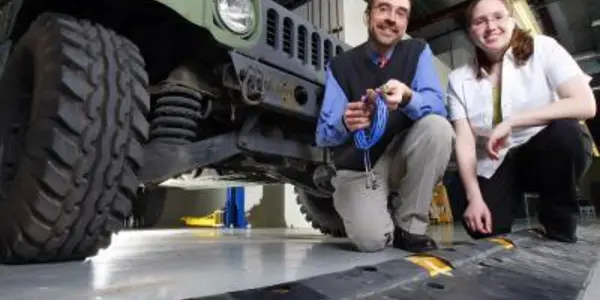
WEST LAFAYETTE, Ind. - Researchers have developed a technology that detects damage to critical suspension components in military vehicles simply by driving over a speed bumplike "diagnostic cleat" containing sensors.
"Our aim is to save time and maintenance costs, but more importantly to reduce downtime by catching damage before it leads to failure in the field," said Douglas Adams, an associate professor of mechanical engineering and director of Purdue University's Center for Systems Integrity.
Purdue is working with the U.S. Army and Honeywell International Inc. to develop the technology.

University of Toronto chemists uncover green catalysts

University of Toronto chemists uncover green catalysts

A University of Toronto research team from the Department of Chemistry has discovered useful "green" catalysts made from iron that might replace the much more expensive and toxic platinum metals typically used in industrial chemical processes to produce drugs, fragrances and flavours.
The synthesis of drugs usually relies on the use of catalysts and the expense of the catalysts influences the ultimate cost of the drug. If the catalyst is toxic, as it usually is when platinum-metals such as ruthenium, rhodium and palladium are used, then it must be removed completely from the synthesized product using costly purification techniques.

Scripps scientists uncover mimicry at the molecular level that protects genome integrity

Scripps scientists uncover mimicry at the molecular level that protects genome integrity

The new study, which was published on April 12, 2009, in an advanced online edition of the journal Nature Structural & Molecular Biology, draws new parallels between the Rad60 DNA repair factor and SUMO, a small ubiquitin-like modifier, which are both essential for maintaining genome stability during replication.
"This collaborative study between our laboratory and the Scripps Research Tainer group shows the very first indication of mimicry in the SUMO pathway," said Scripps Research Assistant Professor Michael "Nick" Boddy, Ph.D., who was senior author of the study. "By mimicking a particular surface feature of SUMO, Rad60 competes for binding to an essential enzyme of the SUMO machinery. Thus, Rad60 is a previously undefined member of the SUMO team."

Family ties provide protection against young adult sucidal behavior

Family ties provide protection against young adult sucidal behavior

SAN FRANCISCO –Adolescents and young adults typically consider peer relationships to be all important. However, it appears that strong family support, not peer support, is protective in reducing future suicidal behavior among young adults when they have experienced depression or have attempted suicide.

The new 'epigenetics:' Poor nutrition in the womb causes permanent genetic changes in the offspring

The new 'epigenetics:' Poor nutrition in the womb causes permanent genetic changes in the offspring

The new science of epigenetics explains how genes can be modified by the environment, and a prime result of epigenetic inquiry has just been published online in The FASEB Journal (http://www.fasebj.org): You are what your mother did not eat during pregnancy. In the research report, scientists from the University of Utah show that rat fetuses receiving poor nutrition in the womb become genetically primed to be born into an environment lacking proper nutrition.

Survey research looks at attitudes, obstacles to walking and biking to work

Survey research looks at attitudes, obstacles to walking and biking to work

According to researchers with Kansas State University's Physical Activity and Public Health Laboratory, active commuting -- walking or biking to school or work -- can be an easy, effective and efficient way to integrate physical activity into the daily routine.
Pam Wittman, a K-State senior in kinesiology, Olathe, worked with K-State's Melissa Bopp and Andy Kaczynski, both assistant professors of kinesiology, on the active commuting research. The project included two surveys, administered in 2008, which looked at demographics, psychosocial factors and environmental characteristics related to active commuting. A survey of more than 800 individuals at K-State was conducted, followed by another survey of 400 Manhattan area residents.

Creating ideal neural cells for clinical use

Creating ideal neural cells for clinical use

LA JOLLA, Calif., April 13, 2009 -- Investigators at the Burnham Institute for Medical Research (Burnham) have developed a protocol to rapidly differentiate human embryonic stem cells (hESCs) into neural progenitor cells that may be ideal for transplantation. The research, conducted by Alexei Terskikh, Ph.D., and colleagues, outlines a method to create these committed neural precursor cells (C-NPCs) that is replicable, does not produce mutations in the cells and could be useful for clinical applications. The research was published on March 13 in the journal Cell Death and Differentiation.

NASA experiment stirs up hope for forecasting deadliest cyclones

NASA experiment stirs up hope for forecasting deadliest cyclones

NASA satellite data and a new modeling approach could improve weather forecasting and save more lives when future cyclones develop.
About 15 percent of the world's tropical cyclones occur in the northern Indian Ocean, but because of high population densities along low-lying coastlines, the storms have caused nearly 80 percent of cyclone-related deaths around the world. Incomplete atmospheric data for the Bay of Bengal and Arabian Sea make it difficult for regional forecasters to provide enough warning for mass evacuations.

While majority of Americans express interest in organ and tissue donation, few register

While majority of Americans express interest in organ and tissue donation, few register

RICHMOND, Va. (April 13, 2009) – While the number of Americans registered as organ and tissue donors is rising, the registry still only includes 38 percent of licensed drivers, according to a report card issued by Donate Life America this year. Yet, according to a new survey of Americans, 72 percent of people want their decision to donate honored, even if their family disagrees.

K-State engineers create DNA sensors that could identify cancer using material only one atom thick

K-State engineers create DNA sensors that could identify cancer using material only one atom thick

Kansas State University engineers think the possibilities are deep for a very thin material.
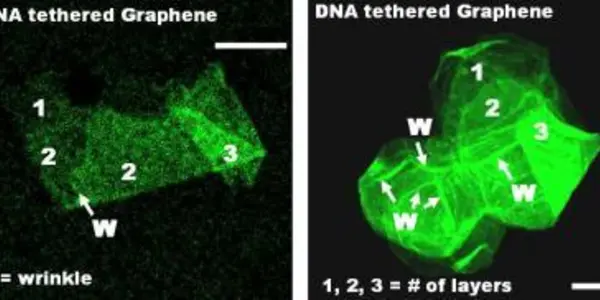
Vikas Berry, assistant professor of chemical engineering, is leading research combining biological materials with graphene, a recently developed carbon material that is only a single atom thick.
"The biological interfacing of graphene is taking this material to the next level," Berry said. "Discovered only four years ago, this material has already shown a large number of capabilities. K-Staters are the first to do bio-integrated research with graphene."
To study graphene, researchers rely on an atomic force microscope to help them observe and manipulate these single atom thick carbon sheets.