News Releases

News Releases

The latest from the scientific community across the world. These are unedited and unfiltered so caveat emptor, even though this is all free.
RSS Feed
Mount Sinai researchers discover novel mechanisms that might causally link type-2 diabetes to Alzheimer's disease

Mount Sinai researchers discover novel mechanisms that might causally link type-2 diabetes to Alzheimer's disease

A recent study by Mount Sinai faculty suggests that a gene associated with onset of type-2 diabetes also decreases in Alzheimer's disease dementia cases. The research, led by Dr. Giulio Maria Pasinetti, MD, Ph.D., The Aidekman Family Professor in Neurology, and Professor of Psychiatry and Geriatrics and Adult Development at Mount Sinai School of Medicine, was published this week in the scientific journal, Archives of Neurology.

Cloud computing brings cost of protein research down to Earth

Cloud computing brings cost of protein research down to Earth

Researchers at the Medical College of Wisconsin Biotechnology and Bioengineering Center in Milwaukee have just made the very expensive and promising area of protein research more accessible to scientists worldwide.
They have developed a set of free tools called ViPDAC (virtual proteomics data analysis cluster), to be used in combination with Amazon's inexpensive "cloud computing" service, which provides the option to rent processing time on its powerful servers; and free open-source software from the National Institutes of Health (NIH) and the University of Manitoba.

New laser technique advances nanofabrication process

New laser technique advances nanofabrication process

COLLEGE PARK, Md. -- The ability to create tiny patterns is essential to the fabrication of computer chips and many other current and potential applications of nanotechnology. Yet, creating ever smaller features, through a widely-used process called photolithography, has required the use of ultraviolet light, which is difficult and expensive to work with.

Can downloads predict impact for scientific articles?

Can downloads predict impact for scientific articles?

Rockville MD — While the number of times a scientific article is cited by other articles is currently the gold standard for ranking its impact, online publishing offers another measure: the number of unique downloads.
A recent analysis in the online Journal of Vision finds that downloads are a good predictor of citations — and they are available significantly faster.
The analysis was published in an editorial by Journal of Vision (JOV) Editor-in-Chief Andrew Watson. (http://journalofvision.org/9/4/i/) JOV recently began publishing download counts for every published article. The journal also ranks the top 20 articles by download.

New drug shows promise in treating drug-resistant prostate cancer

New drug shows promise in treating drug-resistant prostate cancer

A new therapy for metastatic prostate cancer has shown considerable promise in early clinical trials involving patients whose disease has become resistant to current drugs.
Chemists and biologists at UCLA and colleagues at several other institutions, including Memorial Sloan-Kettering Cancer Center, have created a new drug to treat a particularly lethal form of the disease, known as castration-resistant prostate cancer, or CRPC. Also referred to as hormone-refractory prostate cancer, CRPC is resistant to further treatment by anti-hormone drugs such as Casodex and Eulexin.

Fresh details about Silver Creek Fault in downtown San Jose, Calif.

Fresh details about Silver Creek Fault in downtown San Jose, Calif.

Session: Active-Source Seismic Imaging—Characterizing the Subsurface
Poster: Location: Serra I, Friday, April 10, 2009, 8:30 a.m.
Active-source seismology is the chief investigative tool for imaging the Earth's crust. This paper focuses on the use of active-source seismic studies to image faults, basin geometry, groundwater, geologic hazards and the local and regional tectonic setting.

Genes from tiny marine algae suggest unsuspected avenues for new research

Genes from tiny marine algae suggest unsuspected avenues for new research

MOSS LANDING, CA — By sequencing the DNA of two tiny marine algae, a team of scientists has opened up a myriad of possibilities for new research in algal physiology, plant biology, and marine ecology. The project was led by Alexandra Worden at the Monterey Bay Aquarium Research Institute (MBARI) and the Joint Genome Institute (JGI). The genome analyses involved a collaborative effort between MBARI, JGI, and an international consortium of scientists from multiple institutions, including University of Washington, Ghent University (Belgium), and Washington University in St. Louis. Initial discoveries from the research appear in the April 10, 2009 edition of Science magazine.

Study finds multidrug-resistant gram-negative bacteria high in long-term care

Study finds multidrug-resistant gram-negative bacteria high in long-term care

The prevalence of a certain form of drug-resistant bacteria, called multidrug-resistant gram-negative (MDRGN) organisms, far surpassed that of two other common antimicrobial-resistant infections in long-term care facilities, according to a study conducted by researchers at Hebrew SeniorLife's Institute for Aging Research.

Residents at long-term care facilities are one of the main reservoirs of antimicrobial-resistant bacteria. Epidemiological studies have focused primarily on two common antimicrobial-resistant organisms—methicillin-resistant Staphylococcus aureas (MRSA) and vancomycin-resistant enterococci (VRE).

CSI: The 8.0 Magnitude Pisco, Peru Earthquake

CSI: The 8.0 Magnitude Pisco, Peru Earthquake

VIRGINIA KEY, Fla. – A magnitude 8.0. earthquake destroyed 90 percent of the city of Pisco, Peru on August 16, 2007. The event killed 595 people, while another 318 were missing. Tsunami waves were observed locally, off the shore of Chile, and as far away as New Zealand.
In a study published in the Geophysical Journal International, scientists from the University of Miami's Rosenstiel School of Marine and Atmospheric Science, in collaboration with scientists from the University of Oxford (U.K.) have analyzed data on this earthquake and its impact on regional topography. Using InSAR-based geodetic data and teleseismic data, the scientists were able to use satellite images to identify details of this major plate boundary event.

Imaging and discovery from USArray and EarthScope

Imaging and discovery from USArray and EarthScope

Unprecedented dense deployment of EarthScope USArray Transportable Array, Flexible Array and Magnetotelluric instruments is providing data that are being used to develop a new generation of high-resolution Earth models and understanding of structure and processes. Fresh observations:

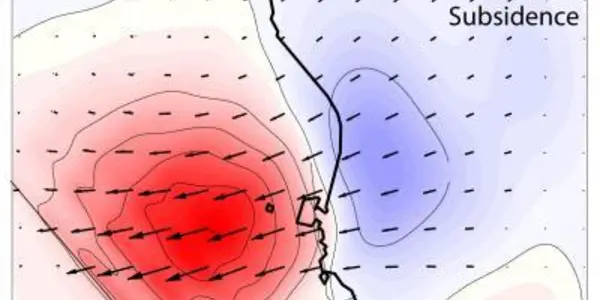
Earthscope Gradiometry: Charles A. Langston, et al., will discuss a new tool for understanding seismic waves by taking a snapshot of how seismic waves propagate across the United States. Rather than evaluate how the ground shakes as seismic waves pass through, this tool looks directly at the seismic wave and how it behaves. Using a newly developed theory, this research offers an entirely new way to consider seismic waves, opening new fields of study.

Test quickly assesses whether Alzheimer's drugs are hitting their target

Test quickly assesses whether Alzheimer's drugs are hitting their target

A test developed by physician-scientists at Washington University School of Medicine in St. Louis may help assess more quickly the ability of Alzheimer's drugs to affect one of the possible underlying causes of Alzheimer's disease in humans, accelerating the development of new treatments.
Scientists used the test to show that an Alzheimer's drug given to healthy volunteers reduced production of a substance known as amyloid beta (A-beta), a normal byproduct of human metabolism that builds to unhealthy levels forming brain plaques in Alzheimer's patients. The drug candidate, LY450139, which is also known as semagacestat, is being studied in clinical trials by Eli Lilly and Company.

Ancestors of African Pygmies and neighboring farmers separated around 60,000 years ago

Ancestors of African Pygmies and neighboring farmers separated around 60,000 years ago

All African Pygmies, inhabiting a large territory extending west-to-east along Central Africa, descend from a unique population who lived around 20,000 years ago, according to an international study led by researchers at the Institut Pasteur in Paris. The research, published April 10 in the open-access journal PLoS Genetics, concludes that the ancestors of present-day African Pygmies and farmers separated ~60,000 years ago.