After yet another strike by highly-paid union members demanding even more money in 2024, and celebrity fatigue due to tedious political posturing, the movie industry has fallen so far California government began adding on to its $1.6 trillion debt by propping up anyone willing to film in the state.(1)
Then along came a heat wave. And suddenly Spider-Man: Brand New Day and The Odyssey were hits. True summer blockbusters.
Pesky corporate media will not correlate heat waves to film success, but it's been that way for over 100 years. It is a much stronger correlation to heat than weedkillers to cancer. Theaters have air conditioning. And in a heat wave that still matters to a lot of people.
In 1925, the movie industry was niche. Studios owned theater chains that showed their products and they blocked out competitors. That meant their fortunes rose or fell on their own content. The Rivoli Theater in Times Square, controlled by film mogul Adolph Zukor, made quality matter less. They had Willis-Carrier install the first modern, mass air conditioning system.
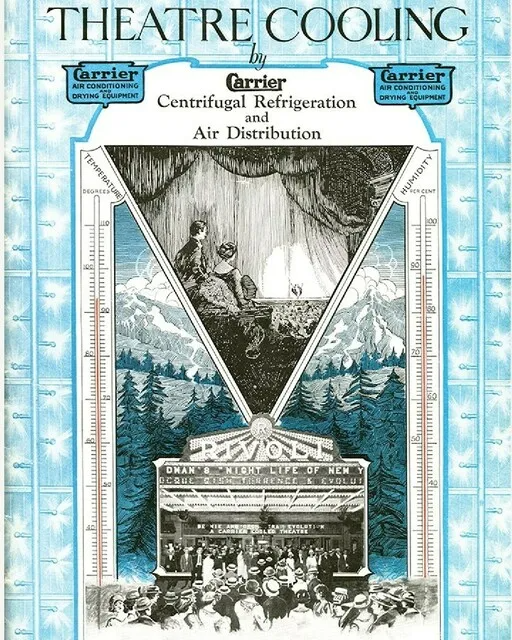
In the heat of New York City summers, the Rivoli suddenly stood above all others. It didn't matter what was showing, people wanted to spend two hours out of the heat and were willing to pay. Seeing that success, the company began installing air conditioning in all its metropolitan theaters.
Suddenly, they could create hits. The summer blockbuster was born, 50 years before Steven Spielberg and George Lucas would claim they invented it with Jaws and Star Wars. His strategy was so successful Famous Players–Lasky would change its name to Paramount Pictures in 1927, to reflect that the studio was the jewel in its imperial crown.
With that success, the company could force independent theater owners to buy all of their movies in a package if they wanted the big summer hit. Then they bought up more theaters. Other studios raced to install air conditioning and do the same thing.
The tactic was so successful that in 1948's United States v. Paramount Pictures, Inc. ruling, the Supreme Court forced the company and all the other studios to divest from theater ownership, ending the "Classic Hollywood" studio system.
But by then, movies had become part of the cultural lexicon and so were air-conditioned summer films. There were still quality films like The Sound of Music and Ben-Hur released during hot months but most summer films prior to Jaws in 1975 were lower-quality or kid fare like Bambi - people were going for the air conditioning rather than the movie itself. The public are so trained for it studios have set out to make or break their balance sheet during the summer. When people want to leave the house but still stay cool.
So if movie marketers think they have a pretty good film but are worried that it doesn't have the public relations sizzle needed to get the public excited, they can start a rumor MAGA is against it, that seems to work pretty well these days, or they could buy the Farmer's Almanac in January and see what looks cyclically like the hottest week of the year and stick their thermometer in the ground then.
NOTE:
(1) The industry wants to contract but U.S. Senators Warren and Sanders are instead determined to do to Warner Bros. what they did to Spirit Airlines - block any effort to merge, claiming that will mean less 'choice' and ironically cause 100 percent less choice when the company goes bankrupt. The Senators hate capitalism so they should instead let Warner merge with anyone the company can. They are the kiss of death. Let's not be cruel so we'll only go back 40 years, when the company killed Time Warner, AOL Time Warner, AT&T, and Warner Bros. Discovery. Total money burned - $185 billion. Even the solar industry hasn't wasted so much for so little.