On this day in 1945, an atomic bomb on Hiroshima began the countdown to the end of World War II. Of the Axis Powers, Italy had surrendered in 1943 and Germany in April of 1945. Only Japan remained, but it was an island. The US President who saw the projections of casualties it would take to invade made the uncomfortable decision to launch a weapon unlike anything anyone had ever seen.
On this day in "Atomic City", Oak Ridge Tennessee, a group of young women learned what they had been doing all this time.
They were called "Calutron Girls."
"Atomic City" was one of the Manhattan Project sites, and part of its role was operating mass spectrometers called Calutrons - a portmanteau of California University and Cyclotron - to separate uranium-235 isotopes. It was the brainchild of U.C. Berkeley physics legend Ernest Lawrence, the father of Big Science and inventor of the Cyclotron.
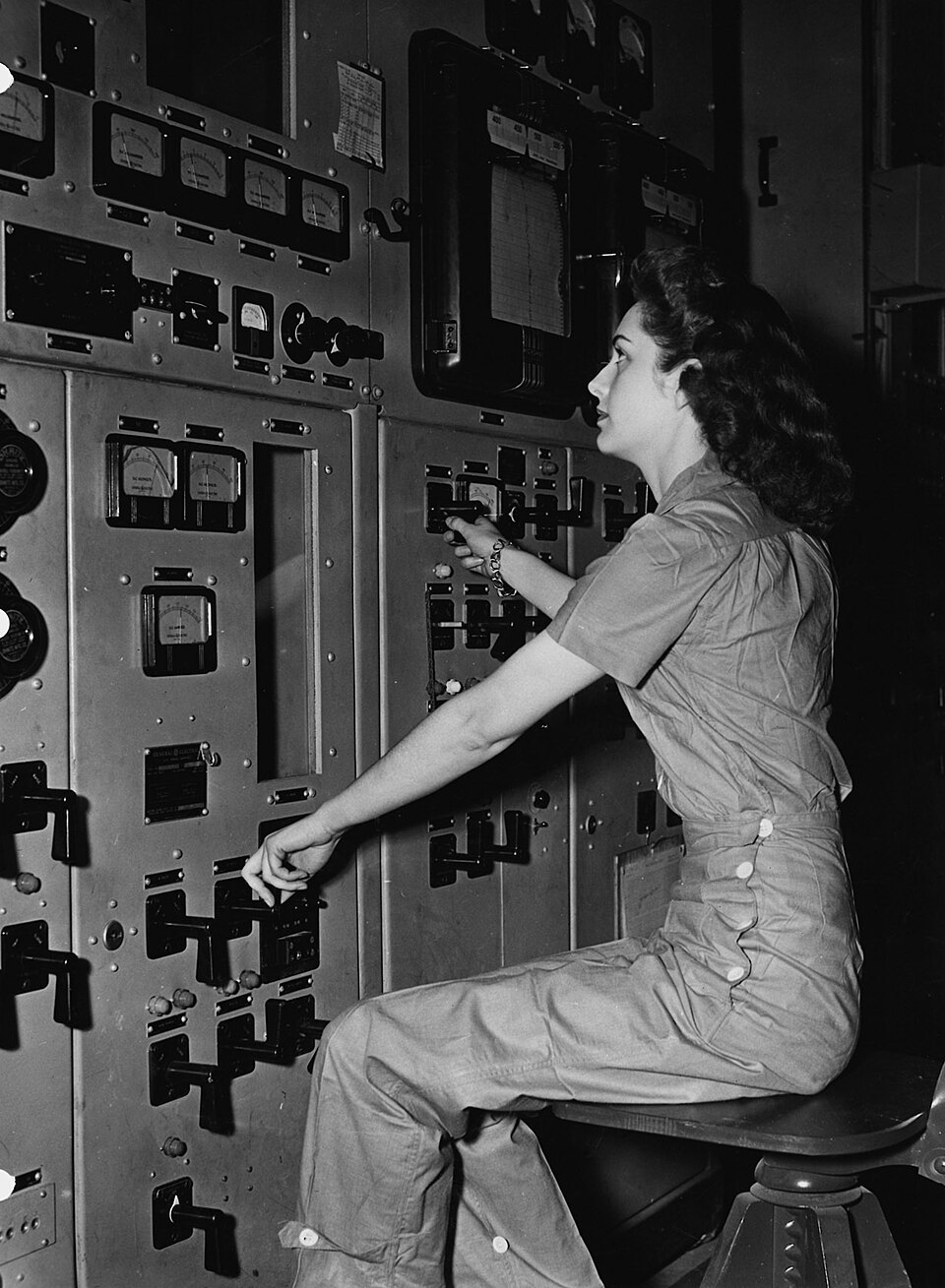
Here is one of the "Calutron Girls" at the Y-12 plant in Atomic City. Photo presumed to be Ed Westcott, from the National Archives at Atlanta
His team suggested they use local women because Tennessee women had a reputation for being detail-oriented and always showed up. The job required patience and discipline. Lawrence was skeptical that young women with no advanced education would be suitable but he believed in falsifying his own hypothesis so he proposed training a group of them and having them compete against physicists.
They did and the race was on. The young women with no degrees were just as accurate but faster (and cheaper, and less temperamental) than the physicist so they were hired. True to their reputation, they just did their job and asked no questions. They were only trained on a specific station. Their families didn't even know what their work meant.
But on this day, when news of the atomic bomb success was announced, they were told how they were part of a bigger picture - and a few days later the war ended and the Calutron Girls became known all over the country.