Before I became a mycologist, I knew Beatrix Potter as the author of some of my favourite childhood books. It was only years later that I learned she was also a serious student of fungi.
The discovery delighted me, but also surprised me. Delighted because one of my childhood heroes had suddenly become a scientific one too. Surprised because mushrooms barely feature in her stories and because I had thought there was something of a contradiction between the imagination of a children’s author and the meticulous observation required of a mycologist.
But the more I learned about Potter’s work, the more obvious it became that making sense of fungi requires both imagination and the patience to look closely.
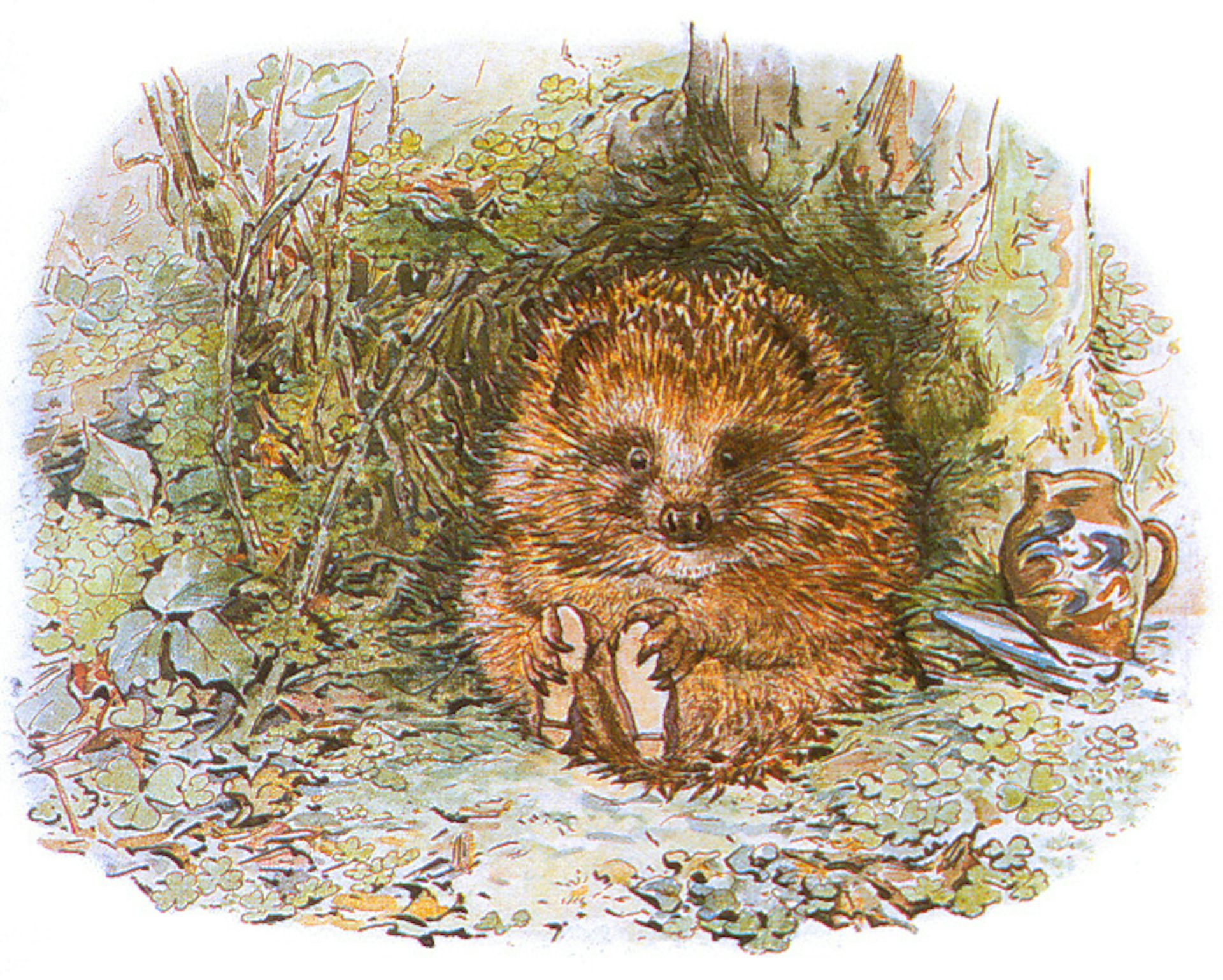
Beatrix Potter was inspired by nature to draw animal characters in her books, including Appley Dapply’s Nursery Rhymes. Beatrix Potter
This year marks 160 years since Potter’s birth. She produced more than 250 paintings and drawings of fungi at a time when these organisms were still poorly understood. Decades before they would be recognized as a kingdom of life distinct from plants, she was documenting them with remarkable accuracy. Many were inspired by specimens collected in the Lake District and Scottish Highlands, landscapes that would later shape both her conservation work and her stories.
Her illustrations remain beautiful works of art, but they also show how the best natural history drawings make us notice things we might otherwise miss.
Potter drew Aleurodiscus amorphus, a bright orange crust fungus that grows on fallen conifer branches. Using a microscope, she illustrated its spores and germination, noting that the fungus appeared to change from an orange crust into a soft, gelatinous form.
Today, mycologists think she was actually observing a second fungus, Tremella simplex, growing on the first. Potter did not recognize the relationship at the time, but she recorded evidence of fungal parasitism so accurately that modern mycologists have been able to reinterpret what she was seeing more than a century later.
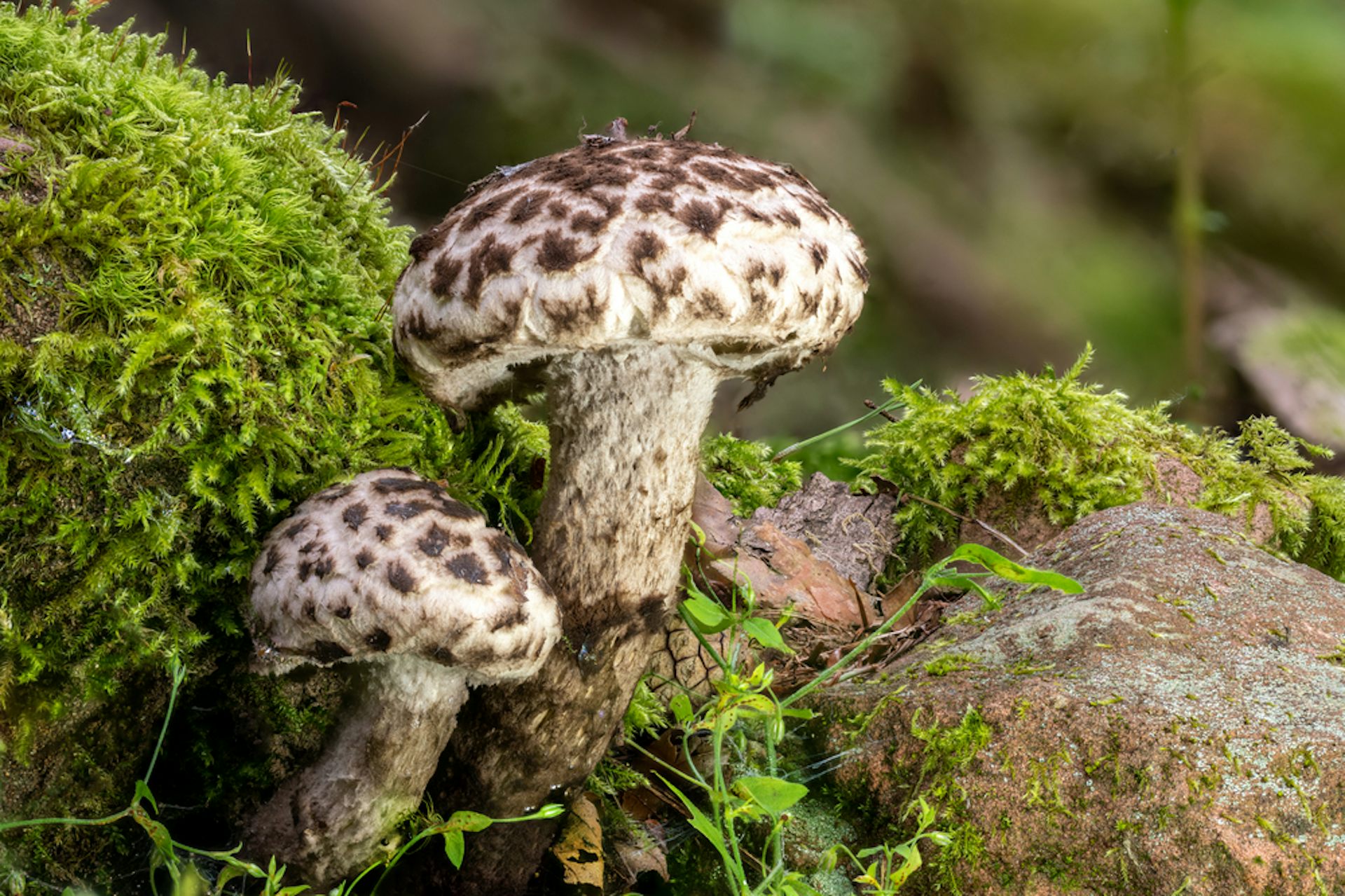
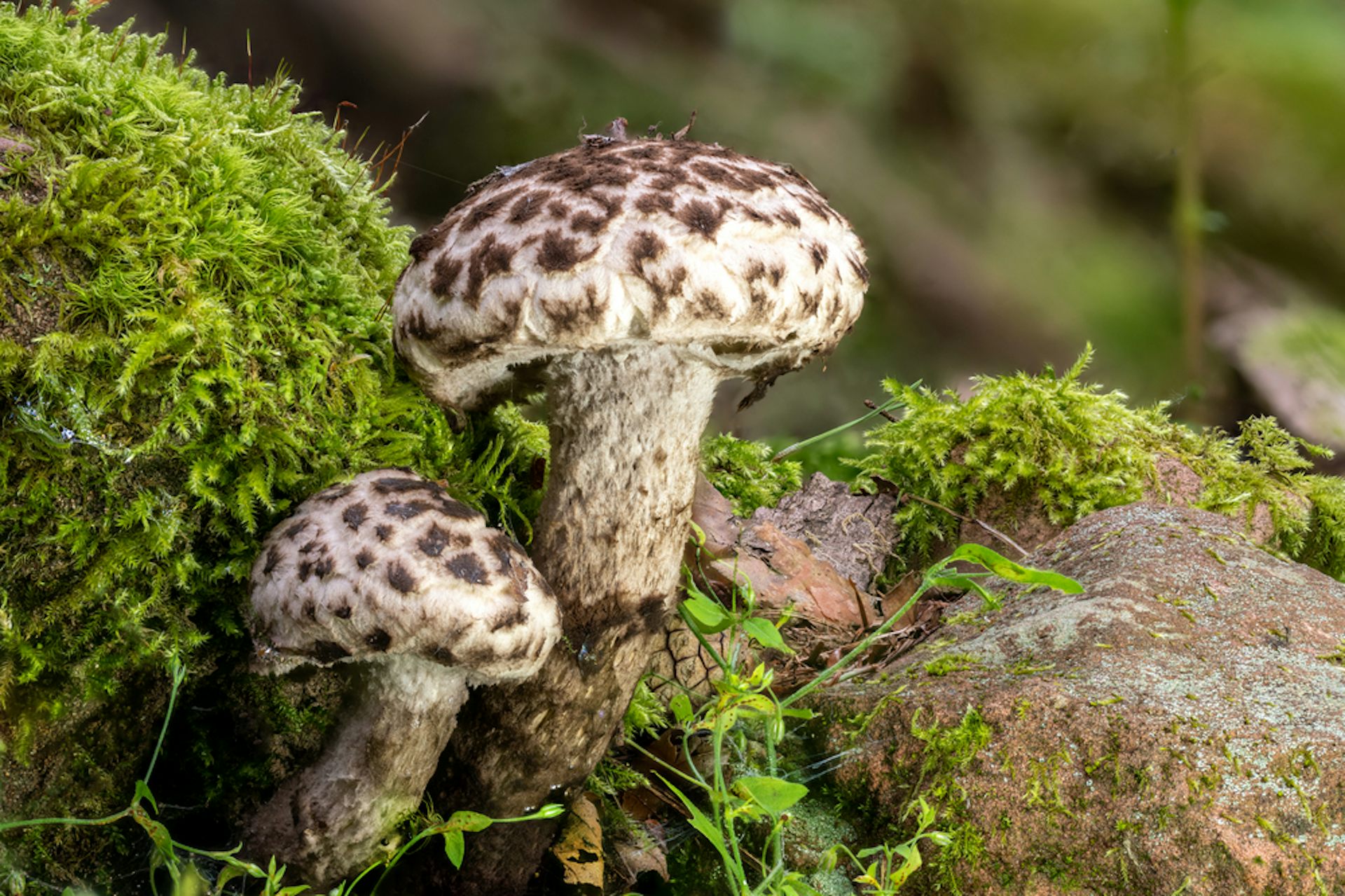
Old man of the woods (Strobilomyces strobilaceus) is a distinctive fungus covered in shaggy scales. It remains an exciting find today, but was even more so in Potter’s time. Potter found and painted it near Dunkeld in Perthshire on September 3, 1893, just six years after its first British recording.
The following day she began a letter to the five-year-old Noel Moore, the son of her friend and former governess, Annie Moore: “I don’t know what to write to you, so I shall tell you a story about four little rabbits.” Those rabbits were Flopsy, Mopsy, Cottontail and Peter. A day later, she wrote to Noel’s younger brother Eric about a frog called Mr Jeremy Fisher. Within three days, Potter had documented a rare fungus and planted the seeds of two of her most beloved stories.
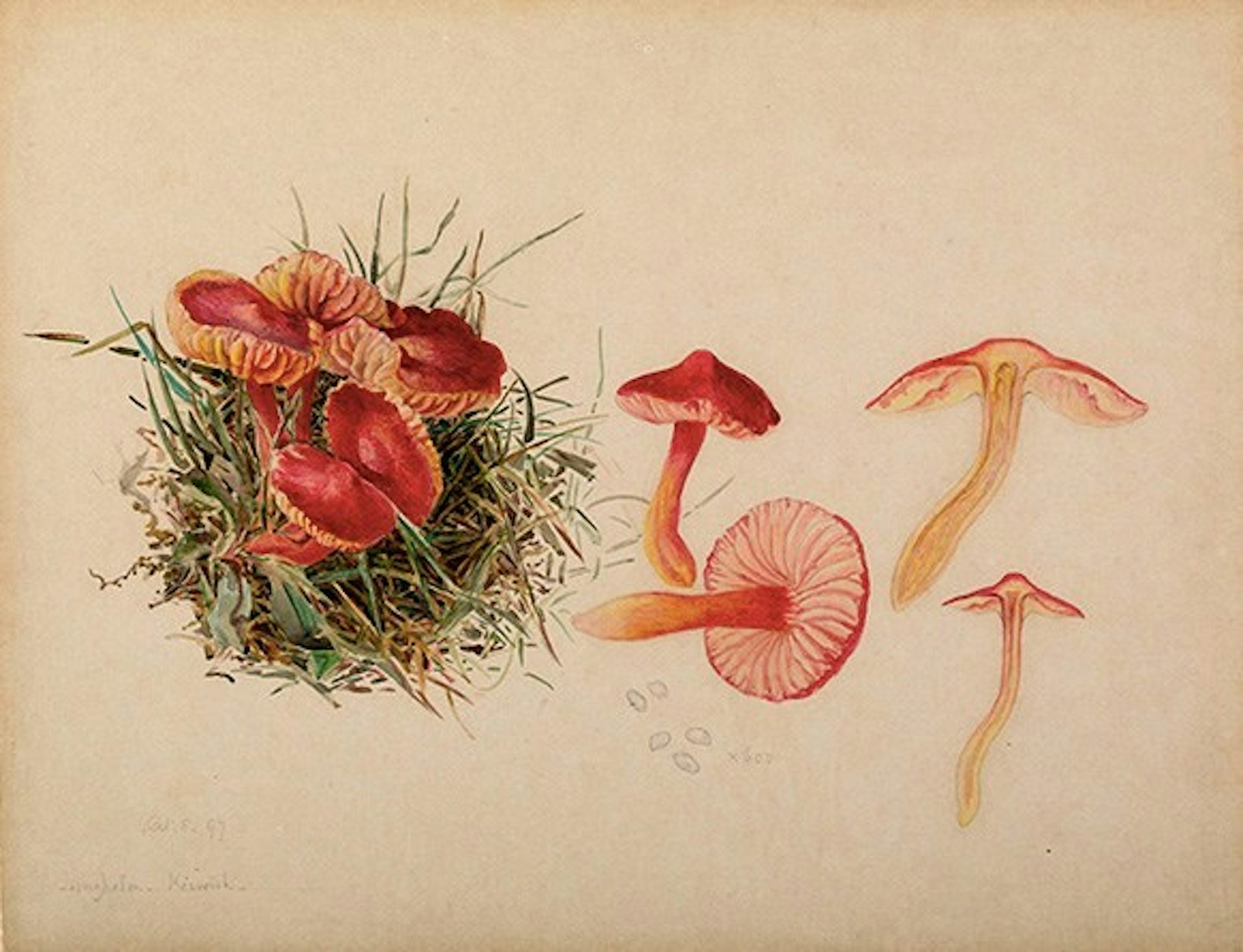
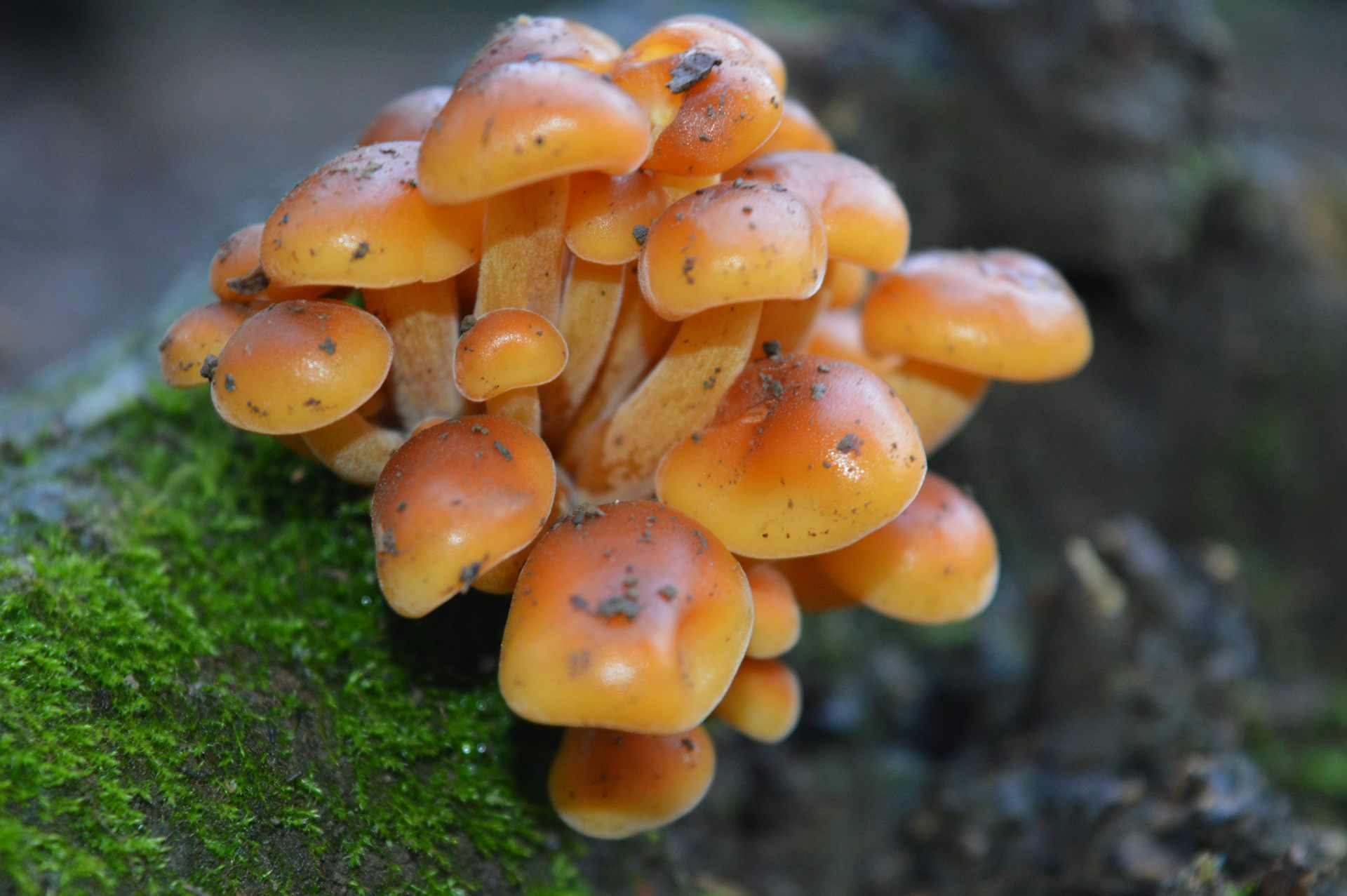
Perhaps the most important of Potter’s fungal studies was her painting of velvet shank (Flammulina velutipes). This winter fruiting mushroom appears to have been central to the experiments behind her paper On the Germination of the Spores of Agaricineae, in which she investigated how fungi reproduce.
Today these questions may seem straightforward, but in the 1890s fungal life cycles remained poorly understood. Where do mushrooms go when they disappear, and how do they return year after year? Potter was among those trying to find answers. Her paper has since been lost, but her surviving drawings and correspondence reveal a scientist tackling some of the biggest questions in mycology.
How to really notice nature
Beyond their scientific value, Potter’s paintings offer a reminder of something that feels increasingly important today. In an era of artificial intelligence, it is often easier to reach for an identification app than a field guide when confronted with an unfamiliar mushroom. Yet there is a difference between recognizing something and noticing something.
Fungal diversity remains vastly underexplored. Estimates suggest that only around 10% of fungal species have been identified, with new species still being discovered every year. Many important contributions in mycology begin when someone notices that a specimen does not quite fit expectations and asks why. It is an ability that Potter clearly possessed.
There is another reason her work feels relevant today. Potter was deeply concerned about the impact that rapid technological change was having on the natural world. She used the success of her books to buy and protect land in the Lake District, preserving landscapes she loved and knew intimately. As we embrace today’s new technologies, her example is a reminder to consider what these changes might mean for the natural world and the organisms we so often overlook, fungi among them.
I am fortunate to work as a mycologist at a time when women can build careers in science. Potter worked in an era when they could not, and it is tempting to wonder what she might have achieved had her ideas been taken more seriously. Yet we do not have to choose between the scientist and the storyteller. One hundred and sixty years after her birth, Potter remains both a beloved author and one of Britain’s most remarkable naturalists.
By Joni Wildman, PhD Candidate in Mycology, University of Bath. This article is republished from The Conversation under a Creative Commons license. Read the original article.