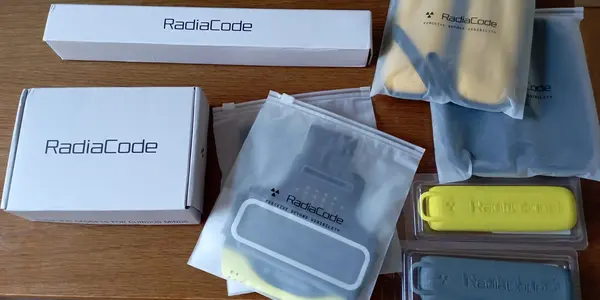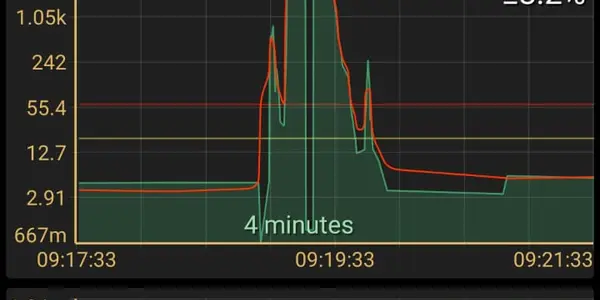
More on Radiacode 110
This is the second post reporting a few tests of the Radiacode 110 spectrometer, an extra-cool pocket dosimeter/radiation counter/spectrograph sold by RadiaCode.
This is the second post reporting a few tests of the Radiacode 110 spectrometer, an extra-cool pocket dosimeter/radiation counter/spectrograph sold by RadiaCode.

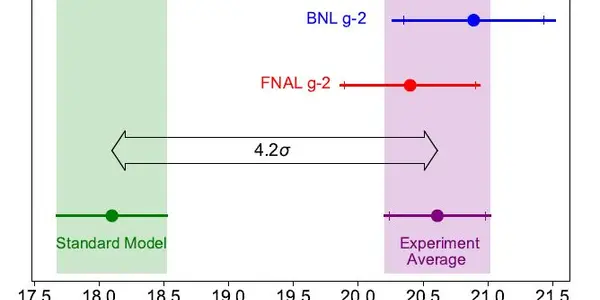
Note: this is an updated version of the article. For the original discussion of the muon anomaly, published before the release of results, please scroll down.
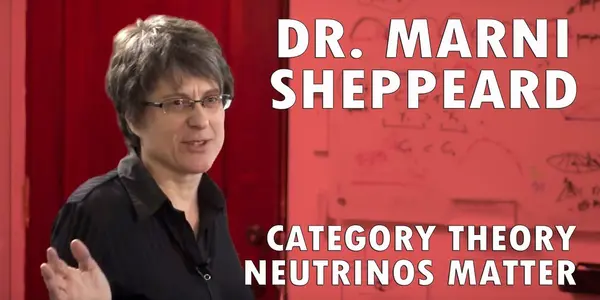
The remains of what probably was Marni Dee Sheppeard were found last week in the mountains of the west coast of New Zealand, near Otira. Although a positive identification is still pending, this does seem to mean that Marni has died while hiking in her beloved mountains, some time between mid November and December of last year.
Almost exactly 15 years ago, I was following a nice conference in the Azores island of San Miguel, where I witnessed with a bit of gloom how the Standard Model was capable of explaining to the tiniest level all observed features not only of electroweak physics observables, but also of low-energy hadronic physics in weak decays of bottom hadrons, from a number of different experiments. I especially remember a talk by Guido Martinelli, among others, who was remarking that if new physics was there, it was really well concealed.
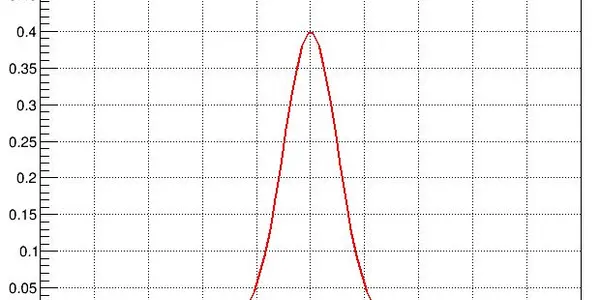
Ok, don't get me wrong here - the title of this post is not meant to mock my LHCb colleagues. I have friends there, and the experiment has been doing amazing physics in the past decade, with scores of new particles found, and tough questions posed to the data and to the Standard Model.

Last Monday at 10.30AM I eagerly queued up at the International Red Cross site of Padova, the town where I live and work, to receive a first vaccination shot against Covid-19. I duly received my dose and went back home with some relief. Little did I know that my relief would turn to anger very soon. My anger arose when I soon heard the news that the treatment with the vaccine I had been given, Astra-Zeneca, was being temporarily stopped, following the detection of a possible adverse reaction. But you should read on before you conclude that I am an idiot (as you indeed should, if the above was all there is to it).
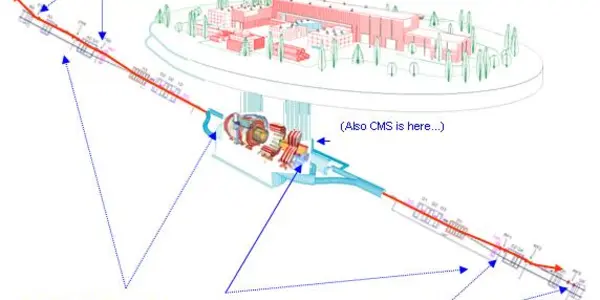
And to complement the title: "...and what the heck is that, anyway?"
The Italian "Accademia Nazionale dei Lincei" is an old institution, founded in 1603 to promote and cultivate natural science studies. It counted Galileo Galilei as a member, and it has never ceased to pursue its goal. Nowadays, it is an excellence cultural centre and is among the advisors of the President of the Republic.
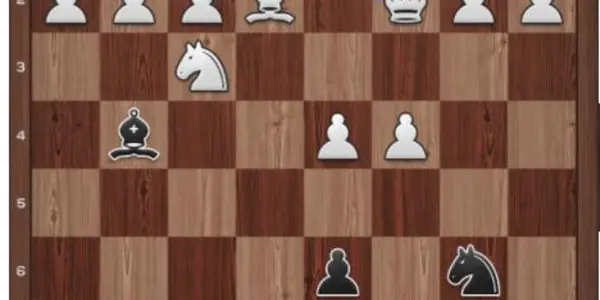
I have put this post under the "psychology" category, although it discusses a chess game, for one important reason. Chess is a game, an art, a sport - you can categorize it in many different ways. However, what characterizes chess the most, in my opinion (an educated one, as I am an amateur with a long past of chess tournaments) is the chance it gives to the players to mess up with each other's mind.
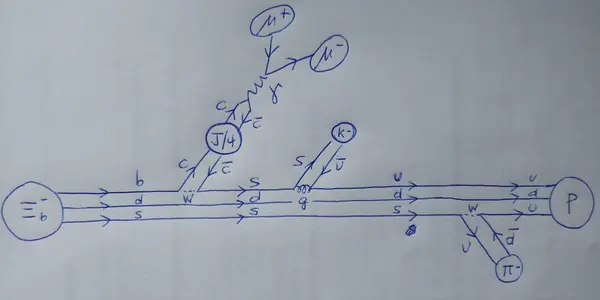
Wait, I can almost hear you say it: "Xi_b what? Let's move on, where's the sports section?" Ok, if you need to, please go. But do not underestimate excited Xi_b baryons. They are a helluva lot of fun to watch as they pop into existence and then decay in stages, as if stripping piece by piece, throwing out opaque layers of matter one by one, and finally exposing their naked beauty in full bloom.Are you getting aroused yet? we are talking about a haDR-on here, don't be mistaken, but the matter is not less sexy than the stuff you'd get on the sports section anyway. For, you know, there is simply so much we still do not know about how quarks can create excited states of nuclear matter, that one cannot ignore any new development.
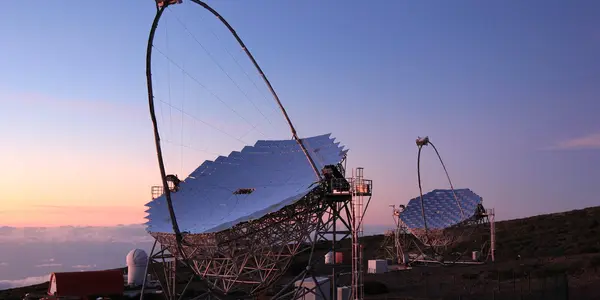
[This is the second part of a two-part article on Cosmic Messenger astrophysics. For part 1, please click here.]We can also "see" showers of secondary particles from cosmic rays thanks to the Cherenkov light they produce. Cherenkov light is emitted when charged particles travel in a medium at speeds higher than the speed of light itself! Light, in fact, slows down a little when it traverses a medium; energetic particles do not, so they create a conic "shock wave" similar to the boom of supersonic airplanes.
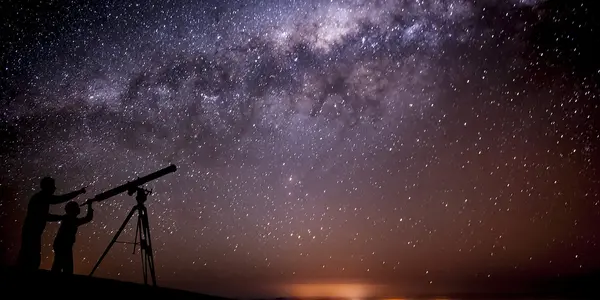
Have you ever looked up to a clear sky on a moonless night, in a place away from large cities? If you have, you will remember seeing hundreds of bright stars, and maybe even the faint collective glow of 250 billion more within the Milky Way, our own galaxy.
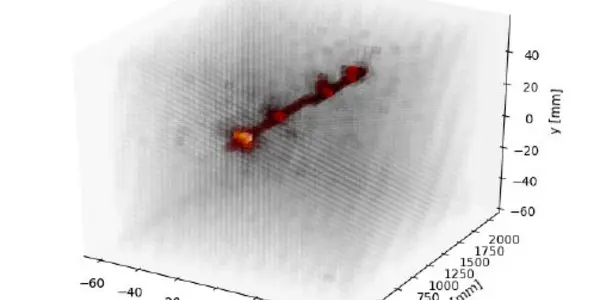
Today I wish to offer you, dear reader, the chance to contribute to scientific research in particle physics. And I claim you can do that by only leveraging basic high-school knowledge in mathematics and geometry. Let me explain what the problem is, first of all, and then I'll put you in the conditions of contributing!Muons are subnuclear particles of high interest in collider physics. I could write about muons for ages, but it would not be of relevance for our problem of today, so let's just say they interact feebly with matter, so they traverse thick layers only depositing in them small amounts of energy (mainly in the form of electromagnetic radiation).