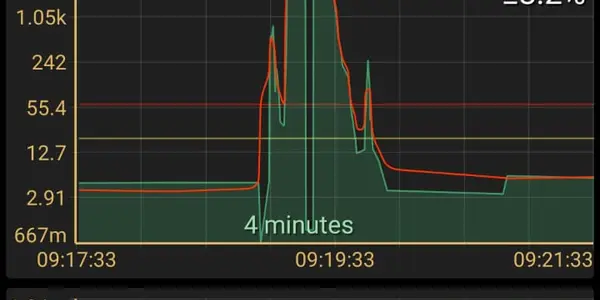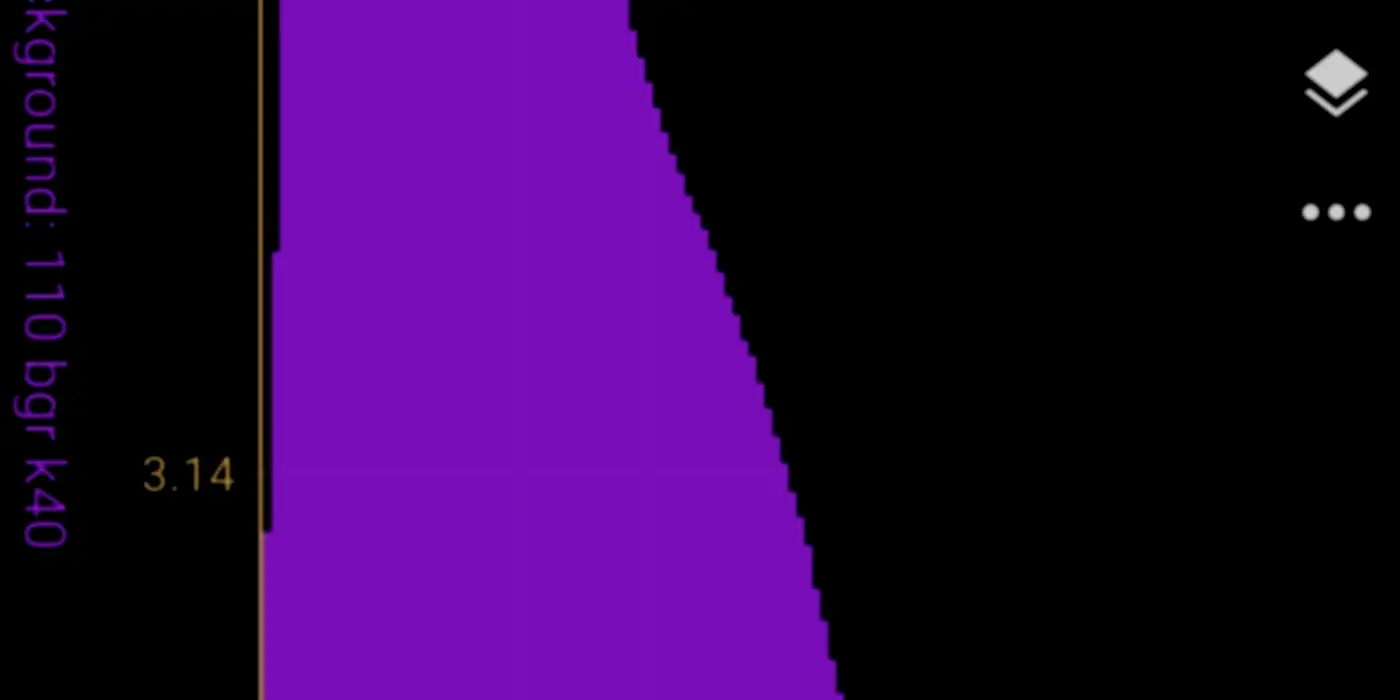
More on Radiacode 110
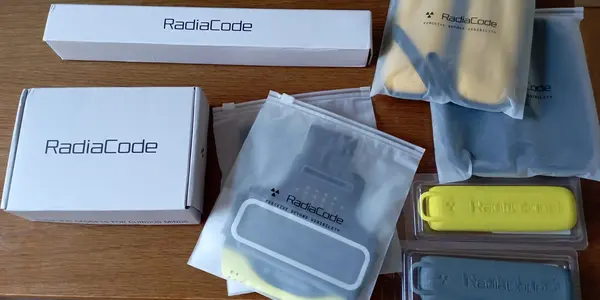
This is the second post reporting a few tests of the Radiacode 110 spectrometer, an extra-cool pocket dosimeter/radiation counter/spectrograph sold by RadiaCode.
This is the second post reporting a few tests of the Radiacode 110 spectrometer, an extra-cool pocket dosimeter/radiation counter/spectrograph sold by RadiaCode.

Eight years ago the CMS and ATLAS experiments, giant electronic eyes watching proton-proton collisions delivered in their interior by the CERN Large Hadron Collider (LHC), discovered the Higgs boson. That particle was the last piece of the subnuclear puzzle of elementary particles predicted by the so-called "Standard Model", a revered theory devised by Glashow, Salam and Weinberg in 1967 to describe electromagnetic, weak, and then strong interactions between matter bodies. The Higgs boson itself is even older, having been hypothesized by a few theorists as far back as 1964 to explain an apparent paradox with massive vector bosons, particles that had to be massless in order to not violate a symmetry principle that could in no way be waived.
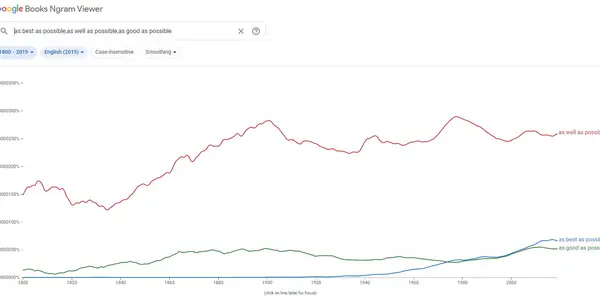
I know, Google has been around for decades by now, and nobody should be surprised to learn how easy they have made the life of information seekers, among other things (I am also an addict of their search engine, scholar, maps, trends, and gmail utilities). But my mouth still dropped today as I discovered their "ngram viewer". It happened by chance. I was trying to find out whether "as best as possible" is really a correct English phrase, or if it is just a tad slang, and the google search pointed to a page where the matter was settled by a cool graph:

Broadly speaking, radioactivity is not something one should mess with just as a pastime. Indeed, ionizing radiation has the potential of causing carcinogenic mutations in your cells DNA, as well as produce damage to cell tissue. Indeed, it makes me chuckle that until 50 years ago or so kids could play with it by purchasing stuff like that shown below...If you know what you are dealing with and take the necessary precautions, however, radiation _can_ be fun to study at home. The tools and the primary matter are not found at the corner grocery, though, so you need to have a specific interest in it before you get ready to start.

Everybody would agree that 2020 was a difficult time for all of us - the pandemic forced on us dramatic changes in our way of living, working, and interacting with one another; and let's leave alone the horrible, avoidable death toll that came with it. Notwithstanding, for some reason it was a productive year for me, and one which has potentially paved the ground for an even more productive future. Below I will summarize, if only for myself, the most important work milestones of the past year, and the ones that lay ahead in the forthcoming months. But I will also touch on a few ancillary activities and their outcome, for the record.Geometry optimization of a muon-electron scattering experiment (MUonE)
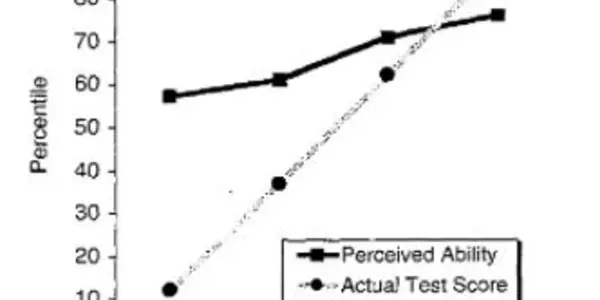
Ever had a nervous breakdown by reading Facebook threads where absolutely incompetent people entertain similar ignoramuses by providing explanations of everything from quantum physics to the way vaccines work? Or did you ever have to apply yoga techniques to avoid jumping into a bar conversation wherein some smart ass worked his audience by explaining things he clearly did not have the dimmest clue about?
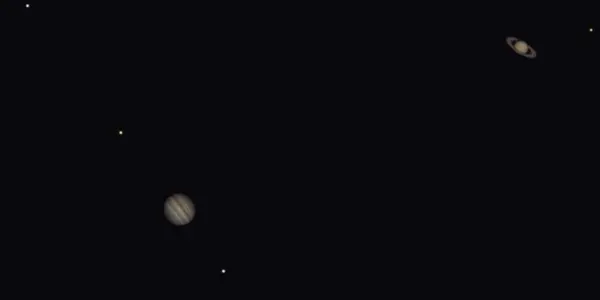
In what is a once-in-a-few-lifetimes experience, I witnessed today the conjunction of Jupiter and Saturn in the evening sky (with a crescent moon thrown in to boot). While every sixteen years or so the two planets end up angularly close because of their different orbital period (Jupiter revolves around our Sun in 11.9 years, Saturn takes 29.4 years), small differences in their orbital planes make the smallest distance they reach usually of the order a degree.
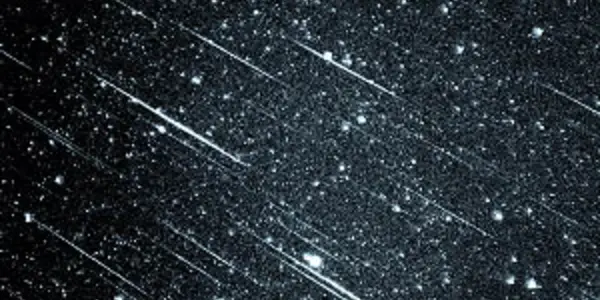
Meteor showers are a spectacular phenomenon that takes place when the Earth intersects the path along which periodic comets (or less frequently, asteroidal bodies) orbit the Sun. Comets lose debris when they get close to perihelion, but the debris does not get lost in all directions - it continues to follow the comet's path in the solar system.
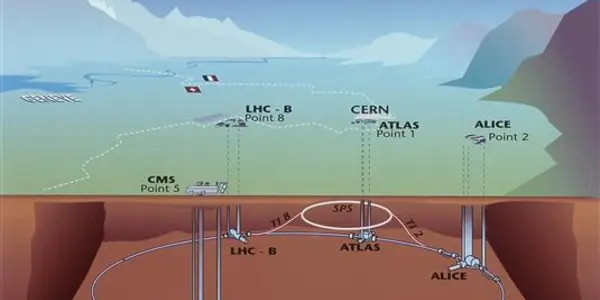
For the (likely going to be dramatically unsuccessful) series "Questions you would have liked your son asked you when you visited CERN together", I feature today a rather unconventional curiosity about LHC and neutrino physics. The source of inspiration for this is a coffee-time conversation I had long ago, I don't even remember with whom - probably a colleague. Anyway, that's the least interesting bit of the whole matter.The LHC is...
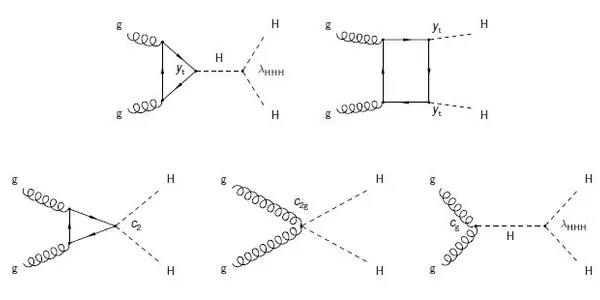
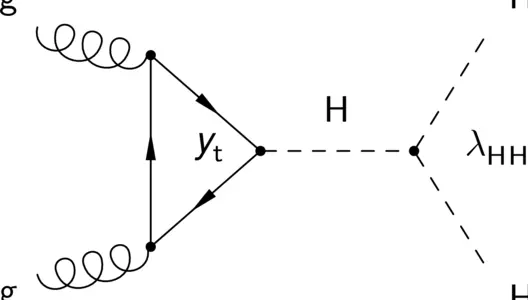
That's right - I finally hit the ground with my creativity, and my jokes are starting to use old material for my post titles. Yet producing a pair of Higgs bosons in a proton-proton collision is seriously cool indeed. The Higgs boson in fact is one of the few particles that does a trick called "self-coupling": in a sort of ermaphroditic act it is capable of giving birth to a pair of objects identical to itself.
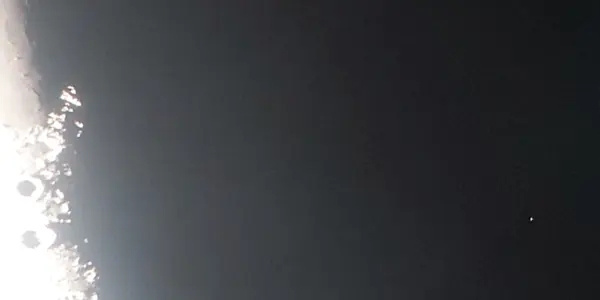
Have you ever looked at the moon through a telescope, or even a pair of binoculars? Our satellite is really beautiful to look at - it is full of detail you can get lost in: craters, mountain ridges, canyons, plateaus. And there's no clouds to obscure the view (if you are a planetary observer and you put an eye on Mars a couple of years ago you know what I mean - a dust storm that went on for weeks completely hid the surface from outside observers).
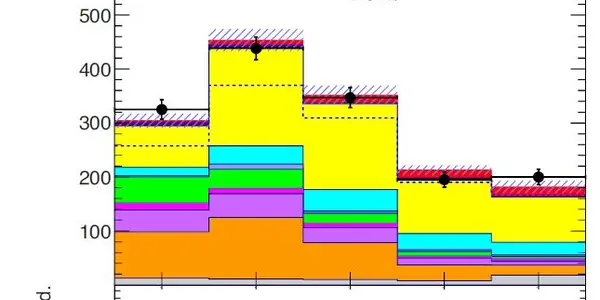
I was blissfully unaware until today of a slightly anomalous effect, which was found by the ATLAS Collaboration when performing a search for top pairs plus Higgs bosons in their Run 2 data. The anomaly I am talking about is an apparent excess of events which could be explained, as ATLAS did in this preprint article, by dialing up the cross section of some background processes producing a top pair and a W boson.
Tomorrow - that is, November 8th, at 8AM GMT - I am chairing a session titled "Artificial Intelligence for Physics Research, and Physics Research for Artificial Intelligence" at the Vth USERN Congress. The event takes place in Tehran, and is broadcast via zoom. If you are interested in the talks, of which I give some detail below, you will be able to connect through this link.The agenda of the workshop is as follows (those shown are are Tehran times):11.30-11.55 Tommaso Dorigo, “Artificial intelligence and fundamental physics research”