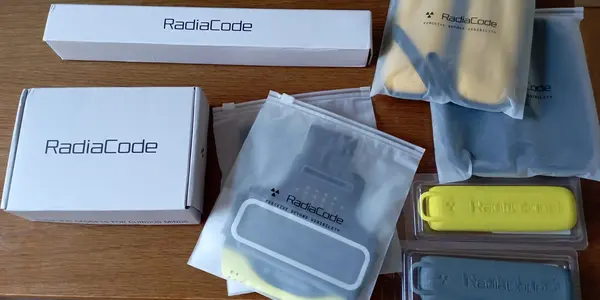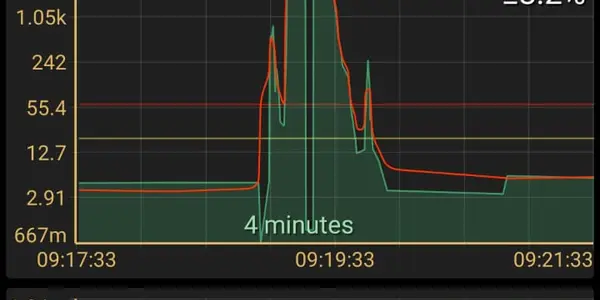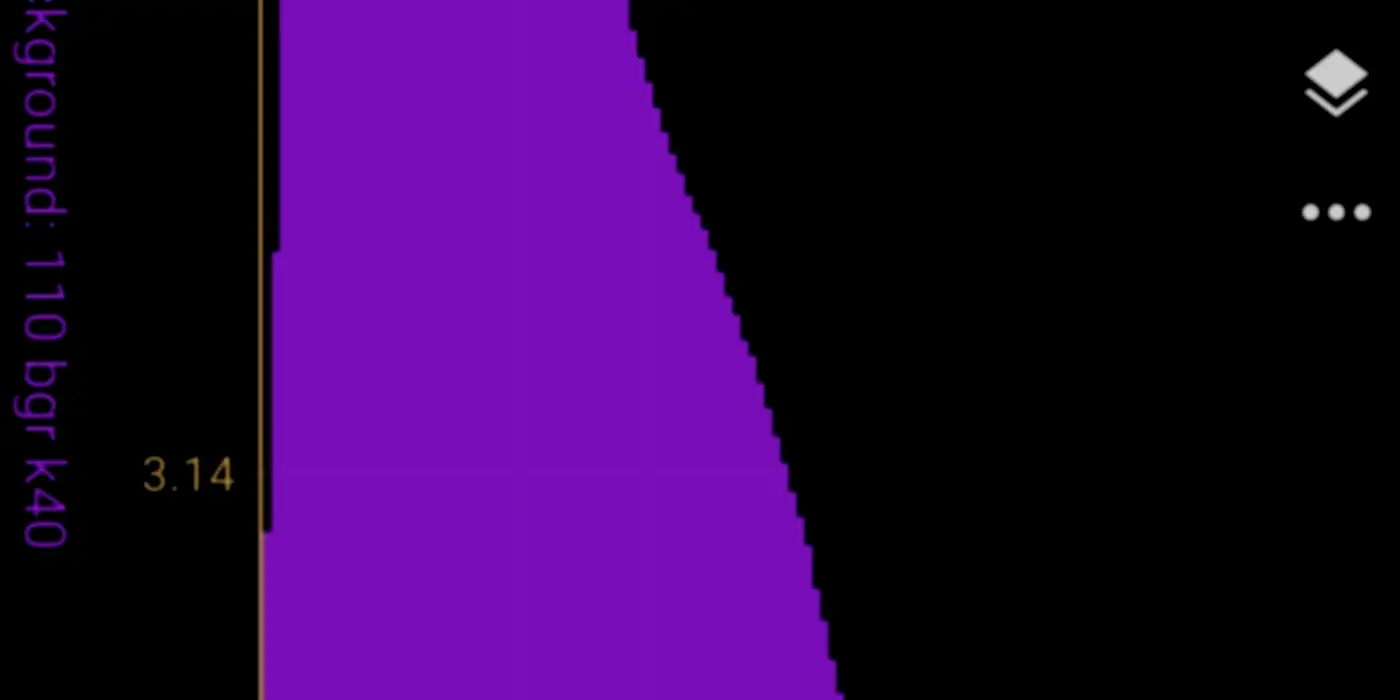
More on Radiacode 110
This is the second post reporting a few tests of the Radiacode 110 spectrometer, an extra-cool pocket dosimeter/radiation counter/spectrograph sold by RadiaCode.
This is the second post reporting a few tests of the Radiacode 110 spectrometer, an extra-cool pocket dosimeter/radiation counter/spectrograph sold by RadiaCode.


The third "Machine Learning for Jets" workshop is ongoing these days at the Kimmel centre of New York University, a nice venue overlooking Washington Square park in downtown Manhattan. I came to attend it and remain up-to-date with the most advanced new algorithms that are been used for research in collider physics, as I have done last year. The workshop is really well organized and all talks are quite interesting, so this is definitely a good time investment for me.
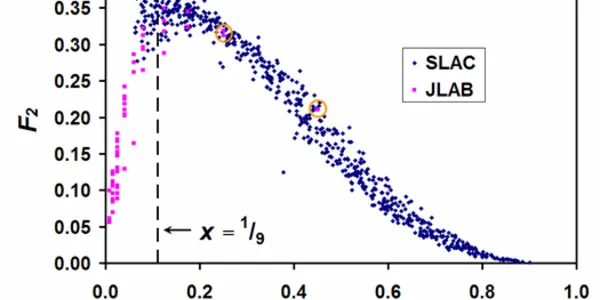
What hurts you is not what you don't know, but those mistaken assumptions which "everyone knows to be true".[The following text is courtesy Andras Kovacs - T.D.]
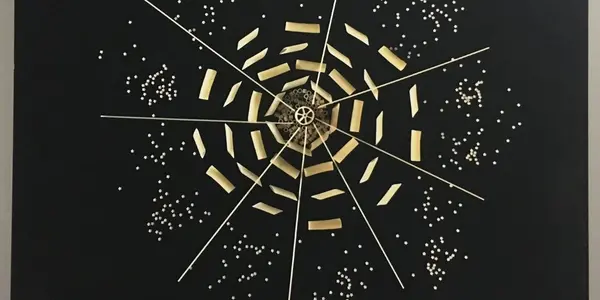
Last month the Museum of Natural History of Venice hosted, in the last room of the exhibit called "room of the cetaceans" (where a large skeleton of a whale hangs from the ceiling), an exhibit of artwork produced by high-school students from the Venice area. The event, which belongs to the "Art and Science across Italy" project, was the culminating point of a series of lectures on particle physics, on science in art, and related topics which involved the students and INFN personnel from the Padova section.
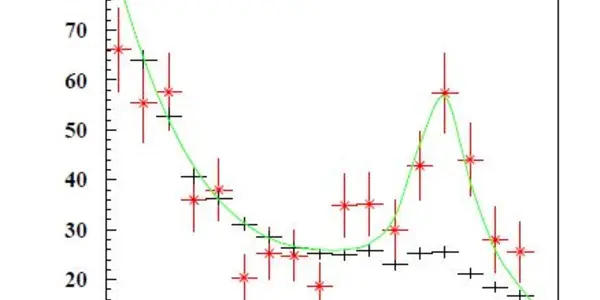
Is there a fifth force of Nature, beyond the four we know about ? This question has been around ever since it was understood that 1 - electric charges attract and repel, and influence one another, due to the action of the electromagnetic force;2 - hadronic matter is held together by the strong force;3 - quarks transmute into other quarks due to the action of the weak force (and leptons do that too);4 - bodies carrying mass feel attracted to one another, although very weakly, by the gravitational force.
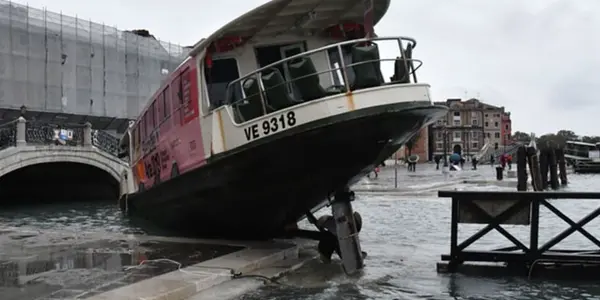
Last November 12 the city of Venice was flooded by the second-highest tide in recorded history. The sea level, pushed by 60 mph SE winds and intense rainfalls, surged to +187 cm above average, a mere 7cm less than the disastrous event of November 4 1966, which put the city and its surroundings to their knees.
[I extorted the text below from my friend and colleague Andrea Giammanco, who has been one of the driving forces behind a new scientific result at the crossroads of nuclear and particle physics - TD]A new result by the CMS collaboration [CMS-PAS-HIN-19-001, cds.cern.ch/record/2699428] demonstrates for the first time that top quarks can be produced in nucleus-nucleus collisions.
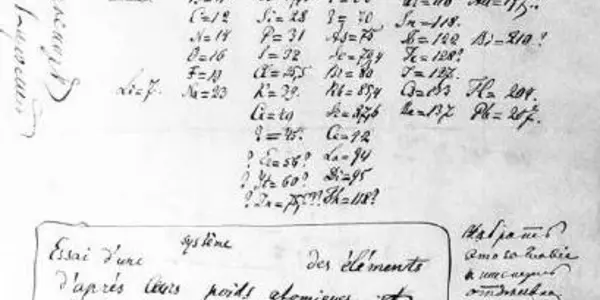
This year marks the 150th anniversary of the Periodic Table of Elements, whose inventor is Dmitrii Mendeleev, a Russian physicist who is famous for that achievement but who actually gave enormous contributions to Physics in a number of different areas of experimental research. It is also well known, but actually a misconception, that Mendeleev "invented" the correct recipe for the Russian national drink, vodka. In fact, he studied the mixture of water and alcohol in detail, discovering several of its interesting properties, but vodka was appreciated before him, as it did after.
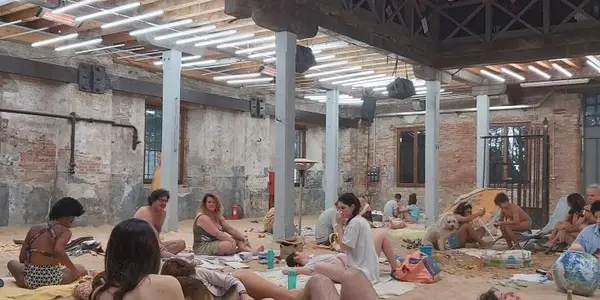
Every two years the Biennale, a contemporary art exhibition, opens in Venice from May to November. This is one of the most important events of its kind, and it attract millions of visitors to a garden that contains a few dozen different pavillions, each hosting artwork from a different country. Over fifty more such independent museums are scattered around the city center and are free entry - these are even more fun to visit than the main exposition at the "Giardini della Biennale", as they allow visitors to visit the spaces themselves, often old houses or palaces that are otherwise unaccessible.
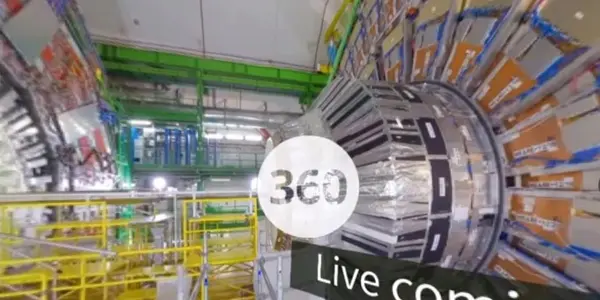
If you have a minute to spend watching something really cool, why not having a look at the completion of the installment of GEM detectors in the CMS experiment at the CERN Large Hadron Collider, ***RIGHT NOW*** (6PM CEST Oct 24th) ?
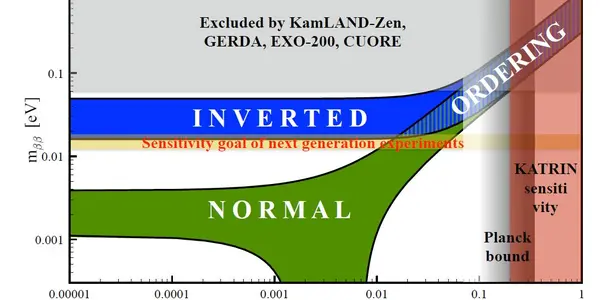
The most recent preprint in the ArXiv this evening is an APPEC report on the neutrinoless double beta decay. This is the thick result of a survey of the state of the art in the search for a very (very) rare subnuclear process, which can shed light on the nature of the mass hierarchy of neutrinos. Oh, and, APPEC stands for "AstroParticle Physics European Consortium", in case you wondered.
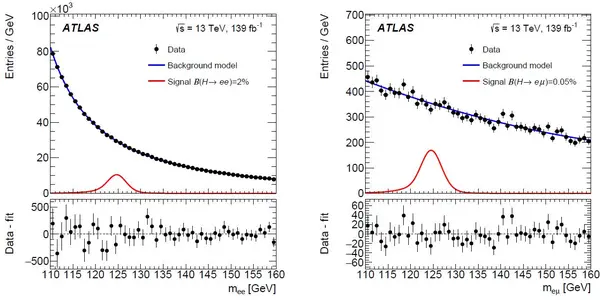
This week's Plot relates to the search of rare decays of the Higgs boson, through the analysis of the large amounts of proton-proton collision data produced by the Large Hadron Collider (LHC), CERN's marvelous 27km particle accelerator. The ATLAS collaboration, which is one of the four main scientific equipes looking at LHC collisions, produced an improved bound on the rate at which Higgs bosons may decay to electron-positron pairs (which they are expected to do, although very rarely, in the Standard Model, SM) and to electron-muon pairs (which are forbidden in the SM).
A few weeks ago, in an article where I discussed some new ideas for fundamental physics research, I briefly touched on an incident in which Paul Frampton, a well-known theoretical physicist, got involved in 2011. The paragraph in question read: