More on Radiacode 110
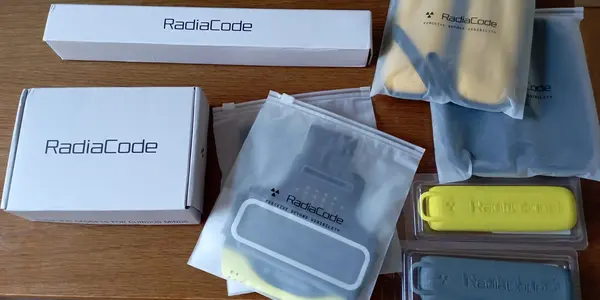
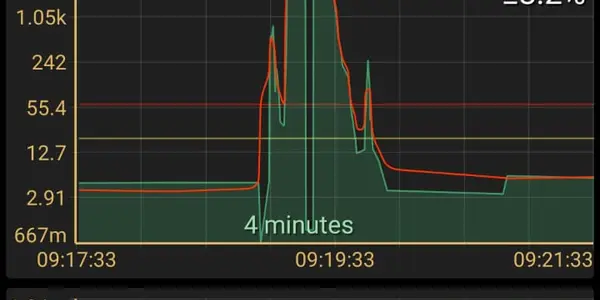
This is the second post reporting a few tests of the Radiacode 110 spectrometer, an extra-cool pocket dosimeter/radiation counter/spectrograph sold by RadiaCode.
This is the second post reporting a few tests of the Radiacode 110 spectrometer, an extra-cool pocket dosimeter/radiation counter/spectrograph sold by RadiaCode.

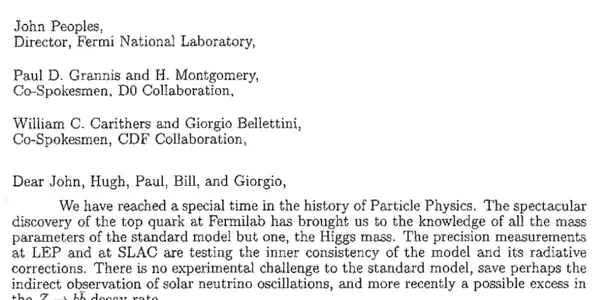
Supersymmetry (SUSY) is a possible extension of the Standard Model (SM), the currently accepted theory of subnuclear physics. SUSY has the potential to "explain away" some of the problematic features of the SM, by introducing a new symmetry between fermions (the stuff that matter is made of) and bosons (the vectors of the forces that hold matter together). Introduced in the seventies, SUSY was tested with increasingly stringent tests in higher- and higher-energy collisions at particle accelerators, but all searches for its particles have returned empty-handed. In particular, many physicists thought that the turn-on of the Large Hadron Collider (LHC) eight years ago would result in heaps of new discoveries of SUSY particles, which unfortunately weren't.
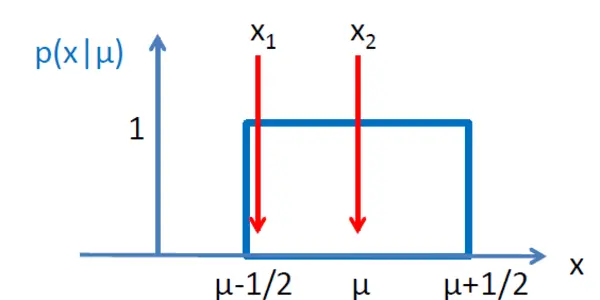
I don't remember who said it, but there's a quote I like a lot: "If you torture them long enough, the data will confess to anything". What the author meant is of course that the manipulation of experimental data and the a posteriori use of hand-picked methods, approximations, and other ad-hoc choices allows you to demonstrate anything with them, from one hypothesis to the opposite one. Statistics, in other words, is a subtle science, which must be handled with care. It is a powerful tool in the hands of people with an agenda.
It's been a while since I last discussed something personal in this column. The reason is not that I changed my mind with respect to being open and freely share my ideas, experiences, and personal life things here - I have long argued that if a blog is not personal, it is not interesting, and I stand by that assessment. Rather, the reason of my not talking much about myself and my personal / work life is the good old one: lack of time. If I have time to write an article, I try to do it on a subject which I suppose will be more interesting to the readers of this site. Hence physics, rather than life and work, takes the precedence. But it needs not be so all the time, so today I will try to go in the other direction.
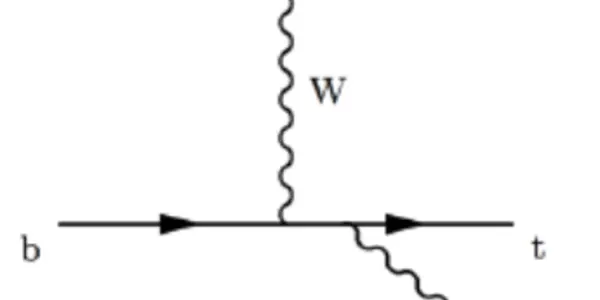
My CMS colleague Didar Dobur, who chairs the "Top Properties" working group in the experiment, presented today the first observation of the process whereby a top quark is produced in association to a Z boson. I could follow the presentation by videoconference, so I am blogging about this result in close to real time, for a change.
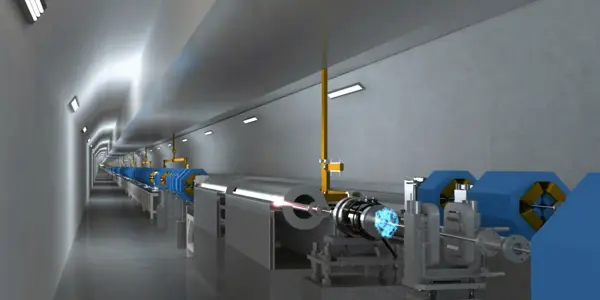
What machine will replace the Large Hadron Collider to further our knowledge of fundamental physics at the high-energy frontier, in the forthcoming decades? The question is not at all a far-fetched one: these large machines require two decades to be built - and can then typically be operated for two further decades, amassing collision data that slowly but steadily improve the precision of our estimates of the parameters of nature.
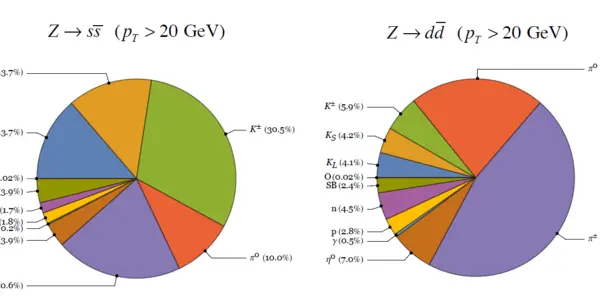
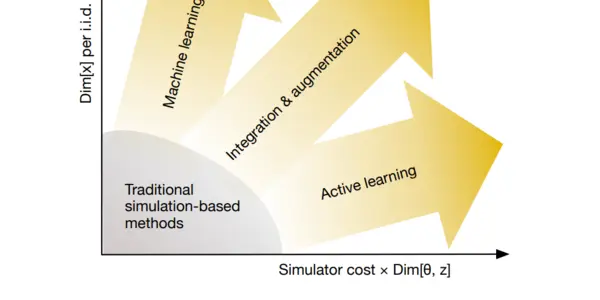
As I mentioned in yesterday's post, there is a workshop going on this week at Fermilab, where 110 attendees - mostly particle physicists, but some computer scientists are also present - discuss how to push for more effective use of machine learning tools in the extraction of information on particle collisions. Also one goal is to understand what new ideas from the world of machine learning could find ideal applications in the typical use cases of research in fundamental physics. Here I wish to mention a few interesting things that I heard at the workshop so far, in random order. I will rarely make direct reference to the talks, to encourage you to dig into the pdf files available here.
I flew to the US yesterday to get to Fermilab, where I am following a workshop titled Machine learning for jet physics". My goal of this post is to explain what this is about in general terms, such that if I have enough stamina I will give, in follow-ups to it, a few examples of the status of this interesting research activity, which encompasses particle physics and computer science and can provide spin-offs in a number of related areas of fundamental research.

What is Dark Matter (DM) and why should you care? I feel I should start this article by explaining these two things first, as we live in an age when nobody has time for long historical or context-setting introductions.

Before you brush off this post with the answer "of course", let me qualify the title. Of course anybody can become a particle physicist, although the learning curve can be steep and hard to climb up. But what I mean here is, can a student who has been trained as a statistician (through his or her bachelor and master degree) become a successful experimental particle physicist, without investing other years of his or her life in studying quantum mechanics and lots of other arcane physics topics ?
Particle physics has been historically the ground of long-standing scientific challenges between the US and Europe, especially since the birth of the CERN laboratories in 1954. And in parallel, another challenge has kept the field alive and thriving for over half a century: the one between theoretical and experimental physics.
The world of particle physics is in turmoil because of a presentation by Alessandro Strumia, an Italian phenomenologist, at CERN's "1st workshop on high energy theory and gender", and its aftermath. By now the story has been echoed by many major newscasters around the world, and discussed in public and private forums, blogs, twitter feeds. I wanted to stay away from it here, mainly because it is a sensitive issue and the situation is still evolving, but after all, why not offer to you my personal pitch on the matter? Strumia, by the way, has been an occasional commenter to this blog - you can find some of his comments signed as "AS" in threads of past articles. Usually he makes good points here, as long as physics is the subject.
Casual reader, be warned - the contents of this article, specifically the second part of it, are highly volatile, speculative stuff. But hey, that is the stuff that dreams are made of. And I have one or two good reasons to dream on.The environment