More on Radiacode 110
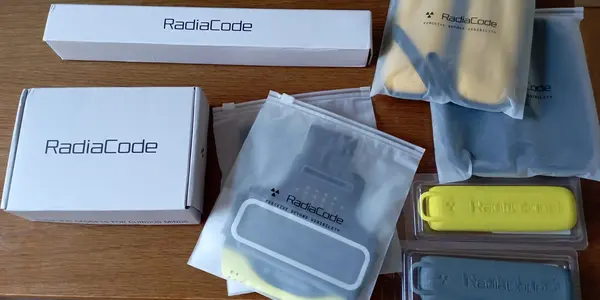
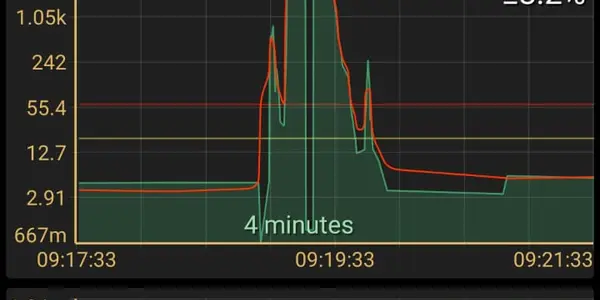
This is the second post reporting a few tests of the Radiacode 110 spectrometer, an extra-cool pocket dosimeter/radiation counter/spectrograph sold by RadiaCode.
This is the second post reporting a few tests of the Radiacode 110 spectrometer, an extra-cool pocket dosimeter/radiation counter/spectrograph sold by RadiaCode.

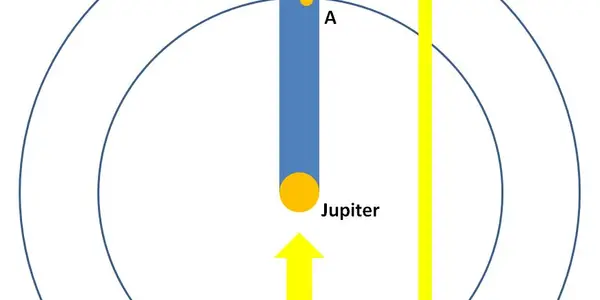
While preparing for another evening of observation of Jupiter's atmosphere with my faithful 16" dobsonian scope, I found out that the satellite Io will disappear behind the Jovian shadow tonight. This is a quite common phenomenon and not a very spectacular one, but still quite interesting to look forward to during a visual observation - the moon takes some time to fully disappear, so it is fun to follow the event.This however got me thinking. A fully eclipsed jovian moon should still be able to reflect back some light picked up from the still lit other satellites - so it should not, after all, appear completely dark. Can a calculation be made of the effect ? Of course - and it's not that difficult.
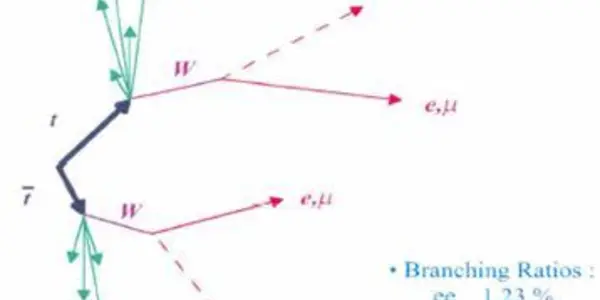
Simulation, noun:1. Imitation or enactment2. The act or process of pretending; feigning.3. An assumption or imitation of a particular appearance or form; counterfeit; sham.Well, high-energy physics is all about simulations. We have a theoretical model that predicts the outcome of the very energetic particle collisions we create in the core of our giant detectors, but we only have approximate descriptions of the inputs to the theoretical model, so we need simulations.
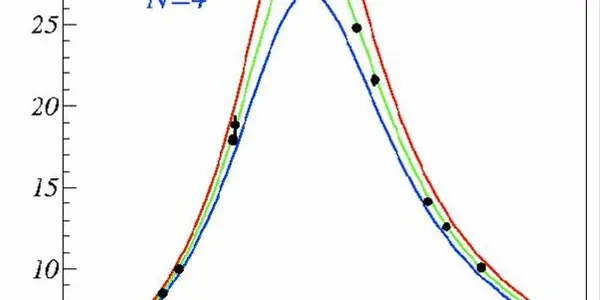
Neutrinos, the most mysterious and fascinating of all elementary particles, continue to puzzle physicists. 20 years after the experimental verification of a long-debated effect whereby the three neutrino species can "oscillate", changing their nature by turning one into the other as they propagate in vacuum and in matter, the jury is still out to decide what really is the matter with them. And a new result by the MiniBoone collaboration is stirring waters once more.
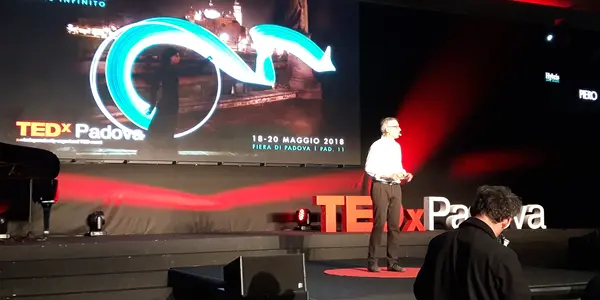
Living in Padova has its merits. I moved here since January 1st and am enjoying every bit of it. I used to live in Venice, my home town, and commute with Padova during weekdays, but a number of factors led me to decide on this move (not last the fact that I could afford to buy a spacious place close to my office in Padova, while in Venice I was confined to a rented apartment).

A paper by B. Fornal and B. Grinstein published last week in Physical Review Letters is drawing a lot of interest to one of the most well-known pieces of subnuclear physics since the days of Enrico Fermi: beta decay.
Visual observation of the planets of our solar system has always been an appealing pastime for amateur astronomers, but the digital era has taken away a little bit of glamour to this activity. Until 30 years ago you could spot with your eye more detail than was at reach of normal photography even for large telescopes, so amateur astronomers could contribute to planetary science by producing detailed drawings of the surface of Jupiter, Saturn, Venus, and Mars.
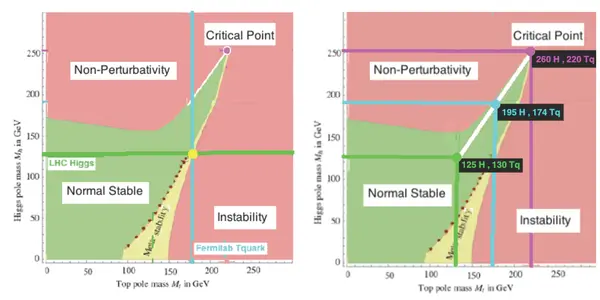
Frank D. Smith (Tony Smith for his friends) has been following this blog since the beginning. He is an independent researcher who is very interested in phenomena connected with the top quark and the Higgs boson. He has a theory of his own and he has been trying to check whether LHC data is compatible or not with it. His ideas are reported here as a guest post, as a tribute to his faithfulness to this site. Of course the views expressed below are his own, as I retain a healthy dose of scepticism to any bit of new physics apparent in today's data... Also, I will comment in the thread below to inform the reader of what my ideas are on his interpretation of public LHC results.
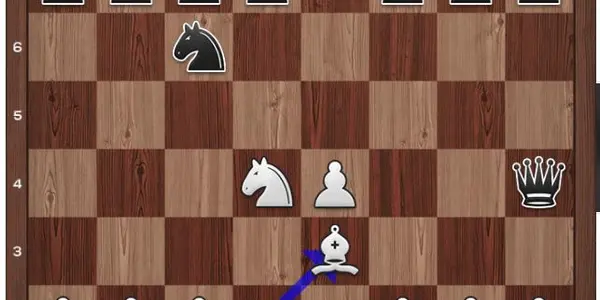
Playing chess games flawlessly is a super-human endeavour, which even machines are still having a hard time achieving. However, the occasional flawless game does arise in human practice, albeit rarely. Usually it is a grandmaster who pulls it off. The absence of sub-optimal moves can be ascertained by extensive computer analysis these days, so the quality of the moves is not in question.

Academics direly need objective, meaningful metrics to judge the impact their publications have on their field of expertise. Nowadays any regular Joe will be able to show many authored papers in their CV, and it will be impossible to objectively assess the relative merits of each and every one of them, if you are trying to rank Joe in a list of candidates for tenure, or just a research job at a University.

CERN has equipped itself with an inter-experimental working group on Machine Learning since a couple of years. Besides organizing monthly meetings and other activities fostering the dissemination of knowledge and active research on the topic, the group holds a yearly meeting at CERN where along with interesting presentations on advances and summaries, there are tutorials to teach participants the use of the fast-growing arsenal of tools that any machine-learning enthusiast these days should master.

These days the use of machine learning is exploding, as problems which can be solved more effectively with it are ubiquitous, and the construction of deep neural networks or similar advanced tools is at reach of sixth graders. So it is not surprising to see theoretical physicists joining the fun. If you think that the work of a particle theorist is too abstract to benefit from ML applications, you better think again.
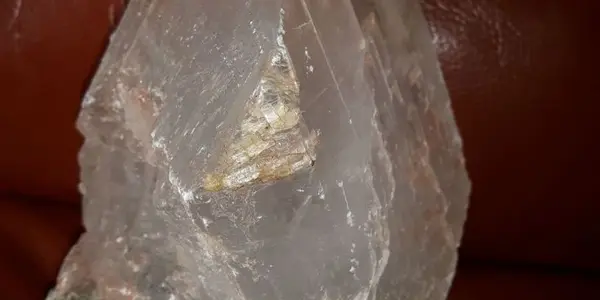
While spending a few vacation days on a trip around central Italy I made a stop in a place in the Appennini mountains, to visit some incredible caves. The caves of Frasassi were discovered in September 1971 by a few young speleologists, who had been tipped off by locals about the existence, atop a mountain near their village, of a hole in the ground, which emitted a strong draft wind - the unmistakable sign of underground hollows.