More on Radiacode 110
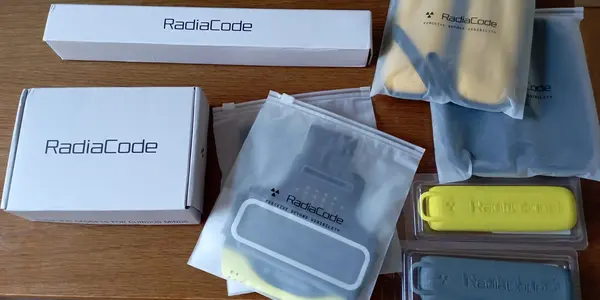
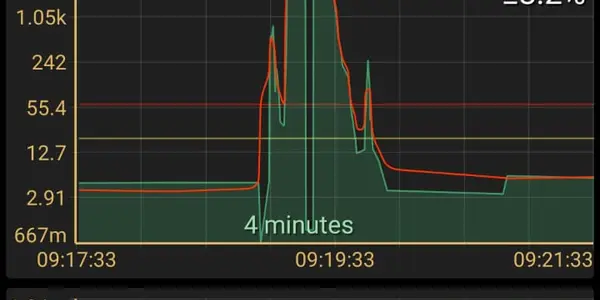
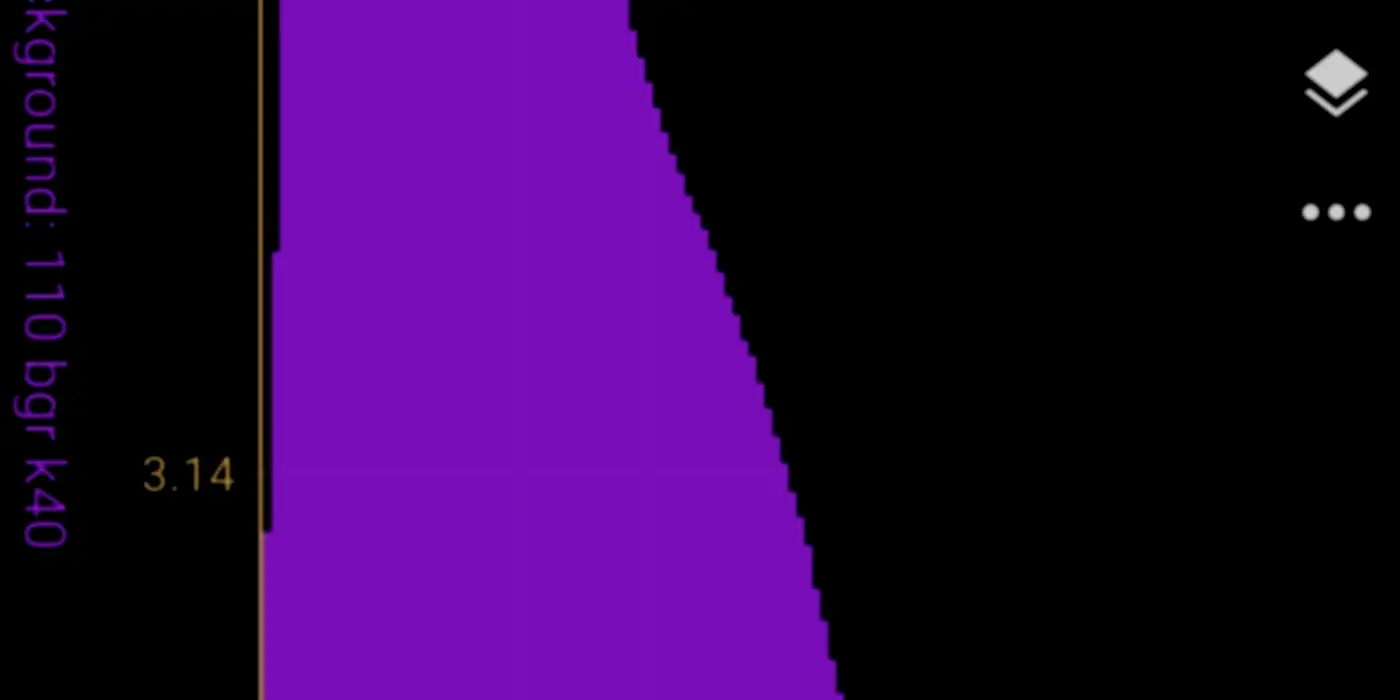
This is the second post reporting a few tests of the Radiacode 110 spectrometer, an extra-cool pocket dosimeter/radiation counter/spectrograph sold by RadiaCode.
This is the second post reporting a few tests of the Radiacode 110 spectrometer, an extra-cool pocket dosimeter/radiation counter/spectrograph sold by RadiaCode.

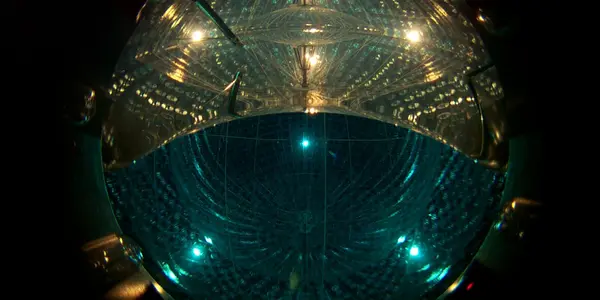
An experiment designed to study neutrinos at the Gran Sasso Laboratories in Italy is under attack by populistic media. Why should you care? Because it's a glaring example of the challenges we face in the XXI century in our attempt to foster the progress of the human race.What is a neutrino? Nothing - it's a particle as close to nothing as you can imagine. Almost massless, almost perfectly non-interacting, and yet incredibly mysterious and the key to the solution of many riddles in fundamental physics and cosmology. But it's really nothing you should worry about, or care about, if you want to lead your life oblivious of the intricacies of subnuclear physics. Which is fine of course - unless you try to use your ignorance to stop progress.
Following the appearance of Kent Staley's review of my book "Anomaly!" in the November 2017 issue of Physics Today, the online site of the magazine offers, starting today, an interview with yours truly. I think the piece is quite readable and I encourage you to give it a look. Here I only quote a couple of passages for the laziest readers.
Another quite positive review of my book "Anomaly! Collider Physics and the Quest for New Phenomena at Fermilab" (which these days is 40% off at the World Scientific site I am linking) has appeared on Physics Today this month.
Writing a serious review of research in particle physics is a refreshing job - all the things that you already knew on that specific topic once sat on a fuzzy cloud somewhere in your brain, and now find their place in a tidily organized space, with clear interdependence among them. That's what I am experiencing as I progress with a 60-pageish thing on hadron collider searches for diboson resonances, which will appear sometime next year in a very high impact factor journal.
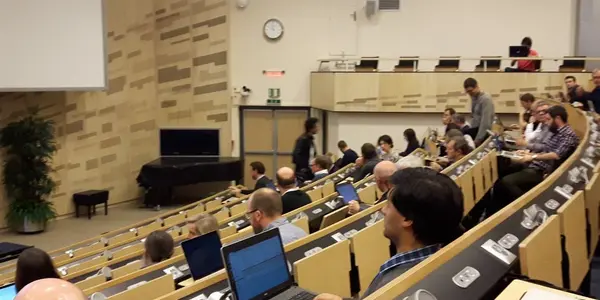
Today at CERN a workshop started on the physics of the High-Luminosity and High-Energy phases of Large Hadron Collider operations. This is a three-days event meant at preparing the ground for the decision on which, among several possible scenarios that have been pictured for the future of particle physics in Europe, will be the one on which the European Community will invest in the next few decades. The so-called "European Strategy for particle physics" will be decided in a couple of years, but getting the hard data on which to base that crucial decision is today's job. Some context
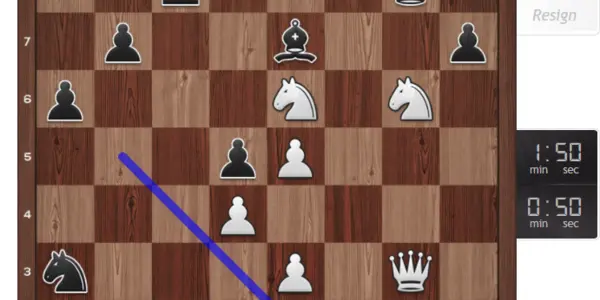
My activity as a chessplayer has seen a steady decline in the past three years, due to overwhelming work obligations. To play in chess tournaments at a decent level, you not only need to be physically fit and well trained for the occasion, but also have your mind free from other thoughts. Alas, I have been failing miserably in the second and third of the above requirements. So I have essentially retired from competitive chess, and my only connection to the chess world is through the occasional 5-minute blitz game over the internet.
Yesterday, October 20, was the international day of Statistics. I took inspiration from it to select a clip from chapter 7 of my book "Anomaly! Collider physics and the quest for new phenomena at Fermilab" which attempts to explain how physicists use the concept of statistical significance to give a quantitative meaning to their measurements of new effects. I hope you will enjoy it....----
Like many others, I listened to yesterday's (10/16/17) press release at the NSF without a special prior insight in the physics of neutron star mergers, or in the details of the measurements we can extract from the many observations that the detected event made possible. My knowledge of astrophysics is quite incomplete and piecemeal, so in some respects I could be considered a "layman" listening to a science outreach seminar. Yet, of course, as a physicist I have a good basic understanding of the processes at the heart of the radiation emissions that took place two hundred million years ago in that faint, otherwise unconspicuous galaxy in Hydra.
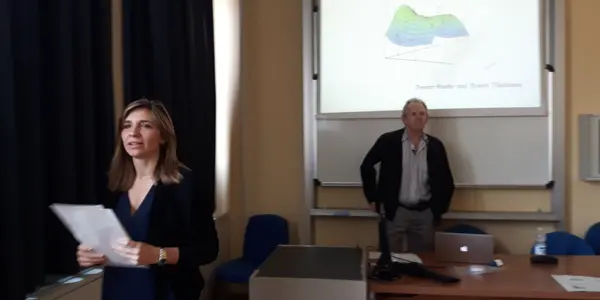
Trevor Hastie, the Stanford University guru on Statistical Learning (he coined the term together with his colleagues Tibshirani and Friedman) is in Padova this week, where he is giving a short course on his pet topic and a seminar. I am happy to report this as this was partly made possible by the European Union-funded network of which I am the project coordinator, AMVA4NewPhysics. But most of the merit is of Prof. Giovanna Menardi, PI of the Padova node of the network, who organized it... And of course I am happy because I am learning from his insightful lectures!(Above, prof. Menardi introduces the lectures).
At 10:00 AM this morning, my smartphone alerted me that in two months I will have to deliver a thorough review on the physics of boson pairs - a 50 page thing which does not yet even exist in the world of ideas. So I have better start planning carefully my time in the next 60 days, to find at least two clean weeks where I may cram in the required concentration. That will be the hard part!
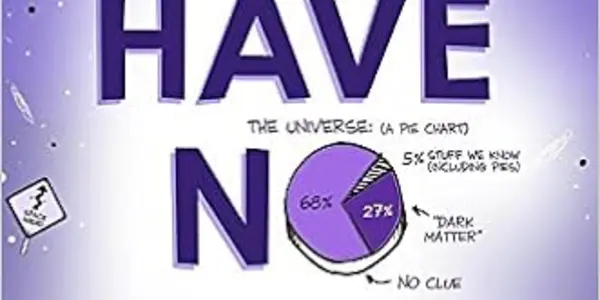
The top quark is the heaviest known matter corpuscle we consider elementary. Elementary is an overloaded word in English, so I need to explain what it means in the context of subatomic particles. If we grab a dictionary we get several possibilities, like e.g.- elementary: pertaining to or dealing with elements, rudiments, or first principles- elementary: of the nature of an ultimate constituent; uncompounded- elementary: not decomposable into elements or other primary constituents- elementary: simple
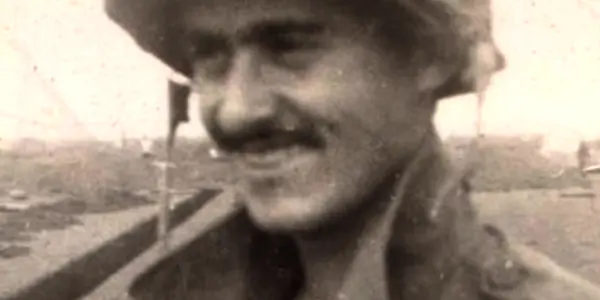
In 1952 my uncle Antonio, then 18 years old, left his family home in Venice, Italy to never return, running away from the humiliation of a failure at school. With a friend he reached the border with France and crossed it during the night, chased by border patrols and wolves. Caught by the French police Toni - that was the abbreviated name with which was known by everybody - was offered a choice: be sent back to Italy, facing three months of jail, or enrol in the French legion. Afraid of the humiliation and the consequences, he tragically chose the latter.