More on Radiacode 110
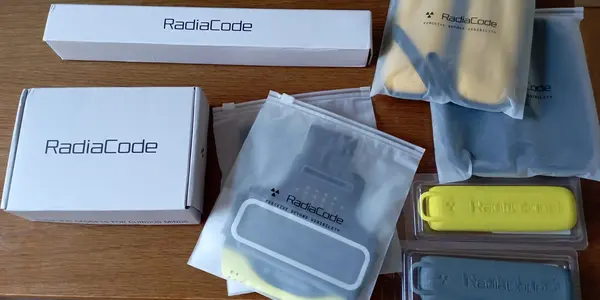
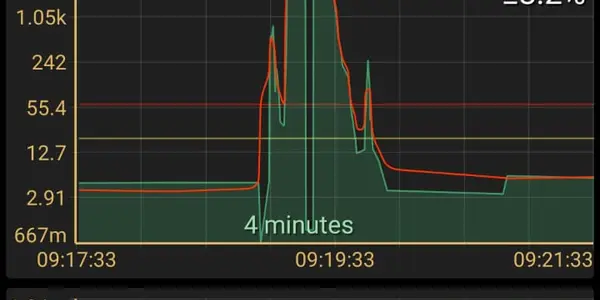
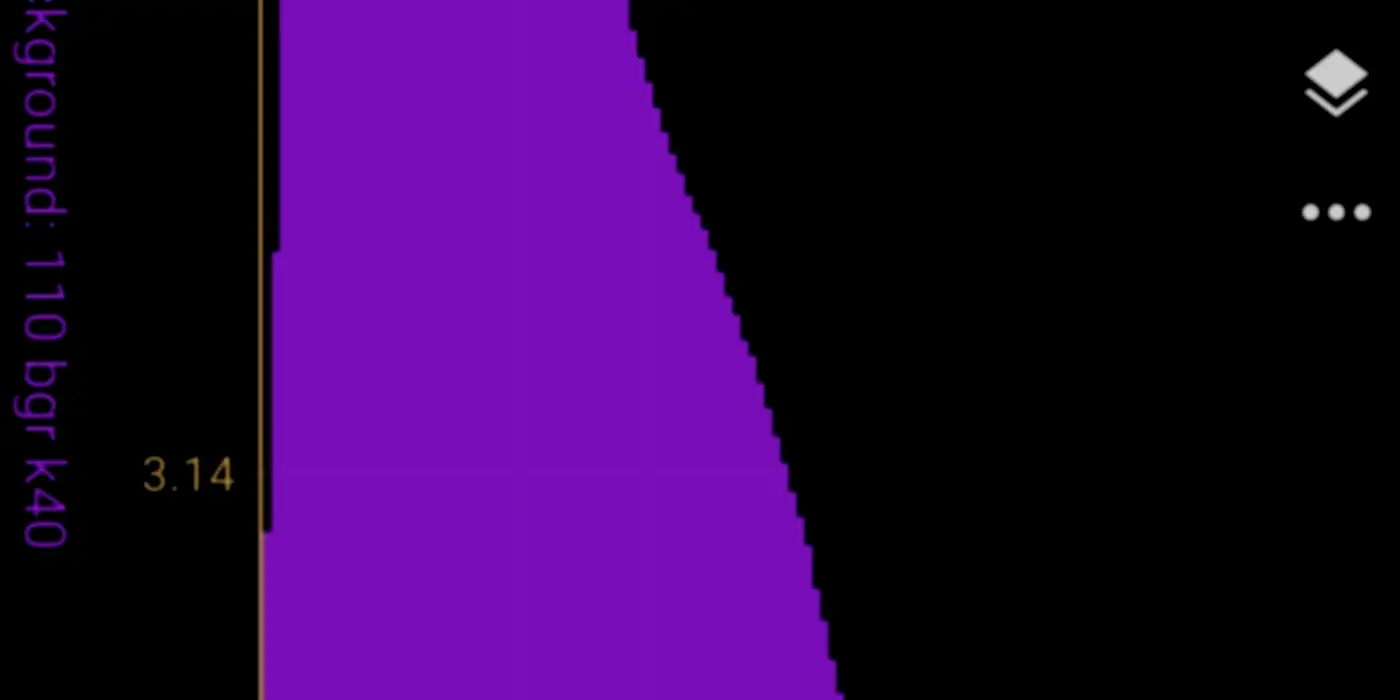
This is the second post reporting a few tests of the Radiacode 110 spectrometer, an extra-cool pocket dosimeter/radiation counter/spectrograph sold by RadiaCode.
This is the second post reporting a few tests of the Radiacode 110 spectrometer, an extra-cool pocket dosimeter/radiation counter/spectrograph sold by RadiaCode.

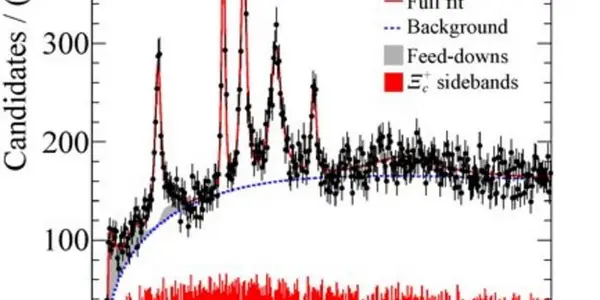
While I was busy reporting the talks at the "Neutrino Telescope" conference in Venice, LHCb released a startling new result, which I have not much time to describe in much detail this evening (it's Friday evening here in Italy and I'm going to call the week off), and yet wish to share with you as soon as possible.The spectroscopy of low- and intermediate-mass hadrons (whatever this means) is a complex topic which either enthuses particle physicists or bores them to death. There are two reasons for this dycothomic behaviour.

The first day of the Neutrino Telescopes XVII conference in Venice is over, and I would like to point you to some short summaries that I published for the conference blog, at http://neutel11.wordpress.com. Specifically:- a summary of the talk on Super-Kamiokande- a summary of the talk on SNO- a summary of the talk on KamLAND- a summary of the talk on K2K and T2K- a summary of the talk on Daya BayYou might have noticed that the above experiments were recipients of the 2016 Breakthrough prize in physics. In fact, the session was specifically focusing on these experiments for that reason.
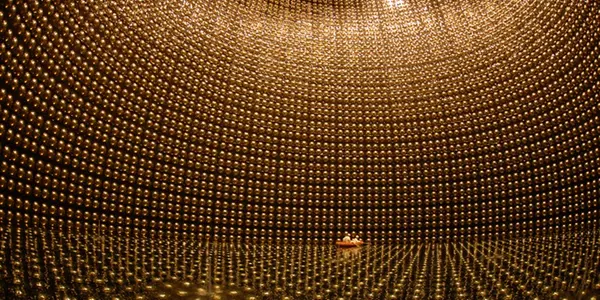
Elementary particles are mysterious and unfathomable, and it takes giant accelerators and incredibly complex devices to study them. In the last 100 years we have made great strides in the investigations of the properties of quarks, leptons, and vector bosons, but I would lie if I said we know half of what we would like to. In science, the opening of a door reveals others, closed by more complicated locks - and no clearer example of this is the investigation of subatomic matter.
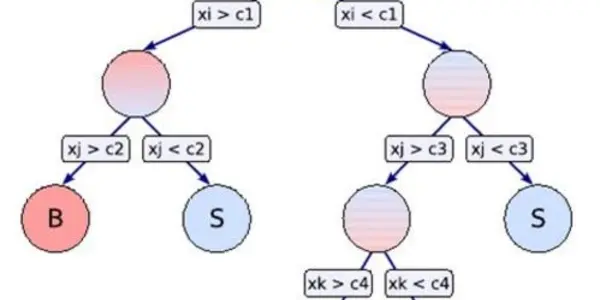
Decision trees are one of the many players in the booming field of supervised machine learning. They can be used to classify elements into two or more classes, depending on their characteristics. Their interest in particle physics applications is large, as we always need to try and decide on a statistical basis what kind of physics process originated the particle collision we see in our detector.
Today I would like to mention that my book "Anomaly! Collider Physics and the Quest for New Phenomena at Fermilab" is now available for purchase as E-Book at its World Scientific site.

I would like to use this space to advertise a couple of blogs you might be interesting to know about. Many of you who erratically read this blog may probably have already bumped into those sites, but I figured that as the readership of a site varies continuously, there is always the need to do some periodic evangelization.
Every year, at about this time, the level of activity of physicists working in experimental collaborations at high-energy colliders and elsewhere increases dramatically. We are approaching the time of "winter conferences", so called in order to distinguish them from "summer conferences". During winter conferences, which take place between mid-February and the end of March in La Thuile, Lake Louise, and other fashionable places close to ski resorts, experimentalists gather to show off their latest results. The same ritual repeats during the summer in a few more varied locations around the world.
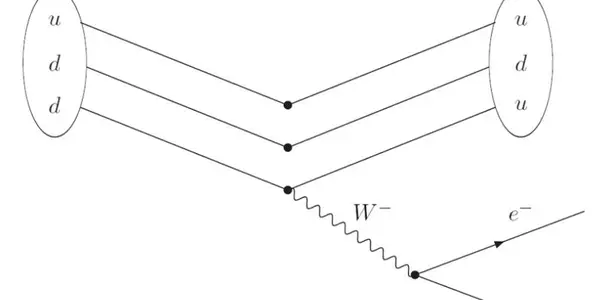
The so-called Lambda_b baryon is a well-studied particle nowadays, with several experiments having measured its main production properties and decay modes in the course of the past two decades. It is a particle made of quarks: three of them, like the proton and the neutron. Being electrically neutral, it is easily likened to the neutron, which has a quark composition "udd". In the space of quark configurations, the Lambda_b is in fact obtained by exchanging a down-type quark of the neutron with a bottom quark, getting the "udb" combination.

Lubos Motl published the other day in his crazily active blog a very nice new review of "Anomaly! Collider Physics and the Quest for New Phenomena at Fermilab". The review is authored by Tristan du Pree, a colleague of mine who has worked in CMS until very recently - now he moved to a new job and changed to ATLAS! (BTW thanks Lubos, and thanks Tristan!)I liked a lot Tristan's commentary of my work, and since he mentions with quite appreciative terms the slow-motion description of a peculiar collision I offer in my book, I figured I'd paste that below.
In a few days, students from five high schools in Venice will be lectured on particle physics, the Higgs boson, the giant detectors of today's colliders, and will be treated with pictures and graphs aimed at stimulating their artistic vein.
I am pleased to report that the book I wrote on the CDF experiment and on collider physics at the Tevatron, "Anomaly!", has been declared this week's "book of the week" by the Times Higher Education site. There, you will be able to read Tara Shears' very nice review of my book, along with some additional considerations and biographical notes on yours truly by Karen Shook.
I am spending a post-wedding vacation in the Dominican Republic these days, and very slowly the stress level in my veins and muscles is leveling down. As you might imagine, I am still reading my emails and checking things here and there, but I do that with a slightly more careless attitude. Many of the emails I skip or overlook will haunt me for the next few weeks, i am sure - but for now, I can't be bothered.