More on Radiacode 110
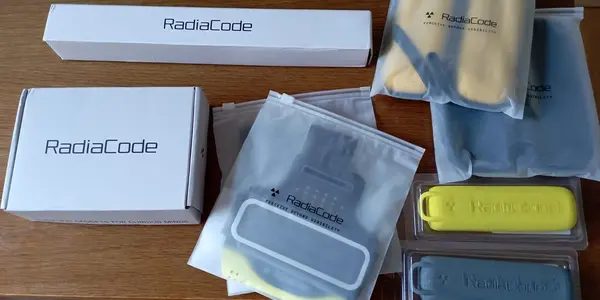
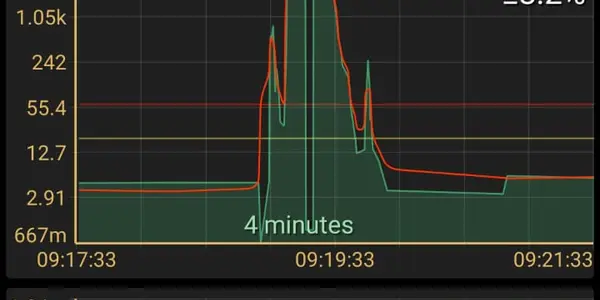
This is the second post reporting a few tests of the Radiacode 110 spectrometer, an extra-cool pocket dosimeter/radiation counter/spectrograph sold by RadiaCode.
This is the second post reporting a few tests of the Radiacode 110 spectrometer, an extra-cool pocket dosimeter/radiation counter/spectrograph sold by RadiaCode.

Back to my office in Padova, I am looking back at last week's travel around the US and the two talks I delivered at SLAC (the Stanford Linear Accelerator Center) and Northwestern University. The event at SLAC was an experimental seminar. Due to a clash with a "Higgs coupling" workshop that was taking place at the same time, it did not attract a very large audience. Still, it was quite nice to meet a few of the SLAC scientists there, and in particular to chat with Stan Brodsky, a well-known theorist whom I had met in Valparaiso earlier this year. I am also grateful to Brandon Eberly, my host at SLAC, who took care of welcoming me there and introducing the seminar.

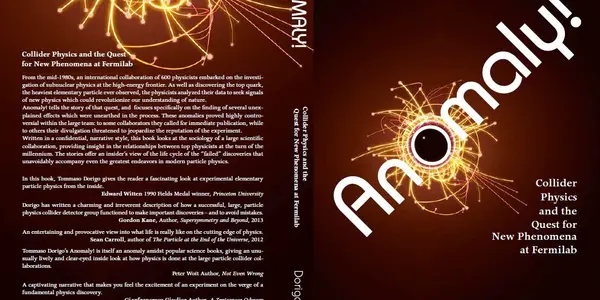
As the 23 faithful readers of this blog already know, I recently wrote a book that describes the searches for new physics undertaken by a glorious particle physics experiment, CDF, during the eighties and nineties. The book, titled "Anomaly! Collider physics and the quest for new phenomena at Fermilab", is coming out at the end of November. More information and reviews on the book can be obtained at this link. Or you can directly pre-order the book via AMazon by following the link on the right column here (you may have to scroll down) -->
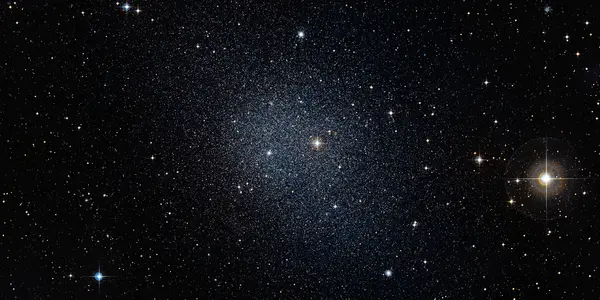
The mystery of what clumps galaxy clusters together, and provides for a quarter of the matter-energy budget of the universe, really looks like _the_ most important scientific question we face today. There is nowadays compelling evidence of the correctness of the standard cosmological model, coming from the cosmic microwave background maps provided lastly by Planck as well as from a number of other observations - of supernovae, galaxy clusters, galaxy rotation curves, etcetera. So we know there has to be dark matter out there. But what is it?

UPDATE: before you read the text below, one useful bit of information. The author of the analysis described below is not a member of ALEPH since 2004. He got access to the data as any of you could, since the ALEPH data is open access by now. There would be a lot to discuss about whether it is a good thing (I think so) or not that any regular joe or jane can take collider data and spin it his or her own way and claim new physics effects, but let's leave it for some other post. What is important is that ALEPH is not behind this publication, and members of it have tried to explain to the author that the claim was bogus. Indeed, on the matter of the source of the signal: it is clearly spurious, as the muons are collinear with the b-jets emitted in the Z decay.
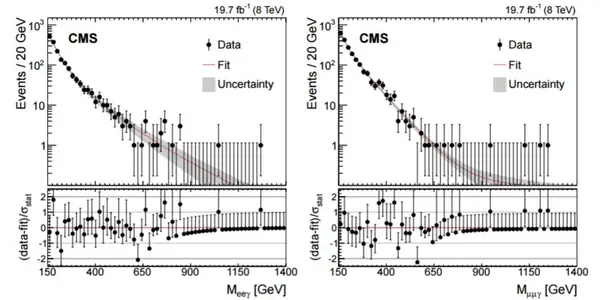
Last December, when the ATLAS and CMS experiments gave two bacl-to-back talks at the end-of-the-year LHC "physics jamboree" in the CERN main auditorium, the whole world of particle physics was confronted with a new question nobody had seen coming: could a 750 GeV particle be there, decaying a sizable fraction of the time into pairs of energetic photons? What new physics could account for it? And how to search for an experimental confirmation in other channels or phenomena?
The text below is part of a chapter of "Anomaly!" which I eventually removed from the book, mainly due to the strict page limit set by my publisher. It is a chapter that discusses the preparations for Run 2 of the Fermilab Tevatron, which started in 2002 and lasted almost 10 years. There were many, many stories connected to the construction of the CDF II detector, and it is a real pity that they did not get included in the book. So at least I can offer some of them here for your entertainment... [A disclaimer: the text has not been proofread and is in its initial, uncorrected state.]

The first few copies of my new book, “Anomaly! – Collider Physics and the Quest for New Phenomena at Fermilab” arrived this morning from Singapore.

The INFN exam for nuclear and subnuclear physicists, to select 58 new researchers, took place on September 19th (first test) and 20th (second test) in Rome. Two different locations for the two tests were set up as the number of candidates who enrolled in the selection were 720, a too large number to manage in a single location.

Yesterday I read with interest and curiosity some pages of a book on the search and discovery of the Higgs boson, which was published last March by Rizzoli (in Italian only, at least for the time being). The book, authored by physics professor and ex CMS spokesperson Guido Tonelli, is titled "La nascita imperfetta delle cose" ("The imperfect birth of things").

The 2012 measurements of the Higgs boson, performed by ATLAS and CMS on 7- and 8-TeV datasets collected during Run 1 of the LHC, were a giant triumph of fundamental physics, which conclusively showed the correctness of the theoretical explanation of electroweak symmetry breaking conceived in the 1960s.The Higgs boson signals found by the experiments were strong and coherent enough to convince physicists as well as the general public, but at the same time the few small inconsistencies unavoidably present in any data sample, driven by statistical fluctuations, were a stimulus for fantasy interpretations. Supersymmetry enthusiasts, in particular, saw the 125 GeV boson as the first found of a set of five. SUSY in fact requires the presence of at least five such states.
Next Monday, the Italian city of Rome will swarm with about 700 young physicists. They will be there to participate to a selection of 58 INFN research scientists. In previous articles (see e.g.

Particle physics conferences are a place where you can listen to many different topics - not just news about the latest precision tests of the standard model or searches for new particles at the energy frontier. If we exclude the very small, workshop-like events where people gather to focus on a very precise topic, all other events do allow for the contamination from reports of parallel fields of research. The reason is of course that there is a significant cross-fertilization between these fields.