More on Radiacode 110
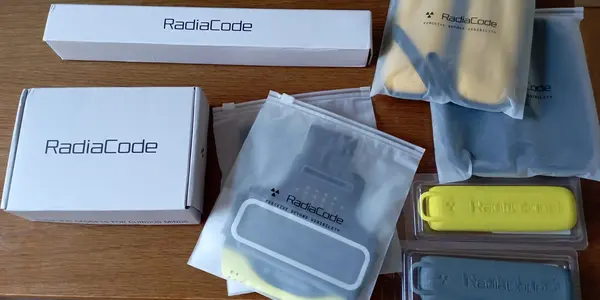
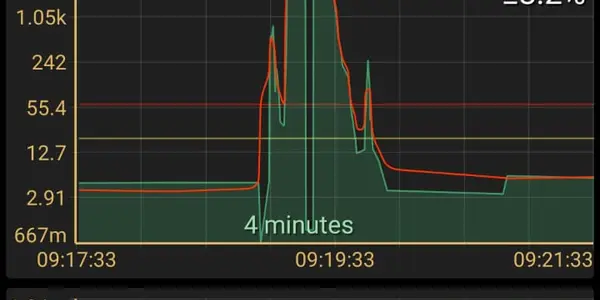
This is the second post reporting a few tests of the Radiacode 110 spectrometer, an extra-cool pocket dosimeter/radiation counter/spectrograph sold by RadiaCode.
This is the second post reporting a few tests of the Radiacode 110 spectrometer, an extra-cool pocket dosimeter/radiation counter/spectrograph sold by RadiaCode.


I have recently put a bit of order into my records of activities as a science communicator, for an application to an outreach prize. In doing so, I have been able to take a critical look at those activities, something which I would otherwise not have spent my time doing. And it is indeed an interesting look back.The bloggingOverall, I have been blogging continuously since January 4th 2005. That's 137 months! By continuously, I mean I wrote an average of a post every two days, or a total of about 2000 posts, 60% of which are actual outreach articles meant to explain physics to real outsiders. My main internet footprint is now distributed in not one, but at least six distinct web sites:
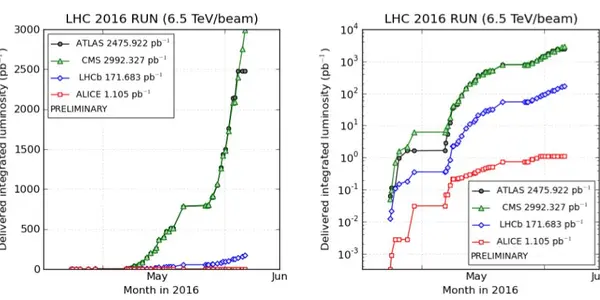
With CERN's Large Hadron Collider slowly but steadily cranking up its instantaneous luminosity, expectations are rising on the results that CMS and ATLAS will present at the 2016 summer conferences, in particular ICHEP (which will take place in Chicago at the beginning of August). The data being collected will be used to draw some conclusions on the tentative signal of a diphoton resonance, as well as on the other 3-sigma effects seen by about 0.13 % of the searches carried out on previous data this far.
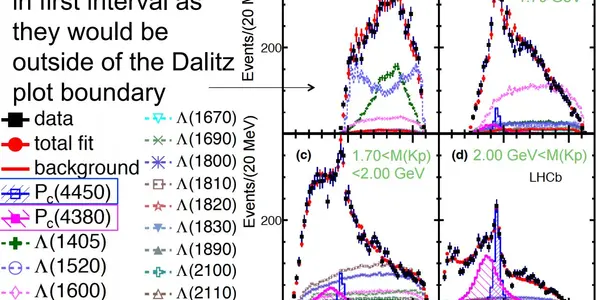
Despite the foul weather that has sieged central Europe in the past few days, with floods, destruction, even deaths, and the occasional evacuation of the auditorium where physicists discussed their recent results, the 28th edition of the "Rencontres de Blois" has taken place as usual.The conference is a periodic event where particle physics and cosmology are discussed with an attention to interdisciplinarity. It takes place in the city of Blois, in central France, a nice town on the river Loire. There, a sizable number of interesting talks have been taking place in the last few days. But one in particular has stirred the interest of particle physicists worldwide.
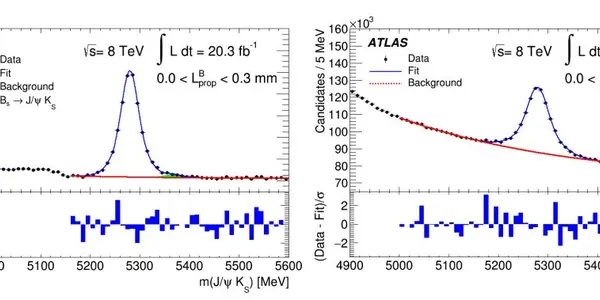
I feel one could describe the new B-physics result by ATLAS as "stalking". A very subtle detail of the behavior of neutral B mesons has been recently measured, in search of deviations from Standard Model predictions - or for a confirmation of the model. First off I should give some background on what ATLAS is, and what neutral B mesons are. ATLAS is one of the big multi-purpose experiments of the Large Hadron Collider at CERN, the machine that discovered the Higgs boson in 2012 and which is poised to search for new physics for the next two decades, studying proton-proton collisions at 13 TeV in the center of mass.

In a chapter of the book I have written, "Anomaly! - Collider physics and the quest for new phenomena at Fermilab" (available from September this year), I made an effort to explain a rather counter-intuitive mechanism at the basis of data collection in hadron colliders: the trigger prescale. I would like to have a dry run of the text here, to know if it is really too hard to understand - I still have time to tweak it if needed. So let me know if you understand the description below!The text below is maybe hard to read as it is taken off context; however, let me at least spend one
I am told by a TOTEM manager that this is public news and so it can be blogged about - so here I would like to explain a rather cunning plan that the TOTEM and the CMS collaborations have put together to enhance the possibilities of a discovery, and a better characterization, of the particle that everybody hopes is real, the 750 GeV resonance seen in photon pairs data by ATLAS and CMS in their 2015 data.

With the Large Hadron Collider now finally up and running after the unfortunate weasel incident, physicists at CERN and around the world are eager to put their hands on the new 2016 collisions data. The #MoarCollisions hashtag keeps entertaining the tweeting researchers and their followers, and everybody is anxious to finally ascertain whether the tentative signal of a new 750 GeV particle seen in diphoton decays in last year's data will reappear and confirm an epic discovery, or what.
The twelfth edition of “Quark Confinement and the Hadron Spectrum“, a particle physics conference specialized in QCD and Heavy Ion physics, will be held in Thessaloniki this year, from
While tediously compiling a list of scientific publications that chance to have my name in the authors list (I have to apply for a career advancement and apparently the committee will scrutinize the hundred-page-long lists of that kind that all candidates submit), I discovered today that I just passed the mark of 1000 published articles. This happened on February 18th 2016 with the appearance in print of a paper on dijet resonance searches by CMS. Yay! And 7 more have been added to the list since then.
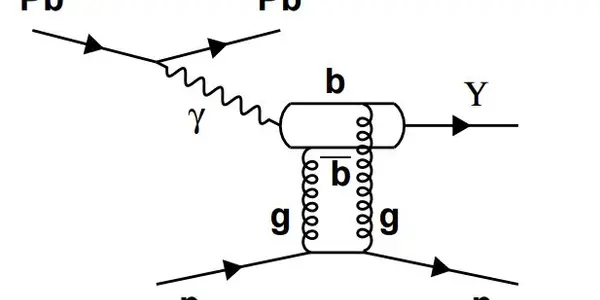
Exclusive production processes at hadron collider are something magical. You direct two trucks at 100 miles per hour one against the other head-on, and the two just gently push each other sideways, continuing their trip perfectly unaffected, but leave behind a new entity (a cart?) produced with the energy of the glancing collision.
Okay, this one was not about the umpteenth statistical fluctuation, hopelessly believed by somebody to be the start of a new era in particle physics. It's gotten too easy to place and win bets like that - the chance that the Standard Model breaks down due to some unexpected, uncalled-for resonance is so tiny that any bet against it is a safe one. And indeed I have won three bets of that kind so far (and cashed 1200 dollars and a bottle of excellent wine); plus, a fourth (for $100) is going to be payable soon.
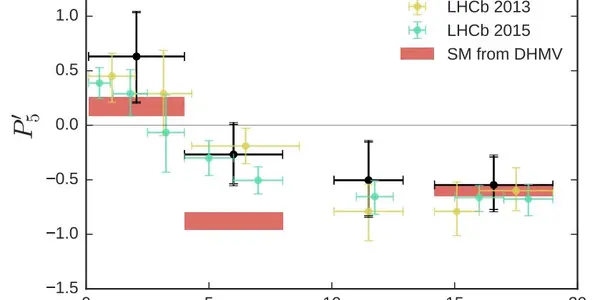
After decades of theoretical studies and experimental measurements, forty years ago particle physicists managed to construct a very successful theory, one which describes with great accuracy the dynamics of subnuclear particles. This theory is now universally known as the Standard Model of particle physics. Since then, physicists have invested enormous efforts in the attempt of breaking it down.It is not a contradiction: our understanding of the physical world progresses as we construct a progressively more refined mathematical representation of reality. Often this is done by adding more detail to an existing framework, but in some cases a complete overhaul is needed. And we appear to be in that situation with the Standard Model.