More on Radiacode 110
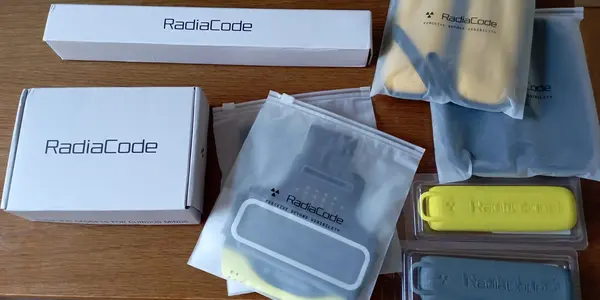
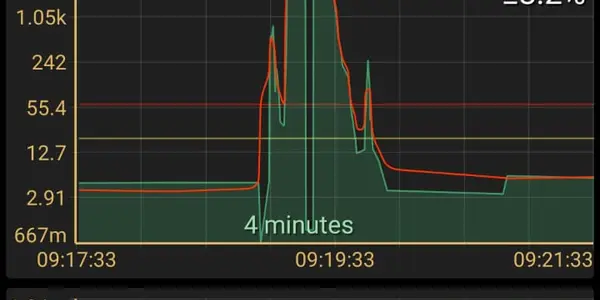
This is the second post reporting a few tests of the Radiacode 110 spectrometer, an extra-cool pocket dosimeter/radiation counter/spectrograph sold by RadiaCode.
This is the second post reporting a few tests of the Radiacode 110 spectrometer, an extra-cool pocket dosimeter/radiation counter/spectrograph sold by RadiaCode.


As explained in the previous installment of this series, these questions are a warm-up for my younger colleagues, who will in two months have to pass a tough exam to become INFN researchers.A disclaimer is useful here. Here it is:
As explained in the previous installment of this series, these questions are a warm-up for my younger colleagues, who will in two months have to pass a tough exam to become INFN researchers.By the way, when I wrote the first question yesterday I thought I would not need to explain it in detail, but it just occurred to me that a disclaimer would be useful. Here it is:
Today I wish to start a series of posts that are supposed to help my younger colleagues who will, in two months from now, compete for a position as INFN research scientists. The INFN has opened 73 new positions and the selection includes two written exams besides an evaluation of titles and an oral colloquium. The rules also say that the candidates will have to pass the written exams with a score of at least 140/200 on each, in order to access the oral colloquium. Of course, no information is given on how the tests will be graded, so 140 over 200 does not really mean much at this point.
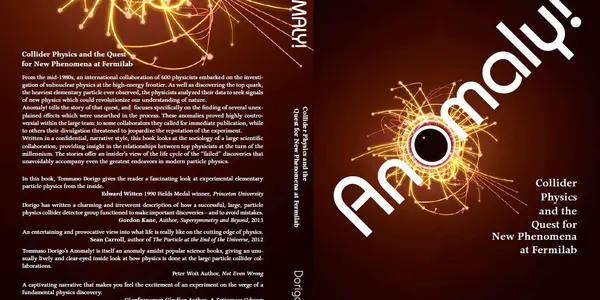
My book "Anomaly! - Collider Physics and the Quest for New Phenomena at Fermilab" is slowly getting its finishing touches, as the second round of proofreading draws to a close. The book is scheduled to appear in bookstores on November 5th, and it makes sense to start planning some events for its presentation.One such event will take place at the CERN library on November 29th, at 4PM. I am told that CERN already ordered the book to sell it in its bookshop, so it will be good to present the work to the community there - after all, the book is for everybody but I expect that it can be of higher interest to scientists and people in some way connected to research in High-Energy physics.
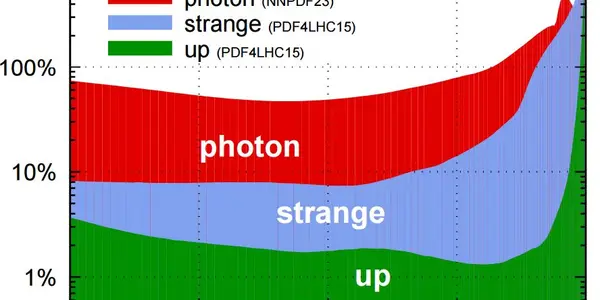
Gavin Salam's talk at the "Altarelli Memorial" session of the ICNFP 2016 conference, which is presently taking place in Kolimbari (Crete), was very interesting and I wish to report here about it.
I am spending a week in Kolimbari, a nice seaside place in western Crete. Here the fifth International Conference on New Frontiers in Physics is being held in the Orthodox Academy of Crete. The conference gathers together high-energy experimentalists and theorists, nuclear physicists, neutrino physicists, and also other specialists. As I am not talking this year (I am here because I am co-organizing a mini-workshop on Higgs physics), I thought it was a good idea to ask the organizers if they needed help, and I got the task of organizing the poster selection committee. 26 posters have been presented, and will be on display tomorrow evening. We will have to select the best ones, whose authors will win a prize.

Final results of searches for particles decaying to photon pairs in 2015 data keep hopes alive for imminent ground-breaking discovery On December 15th last year, as the physics coordinators of the ATLAS and CMS collaborations showcased the results of their new searches, particle physicists around the world held their breath. Both experiments showed preliminary results from the analysis of LHC data acquired during 2015 at 13 TeV. That unprecedented energy made the potential for new discoveries high.
Today, while Americans set up their barbecues and prepare to celebrate their Independence, particle physicists around the world have a different reason to celebrate. Four years ago today is when the Higgs boson got officially declared a confirmed new particle in the subatomic zoo.
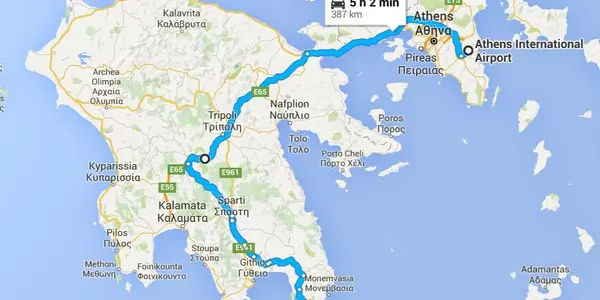
As my blogging here has been erratic in the last couple of weeks, I feel I need to explain to my 23 readers (what citation is this BTW?) what I have been up to. So this post does not contain any physics, and is rather about how a physicist fights for some space and time for himself and his family, decoupled from his daily occupations, and hopefully lowers his stress level. I left my home in Venice on June 15th at four in the morning with my fiancee and my two kids (Filippo, 17 and Ilaria, 13 years old), headed to Elafonisos, a tiny island in southern Greece. Our Volotea flight was due to leave the Marco Polo airport at 6.30AM -an early and cheap flight I had picked to ensure we would get to destination at a reasonable time.

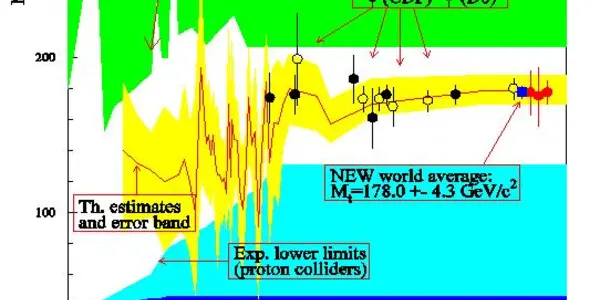
The top quark is the heaviest known subatomic particle we may call "elementary", i.e. one we describe as a point-like object; it weighs a full 66% more than the Higgs boson itself! Top was discovered in 1995 by the CDF and DZERO collaborations at the Fermilab Tevatron collider, which produced collisions between protons and antiprotons at an energy 7 times smaller than that of the proton-proton collisions now provided by the Large Hadron Collider at CERN.
I am happy to announce here that a session on "Statistical Methods for Physics Analysis in the XXI Century" will take place at the "Quark Confinement and the Hadron Spectrum" conference, which will be held in Thessaloniki on August 28th to September 3rd this year. I have already mentioned this a few weeks ago, but now I can release a tentative schedule of the two afternoons devoted to the topic.
I am spending some time today at the Altarelli Memorial Symposium, which is taking place at the main auditorium at CERN. The recently deceased Guido Altarelli was one of the leading theorists who brought us to the height of our understanding of the Standard Model of particle physics, and it is heart-warming to see so many colleagues young and old here today - Guido was a teacher for all of us.