More on Radiacode 110
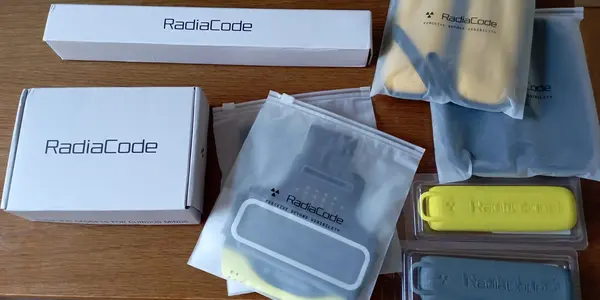
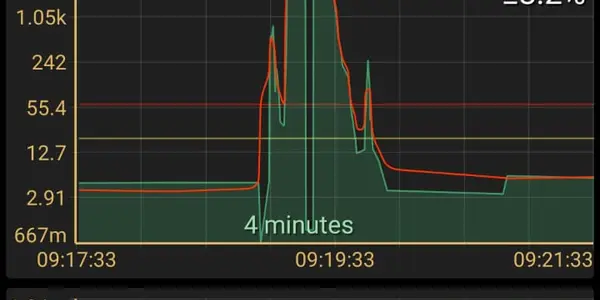
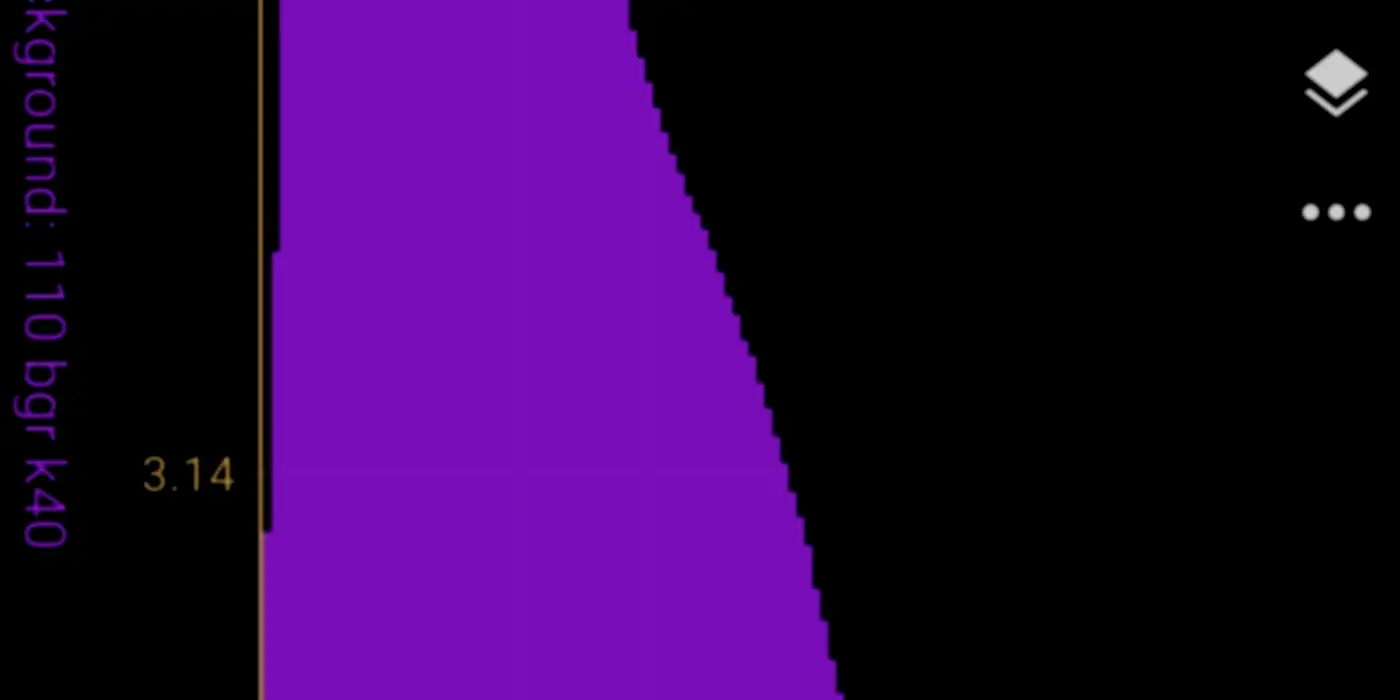
This is the second post reporting a few tests of the Radiacode 110 spectrometer, an extra-cool pocket dosimeter/radiation counter/spectrograph sold by RadiaCode.
This is the second post reporting a few tests of the Radiacode 110 spectrometer, an extra-cool pocket dosimeter/radiation counter/spectrograph sold by RadiaCode.

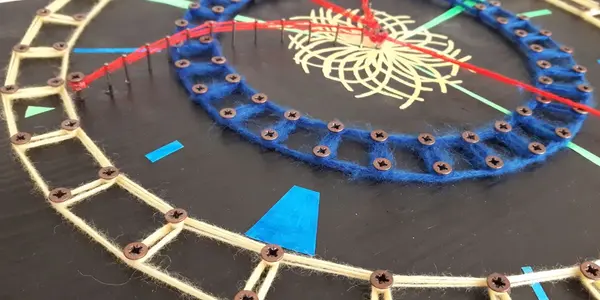
This is the first of a series of posts that will publish the results of artistic work by high-school students of three schools in Venice, who participate in a contest and exposition connected to the initiative "Art and Science across Italy", an initiative of the network CREATIONS, funded by the Horizon 2020 programme
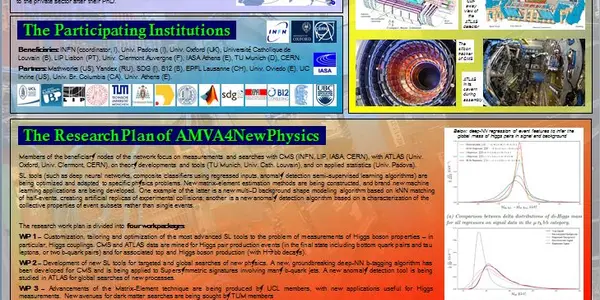
The European Commission has launched a couple of weeks ago the campaign "Europe in my region 2017", an initiative aimed at getting the general public informed on the projects funded by the European Community in their area of residence or activity. There are open day events scheduled a bit everywhere, a blog contest, a photo contest, and other initiatives of interest.
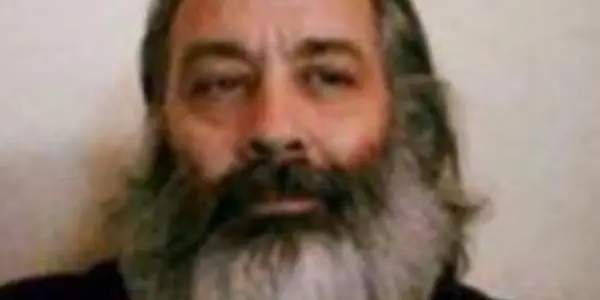
Dr. Alex Durig (see picture) is a professional freelance writer, with a PhD in social psychology from Indiana University (1992). He has authored seven books in his specialization of perception and logic. He claims to have experienced great frustration resolving his experience of perception and logic when it comes to physics, but he says he no longer feels crazy, ever since Anomaly! was published. So I am offering this space to him to hear what he has to say about that...------On Dorigo's Anomaly! and the Social Psychology of Professional Discourse in Physics, by Alex Durig
Yesterday I visited the Liceo “Benedetti” of Venice, where 40 students are preparing their artwork for a project of communicating science with art that will culminate in an exhibit at the Palazzo del Casinò of the Lido of Venice, during the week of the EPS conference in July.
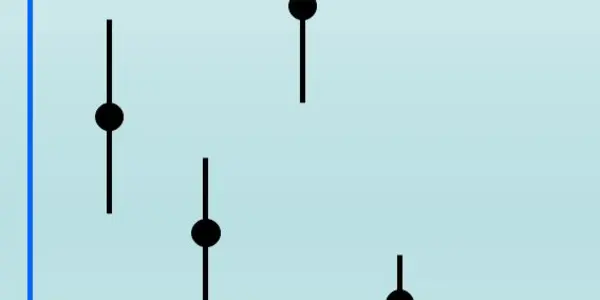
A little while ago I encountered an interesting problem, which I had fun solving by myself. I think my solution is not original (it must have occurred to others a gazillion times in the past) but I do believe the implementation is nice, so I want to share it with you here.The general problemImagine you are given a set of counts distributed in bins of a histogram. This could be, for instance, the age distribution of a set of people. You are asked to assign uncertainty bars to the counts: in other words, estimate a "one-sigma" interval for the relative rate of counts in each bin.

Innovative training networks are a European Community concept funded by the Research Executive Agency, under the project called "Marie Curie Actions". The idea is that the EU helps build structures that provide interdisciplinary training to skilled graduate students, providing them with knowledge and skills that make them attractive for the work market and useful to society, while boosting the research projects that the EU is interested in.

GSI, the Helmholtz Centre for Heavy Ion Research, is a laboratory located near the town of Darmstadt, in central Germany, just a few miles away from the Frankfurt airport. The centre was founded in 1969, and has since then been a very active facility where heavy elements are studied (six rare heavy ones were in fact discovered there, including the one they named Darmstadtium!), and where a wide research plan of nuclear physics is carried out.
With a slightly anti-climatic timing if we consider the just ended orgy of new results presented at winter conferences in particle physics (which I touched on here), the LHCb collaboration outed today the results of a measurement of unity, drawing attention on the fact that unity was found to be not equal to 1.0.

This evening I am blogging from a residence in Sesto val Pusteria, a beautiful mountain village in the Italian Alps. I came here for a few days of rest after a crazy work schedule in the past few days -the reason why my blogging has been intermittent. Sesto is surrounded by glorious mountains, and hiking around here is marvelous. But right now, as I sip a non-alcoholic beer (pretty good), chilling off after a day out, my thoughts are focused 500,000,000 kilometers away.
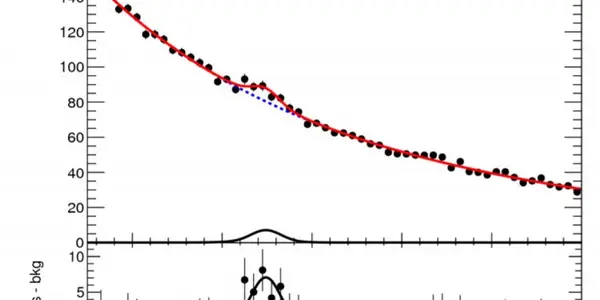
Snow is melting in the Alps, and particle physicists, who have flocked to La Thuile for exciting ski conferences in the past weeks, are now back to their usual occupations. The pressure of the deadline is over: results have been finalized and approved, preliminary conference notes have been submitted, talks have been given. The period starting now, the one immediately following presentation of new results, when the next deadline (summer conferences!) is still far away, is more productive in terms of real thought and new ideas. Hopefully we'll come up with some new way to probe the standard model or to squeeze more information from those proton-proton collisions, lest we start to look like accountants!
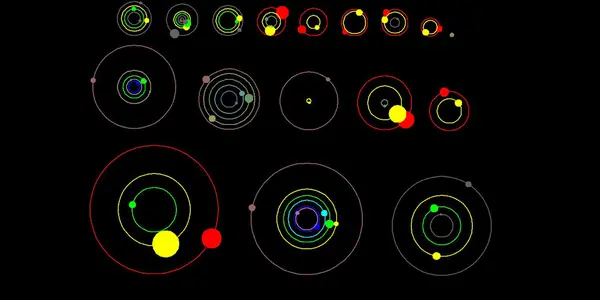
Where by "It" I really mean the Future of mankind. The human race is facing huge new challenges in the XXI century, and we are only starting to get equipped to face them. The biggest drama of the past century was arguably caused by the two world conflicts and the subsequent transition to nuclear warfare: humanity had to learn to coexist with the impending threat of global annihilation by thermonuclear war. But today, in addition to that dreadful scenario there are now others we have to cope with.
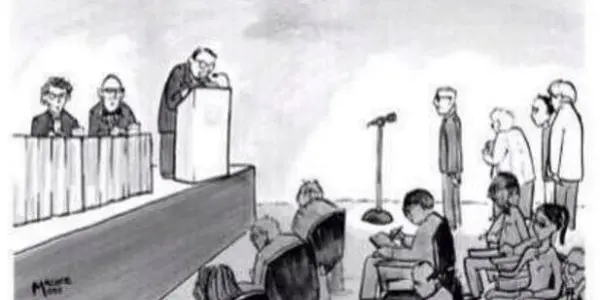
The XVII edition of the “Neutrino Telescopes” conference closed its works yesterday after a lively debate on the future of the neutrino physics program in Europe.