More on Radiacode 110
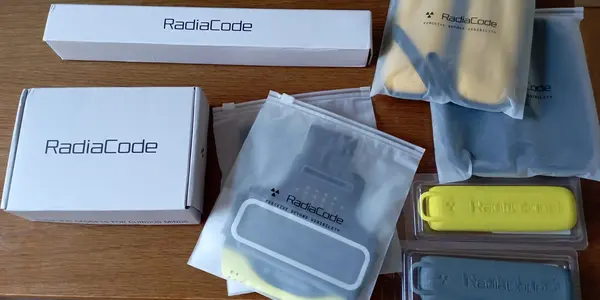
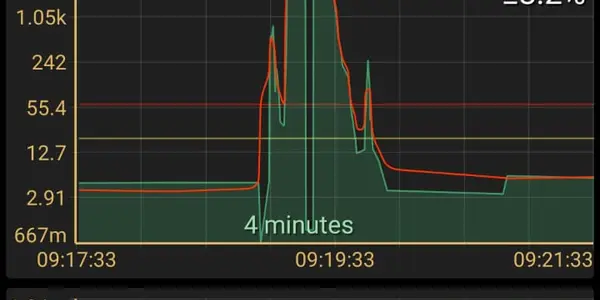
This is the second post reporting a few tests of the Radiacode 110 spectrometer, an extra-cool pocket dosimeter/radiation counter/spectrograph sold by RadiaCode.
This is the second post reporting a few tests of the Radiacode 110 spectrometer, an extra-cool pocket dosimeter/radiation counter/spectrograph sold by RadiaCode.

Experimental physics is about investigating the world in a quantitative manner, by exploiting our technology to carefully map the wealth of phenomena that make planets turn around stars, atoms stick together, and hearts to beat. All of that can be understood by creating models of the underlying physics processes. These models need to be fed with input parameters which we must measure.
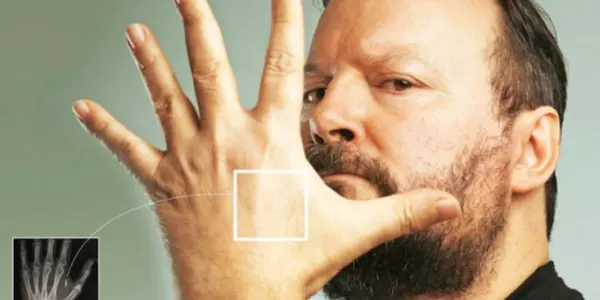
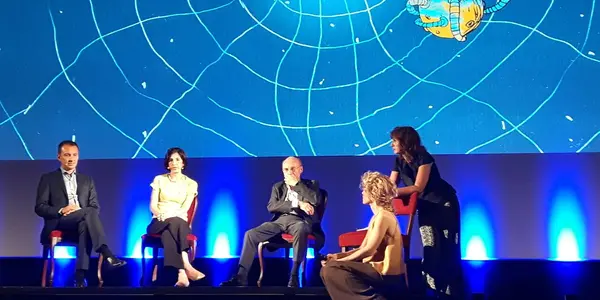
On July 6th, at 7PM CET (1PM in NY, 10AM in California) I will be chatting online with David Orban on his show Searching For The Question Live (#sftql) about the present and future of particle physics, artificial intelligence and its applications to research, science communication, and the whereabouts. I hope you will be joining us, it should be fun!
For those of you who do not know who David Orban is:

I did not think I would need to explain here things that should be obvious to any sentient being, but the recent activity I detect on Facebook and other sites, and the misinformation spread by some science popularization sources and bloggers around the conclusions reached last week by the European Strategy Update for Particle Physics (EUSUPP), a 2-year-long process that saw the participation of hundreds of scientists and the heavy involvement of some of our leading thinkers, forced me to change my mind.
Fundamental science works by alternating phases of interpretation and refutation. When interpreting the result of experiments, physicists spend their time sweating shirt after shirt in the attempt of formulating economical and coherent explanations of observed phenomena. If the process converges, they formulate a theory which works well, whereby they celebrate for a little while. Then a second phase starts, when hypotheses are formulated on how to refute the shiny new model, finding effects and observatons that do not fit in the formulated framework. And so on.

The text below is the sixth and last part of what could have become "Chapter 13" of the book "Anomaly! Collider Physics and the Quest for New Phenomena at Fermilab", which I published in 2016.
The text below is the fifth part of what could have become "Chapter 13" of the book "Anomaly! Collider Physics and the Quest for New Phenomena at Fermilab", which I published in 2016. For part 1 see here; for part 2 see here; for part 3 see here; for part 4 see here.
No superjets in Run 2
The text below is the fourth part of what could have become "Chapter 13" of the book "Anomaly! Collider Physics and the Quest for New Phenomena at Fermilab", which I published in 2016. For part 1 see here; for part 2 see here; for part 3 see here.
The offer of Ph.D. positions in Physics at the University of Padova has opened just a few days ago, and I wish to advertise it here, giving some background on the matter for those of you who are interested in the call or know somebody who could be.
The Ph.D. in Italy
In Italy, Ph. D.s last three years (the duration can be extended but this is not recommended). Courses start with the first academic semester, so the calls typically open in the spring, and admission tests are run in the summer. The system is not too different from that of other countries, but there are peculiarities of which you might want to be aware.
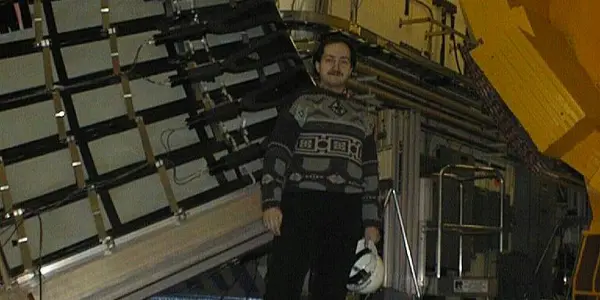
The text below is the third part of what could have become "Chapter 13" of the book "Anomaly! Collider Physics and the Quest for New Phenomena at Fermilab", which I published in 2016. For part 1 see here; for part 2 see here.
Giromini joins Run 2
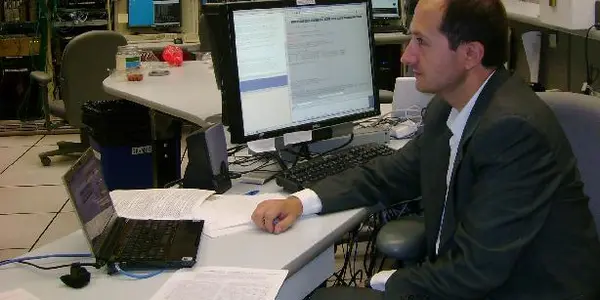
The text below is the second part of what could have become "Chapter 13" of the book "Anomaly! Collider Physics and the Quest for New Phenomena at Fermilab", which I published in 2016. For part 1 see here.
Collaboration membership from CDF to CDF II
When I wrote the final version of the book "Anomaly! Collider physics and the quest for new phenomena at Fermilab", four years ago, I had to get rid of a lot of material which would not fit within the strict page limit requested by my prospective publisher. The discarded material was not yet at book quality level - I had intended to interview more colleagues and collect more material to finalize those extra chapters - so I never bothered to do anything with them, and they rested until now in a subdirectory of my book project folder.
You may be wondering, upon reading the above title of this post, what I am after today: the top quark has been around for 25 years now, and there is no long-standing controversy on who discovered it -almost. Well, I will come to that in due time, but to explain quickly what I mean for those of you in a hurry, I am referring to how the top discovery is cited in the very important Wikipedia pages about that subatomic particle, as well as those of the relevant experiments that claimed its observation in 1995.Quarks