Inside Science

InsideScience

Inside Science is an editorially independent news product of the American Institute of Physics, a nonprofit organization dedicated to advancing, promoting and serving the physical sciences. Link: http://www.insidescience.org/
RSS Feed
Disgust Evolved To Protect Us From Disease But With Coronavirus Our Ancient Instincts May Be Wrong

Disgust Evolved To Protect Us From Disease But With Coronavirus Our Ancient Instincts May Be Wrong

(Inside Science) -- Imagine putting your hand in a pile of poop. It stinks and squishes. What do you do next?Most likely, you'll scrub that hand with plenty of soap -- and you don't need public health officials or a germ theory of disease to tell you that's the right thing to do. But when you touch the handrail on an escalator, it's much harder to remember that you could be picking up coronavirus germs.

Like Stonehenge? Brits May Have To Thank The French

Like Stonehenge? Brits May Have To Thank The French

By Charles Choi, Inside Science – New research suggests that megaliths -- monuments such as Stonehenge created from large rocks during the Stone and Copper Ages in Europe -- owe their origins to a mysterious culture from northwest France with advanced seafaring technology.Roughly 35,000 megaliths are known throughout Europe, including standing stones, stone circles and megalithic tombs. Most megaliths date from 4500 to 2500 B.C., are concentrated in coastal areas along the Atlantic and Mediterranean, and share similar or even identical architectural features, said archaeologist Bettina Schulz Paulsson at the University of Gothenburg in Sweden.

Will Position-Specific  Football Helmets Reduce NFL Concussions?

Will Position-Specific Football Helmets Reduce NFL Concussions?

By Chris Gorski, Inside Science -- Hard-shelled football helmets first emerged nearly 80 years ago to protect against catastrophic head injuries like skull fractures and brain hemorrhages, and they have evolved over the decades to offer better protection. Recently, public attention has increasingly focused on other consequences of hits to the head, including concussions and long-term degenerative diseases such as chronic traumatic encephalopathy.

Dark Matter: Looking Beyond WIMPs

Dark Matter: Looking Beyond WIMPs

(Inside Science) – Physicists are on the hunt for elusive dark matter, the hypothesized but as yet unidentified stuff that makes up a large majority of the matter in the universe. They had long favored "weakly interacting massive particles," known as WIMPs, as the most likely dark matter candidate, but after an exhaustive search, some scientists are moving on to more exotic particles.

Why Science Still Matters In The Age Of Big Data

Why Science Still Matters In The Age Of Big Data

By Vikram Jandhyala&Nitin Baliga, Inside Science - We recently met with a host of biotechnology leaders and were struck by their infatuation with Big Data and machine learning. In fact, upon reflection, it was amazing how often the word "algorithm" came up in the course of our conversations with these accomplished scientists.Don't get us wrong. The boom in software and computing has achieved powerful and profound results in our society. And, yes, the world is a better place, thanks to data analytics.

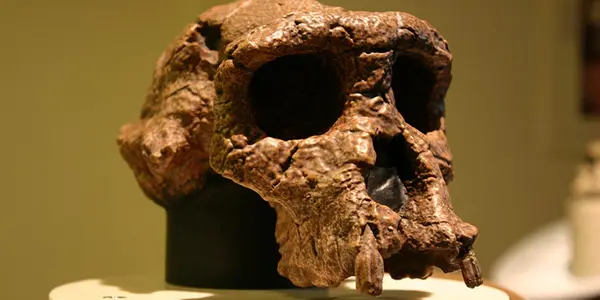
Why A Skull May Not Tell Us If An Ancient Human Walked Upright

Why A Skull May Not Tell Us If An Ancient Human Walked Upright

Inside Science -- How can you tell how a creature walked when all that you have is the head?For many years, scientists looked to the foramen magnum – the large hole at the base of the skull where the brain connects to the spine – to find out. They believed it showed if an early human was a biped that walked on two legs, or a quadruped that walked on four. But a recent study published in the Journal of Human Evolution calls this into question.

What LIGO Detection Means For Other Gravitational Wave Searches

What LIGO Detection Means For Other Gravitational Wave Searches

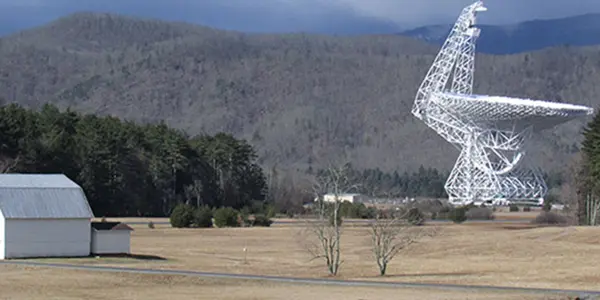
By Gabriel Popkin, Inside Science -- When leaders of the Laser Interferometer Gravitational-wave Observatory, or LIGO, announced in February the first-ever direct detection of a gravitational wave, astrophysicists Scott Ransom from the National Radio Astronomy Observatory and Andrea Lommen at Franklin and Marshall University in Lancaster, Pennsylvania, had mixed feelings.

Science Experts Make Movies Better

Science Experts Make Movies Better

By Marsha Lewis, Inside Science – What do the movies: "Frozen," "Thor," and "Iron Man" all have in common? They’re all examples of when science and science fiction collide.From the "final frontier" to a frozen fantasy world, scientists and storytellers are working together to bring facts into fiction films. “Hollywood reaches more people than any other group in the world and I think it has the opportunity to inspire more people than any other group in the world,” said Rick Loverd, program director for The Science and Entertainment Exchange in Los Angeles, California.

What If There Were No Moon?

What If There Were No Moon?

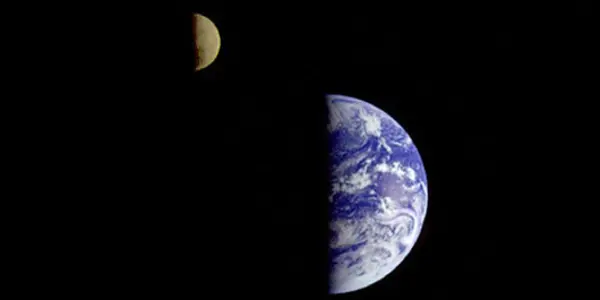
By Marsha Lewis, Inside Science TV. The moon — it can appear full, shining like a beacon in the night or just a sliver of a nightlight. Still, it’s always there.Image Credit: NASA.govBut what if we didn't have a moon?Here’s the top five things we would miss without it.1.       Nights would be much, much darker. The next brightest object in the night sky is Venus – but it still wouldn’t be enough to light up the sky – a full moon is nearly two thousand times brighter than Venus is at its brightest.