Inside Science

InsideScience

Inside Science is an editorially independent news product of the American Institute of Physics, a nonprofit organization dedicated to advancing, promoting and serving the physical sciences. Link: http://www.insidescience.org/
RSS Feed
Neutralize Bioterrorism With Tiny Motors

Neutralize Bioterrorism With Tiny Motors

William Murphy/flickr By: Alexander Hellemans, Inside Science(Inside Science) -- Researchers around the world are studying how to destroy chemical and biological warfare agents without anyone getting hurt. A research group at the University of California, San Diego has demonstrated the ability to destroy dangerous agents, such as nerve gas and anthrax spores, with a recent new invention: self-propelled micromotors.

Politics Is Quacked: How To Win Friends And Influence Ducklings

Politics Is Quacked: How To Win Friends And Influence Ducklings

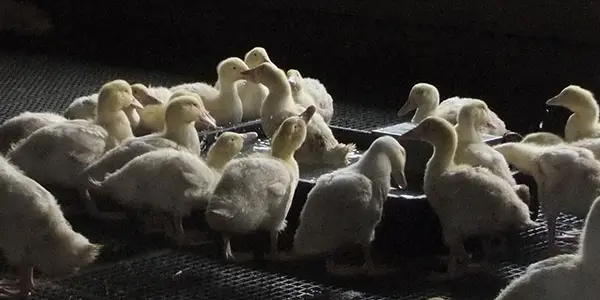
Courtesy of Guiomar ListeBy: Nala Rogers, Inside Science(Inside Science) -- When ducklings head out to bathe in a pool, they usually follow the same individual, new research has found. But do they visit the pool that’s best for everyone, or just the one their chief prefers? This puzzle has made it hard for farmers to know how to provide for all their ducks equally, and for biologists to know what social animals really want.  

Could Life Have Existed Just 15 Million Years After The Big Bang?

Could Life Have Existed Just 15 Million Years After The Big Bang?

A new paper suggests that planets from the remnants of the universe's earliest stars could have supported life on dim, warm planets. Credit: NASA/WMAP Science TeamBy: Ker Than, Inside Science(Inside Science) -- Life in the universe could be much older than previously thought, forming as early as fifteen million years after the Big Bang, according to a provocative new idea proposed by a Harvard astrophysicist.

As The Weather Changes, So Do Beliefs About Climate Change

As The Weather Changes, So Do Beliefs About Climate Change

By: Karin Heineman, Inside Science(Inside Science TV) – Who can forget the winter of 2013-2014? Record-breaking cold temperatures and heavy snowfall hit from the Rocky Mountains all the way to the East Coast.Although the majority of Americans still believe that global warming is happening, the especially blustery winter caused some people to question whether global warming is really happening.“Almost invariably we find that after any winter a drop off in belief in the existence of global warming," said Barry Rabe, a political scientist at the University of Michigan in Ann Arbor.

Humans May Have A Spidey Sense For Blind Spots

Humans May Have A Spidey Sense For Blind Spots

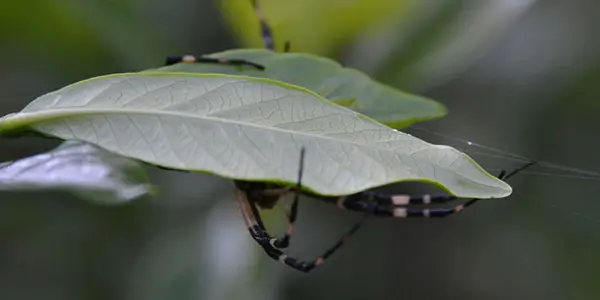
Credit: Tobyotter via flickrBy: Nala Rogers, Inside Science(Inside Science) -- The spider's iconic leggy shape can abruptly yank our attention, even when we’re focused on something else, according to a new study. Other shapes such as houseflies and hypodermic needles don’t draw our attention in the same way. This suggests that spiders may be hard-wired into our visual systems, helping us avoid a threat that our ancestors faced for millions of years.

New .Health Internet Domains Could Risk Public Health

New .Health Internet Domains Could Risk Public Health

Image credit:  Ph0neutria via shutterstockBy: Benjamin Plackett, Inside Science(Inside Science) — Until last year, website designers had a choice of just 22 Internet domains to use as suffixes at the end of URLs, excluding country-specific ones. The familiar “dot-com” and “dot-org” hail from the Reagan era, and the trickle of new domains since has usually been met with much discussion and occasionally debate or even discontent.

3-D Printer Creates Emergency Trachea Implant, Saves Baby's Life

3-D Printer Creates Emergency Trachea Implant, Saves Baby's Life

By Marsha Lewis, Inside Science(Inside Science TV) –   You've seen toys and prosthetics made on a 3-D printer but now, scientists are using 3-D printers to build implants that help babies breathe.Natalie Peterson, a parent of a child who was having trouble breathing shortly after birth said of her son Garrett, “When he was born, he was so sensitive to everything…when the nurses would move his head, he would just turn blue instantly.”Almost every day 18 month old Garrett Peterson stopped breathing due to a collapsed trachea.

Drugs For Your Pets

Drugs For Your Pets

By:  Karin Heineman, Inside Science(Inside Science TV) – Dogs and cats can suffer from some of the same illnesses as humans such as allergies, cancer and even Alzheimer's disease. Currently pets are often given drugs designed for the human body that may not work the same way in the body of another species.For example, dogs with allergies are often prescribed the popular allergy drug Allegra. But, the formula was not designed for use by a dog and may not work correctly.Now, researchers at Kindred Biosciences in Burlingam, California are developing new drugs made just for pets.

Indonesia Cassava Might Be Saved By Parasitic Wasp

Indonesia Cassava Might Be Saved By Parasitic Wasp

Researchers in Indonesia are releasing the parasitic wasp Anagyrus lopezi in an attempt to save cassava crops from destructive mealybugs.Credit:CIAT International Center for Tropical Agriculture .Rights information: http://bit.ly/otwhKGBy: Ker Than, Inside Science. (Inside Science) -- Scientists today released 2,000 South American parasitic wasps in Indonesia as part of a project aimed at thwarting an invasive insect pest that is devastating the country’s cassava food crop.

The Wealth Under Afghanistan

The Wealth Under Afghanistan

Credit: Image of map courtesy of the USGS and composite image by Patricia WaldronBy: Patricia Waldron, Inside Science(Inside Science) -- People living in Afghanistan have mined precious gems from their land, such as lapis lazuli, since the times of the Egyptian pharaohs. But modern analyses of the country's mineral deposits show that the Afghan people have barely scratched the surface of their mineable wealth.

Genetically Modified Kamikaze Mosquitoes Take Out Diseases

Genetically Modified Kamikaze Mosquitoes Take Out Diseases

By Marsha Lewis, Inside Science(Inside Science TV) – One of the deadliest forces on earth is the humble mosquito. Mosquito-borne diseases like malaria, chikungunya, yellow fever and West Nile virus infect more than 350 million people and kill another 1 million people every year.Now, scientists in Florida hope to wipe out some of these deadly diseases by genetically modifying their winged carriers.“Mosquitoes are probably the most dangerous animal in the world. More people are killed by them [than] by anything else," said Michael Doyle, an entomologist at the Florida Keys Mosquito Control District in Key West, Florida.