Inside Science

InsideScience

Inside Science is an editorially independent news product of the American Institute of Physics, a nonprofit organization dedicated to advancing, promoting and serving the physical sciences. Link: http://www.insidescience.org/
RSS Feed
Has Science Stopped Taking Chances?

Has Science Stopped Taking Chances?

By Kate Gammon, Inside Science --Without risky ideas in science, the world wouldn't have new cancer treatments, an understanding of dark matter – or even the World Wide Web. But as scientific disciplines mature, scientists in them choose to go for small, incremental advances rather than risky leaps – and those choices lead to a system that's slower and more expensive than it needs to be, according to the study authors.The problem?

Fitbit For Cows Could Detect Disease Sooner

Fitbit For Cows Could Detect Disease Sooner

By Brian Owens, Inside Science -- Wearable fitness monitors are all the rage among humans right now, but they are also spreading among farm animals. Researchers hope the devices can help keep herds of beef cows healthy.Karin Orsel, a veterinary epidemiologist at the University of Calgary in Canada is testing how accelerometers – the same devices inside fitness monitors that measure a person's activity level – can be used to detect disease in beef cattle before it becomes obvious to ranchers.

Doorknob Germs Can Infect Half Of Your Office In A Few Hours

Doorknob Germs Can Infect Half Of Your Office In A Few Hours

By:  Karin Heineman, Inside Science TV – Viruses: they’re too tiny for us to see, yet they’re lurking everywhere.  And guess what? They spread really fast through an office environment.“Most people don’t realize they easily spread by your hands,” said University of Arizona microbiologist Charles Gerba. Most people think that viruses spread by inhaling sick people’s coughs or sneezes, but “it’s really when those droplets settle out and you touch that surface” that tiny viruses spread, he said. People unknowingly bring their virus-covered fingers to their noses, mouths, or eyes, kicking off infection.

Fermentation Science: How To Make The Perfect Wine

Fermentation Science: How To Make The Perfect Wine

By Marsha Lewis, Inside Science – Each year, about 32 billion bottles of wine are bought and sold around the world.  Each bottle contains about two and a half pounds of grapes, and to transform those grapes into a beverage with the perfect aroma, color, and taste, winemakers carefully monitor the complex chemistry bubbling away in wineries’ fermentation tanks.“I would say the trickiest part of making wine is getting the flavors right,” said Linda Bisson, a yeast geneticist at the University of California, Davis.

Lights Changes Sleep Patterns

Lights Changes Sleep Patterns

By Rebecca Boyle, Inside Science -- When light bulbs colonize our homes, humans get much less sleep. It's an intuitive idea, but a new study measures this effect in a real-life situation for the first time by examining hunter-gatherers in Argentina.Communities with access to electric lighting have shifted their bedtimes to later in the evening, curtailing a normal night of shuteye."When you have access to electricity, you can decide when you turn the lights off, and that resets your biological clock," said Horacio de la Iglesia, a biologist at the University of Washington, in Seattle, who led the study.

5 Big Weather Myths Debunked

5 Big Weather Myths Debunked

 Karin Heineman, Inside Science –  Predicting and analyzing weather is a highly sophisticated scientific endeavor these days. But, it is also peppered with a good deal of lore. We're here to debunk some popular weather myths.Myth #1: Heat lightning, or the distant flashes of lightning you see in the sky (without hearing the clap of thunder) during the hot summer months, only occur because it is hot out.Wrong. The truth is you're actually seeing lightning from a storm that's really far away. Since most severe thunderstorms often happen during hot summer months – the name "heat" lightning stuck.Myth #2: The Earth is farthest from the sun in January.

Damaged Hearts Repaired With Pig Parts

Damaged Hearts Repaired With Pig Parts

By Marsha Lewis, Inside Science  – The statistics are shocking. Almost half of all Americans live with one or more risk factors for a heart attack.Now, bioengineers at the Christman Lab at the University of California, San Diego have created a material that could repair and even reverse the damage done by a heart attack."A heart attack is a single event where the blood supply is blocked to that downstream tissue," said Karen Christman, a bioengineer at UCSD. When the tissue is deprived of the blood it needs, it becomes damaged.

Amtrak Tragedy And Newton's First Law

Amtrak Tragedy And Newton's First Law

By Sara Rennekamp, Inside Science -- Last week's deadly derailment that sent an Amtrak Northeast Regional train careening off its tracks has many people asking how such a tragedy could happen.

Why Gamblers Fail To Beat The Odds

Why Gamblers Fail To Beat The Odds

Brian Owens, Inside Science - Habitual gamblers are more likely to believe they see patterns in random sequences of events, and to act on that belief, than the general population, according to new research.

Kind Snacks And Why You Should Ignore Marketing On Food Packages

Kind Snacks And Why You Should Ignore Marketing On Food Packages

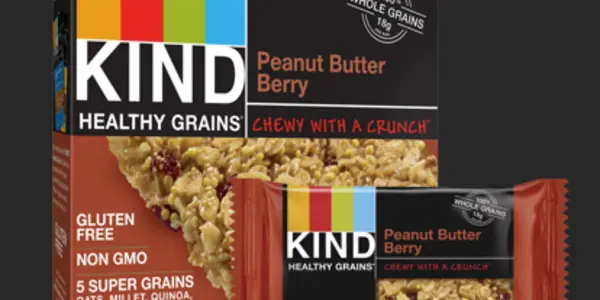
By Sara Rennekamp, Inside Science  -- News broke this week that the company behind the popular Kind line of snack bars received a warning letter from the Food and Drug Administration. Their offense? Not labeling the bars according to FDA rules -- primarily due to slapping a "healthy" label on a product that did not meet the FDA standards for healthy.

Genome 10k Project: Complex Animal Life And How It Has Evolved Over Time

Genome 10k Project: Complex Animal Life And How It Has Evolved Over Time

Marsha Lewis, Inside Science TV – There are about 60,000 different vertebrates on this planet.Mammals, birds, reptiles, amphibians, fish, even you are a vertebrate. And now for the first time, scientists from around the world are coming together to study them on a molecular level."The Genome 10k Project is our first look at vertebrate animal life," said David Haussler, a biomolecular engineer at the University of California, Santa Cruz. "We're trying to get at least 10,000 species represented in our genome collection," he said.

Just In Case You Thought Your Wine Was Vegan

Just In Case You Thought Your Wine Was Vegan

By Sara Rennekamp, Inside Science - Is your wine vegan? It seems like an odd question: wine is made of grapes, grapes fall solidly under the "not an animal product" label, therefore it would seem that wine is a vegan-friendly beverage.However, many people who adhere to a vegan diet refrain from consuming any food or drink that is processed using animal products as well as the animal products themselves. Unfortunately for vegans, some wines are processed using animal products.The culprit: a process called fining.