Inside Science

InsideScience

Inside Science is an editorially independent news product of the American Institute of Physics, a nonprofit organization dedicated to advancing, promoting and serving the physical sciences. Link: http://www.insidescience.org/
RSS Feed
Catching Some Xe's Has Strange Effects On The Body

Catching Some Xe's Has Strange Effects On The Body

Image credit: Pslawinski via Wikimedia | http://bit.ly/1lzJKDEBy Chris Gorski, Inside Science(Inside Science) -- Xenon is one of the so-called noble gases. It's odorless, colorless and a loner. It very rarely combines with other atoms, or even itself, to form molecules. Like helium, neon, argon, krypton and radon, it's kind of a wallflower that rests on the far right of the periodic table.Unlike most of those others, though, recent reports show that xenon might improve athletic performance in endurance sports. The gas may also help erase traumatic memories.

Turning Corn Cobs Into Car Fuel

Turning Corn Cobs Into Car Fuel

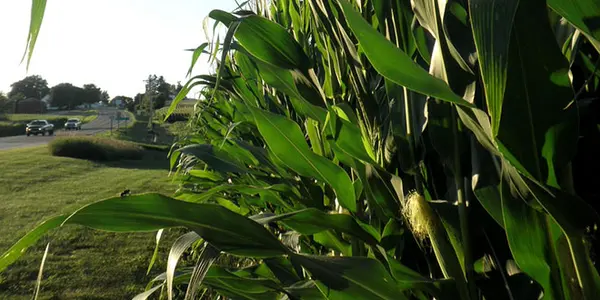
Image credit:  FeeBeeDee via flickr http://bit.ly/1tyHJdD. Rights information: http://bit.ly/cGotEb. By: Laurel Hamers, Inside Science(Inside Science) -- Today, ethanol is routinely made from the kernels of corn. Eventually, though, it may be made from the husks.Starches like corn provide quick energy because they readily break down into simple sugars such as glucose. This structure also makes them easy to convert into bioethanol, an alternative to fossil fuels.

Curious Space Particles May Kick-Start Formation Of Planets And Stars

Curious Space Particles May Kick-Start Formation Of Planets And Stars

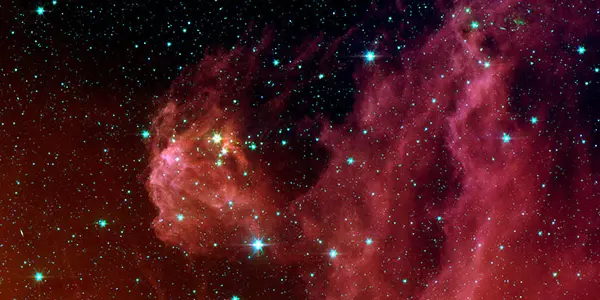
The Orion Nebula. Image credit: NASA http://bit.ly/1rTTyeCBy: Marcus Woo, Inside Science(Inside Science) -- Interstellar space can be a dusty place, filled with tiny flecks no bigger than a bacterial cell.But now astronomers have detected particles as big as pebbles, possibly a previously unknown type of dust that may kick-start the production of planets. The presence of these big particles may also suggest that star formation is more efficient than previously thought.

Use Ocean Waves To Power Homes

Use Ocean Waves To Power Homes

By Karin Heineman, Inside Science (Inside Science TV) – From powering homes, to cars to phones, people across the world use vast amounts of energy. And that consumption is only growing.As energy needs increase, scientists are constantly on the hunt for new ways to meet the demand. A group of mechanical engineers may have found a new source: the ocean.“Wave energy has the potential in the U.S. to power 50 million homes," said Marcus Lehmann, a mechanical engineer at the University of California, Berkeley.So, Lehmann and his team at UC Berkeley have created a device that can capture the power of ocean waves.

Breaking Beautiful - The Useful Mechanism In Patterns Of Cracks

Breaking Beautiful - The Useful Mechanism In Patterns Of Cracks

High resolution photograph of cracks in thin layer of glass atop a silicon wafer. The colors come from optical interference between the thin wafer and the glass above. Image credit: Joël Marthelot (ESPCI). Rights information: Used with permissionBy:  Gabriel Popkin, Inside Science

The Science Reason Your Beer Loses Its Cool So Quickly

The Science Reason Your Beer Loses Its Cool So Quickly

By Marsha Lewis, Inside Science(Inside Science TV) – Ever wonder why that cold can of beer you opened heats up so fast? Well, there's a scientific answer behind it…literally.Atmospheric scientists at the University of Washington have new insights on what makes your beverage lose its cool.“Condensation really has an impact on your drink," said Dargan Frierson, a mathematician at the University of Washington in Seattle.

Your Landscaping Could Be Causing Tornados

Your Landscaping Could Be Causing Tornados

By Karin Heineman, Inside ScienceWhen tornadoes hit, they are often quick, deadly and come without warning.In 2013, more than fifty people were killed during tornadoes.“We have tornadoes at daytime, we have tornadoes at night,” said Dev Niyogi, a climatologist at Purdue University in West Lafayette, Indiana.Now, researchers at Purdue say there are certain areas that may be more likely than others to be hit by tornadoes.“The region just around the city becomes a hotspot for where a tornado can occur,” explained Niyogi.

Cell Phone Morphs Into A Portable Science Lab

Cell Phone Morphs Into A Portable Science Lab

By Marsha Lewis, Inside ScienceFrom the classrooms to research facilities a cell phone could morph into a portable science lab."If we could use a cellphone as a microscope that would be a very cheap and cost effective way to solve a number of our problems," said Thomas Larson, a mechanical engineering graduate of the University of Washington in Seattle and inventor of the Micro Phone Lens.The idea came to Larson while he was working in the lab at the University of Washington."We’re using microscopes a lot!" said Larson.

For E. Coli Outbreaks, Cinnamon Spice Makes Everything Nice

For E. Coli Outbreaks, Cinnamon Spice Makes Everything Nice

By
Allison Jarrell, Inside Science
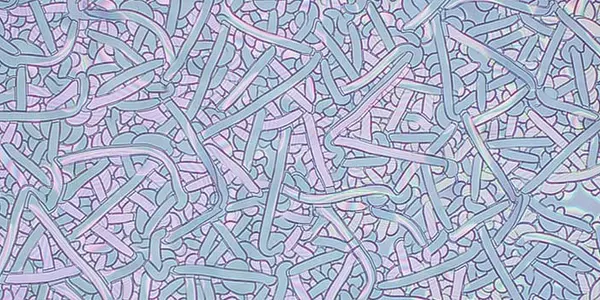
For centuries, cinnamon has been used to enhance the flavor of foods, but new research shows that the spice could also help make foods safer.According to a study by Meijun Zhu and Lina Sheng, food safety scientists at Washington State University in Pullman, the ancient cooking spice could help prevent some of the most serious foodborne illnesses caused by pathogenic bacteria.