You Feel Colder As You Age: The Science Reason Why
Older people report feeling colder, enough that it is clearly happening, but why has been a mystery. Until now.
Older people report feeling colder, enough that it is clearly happening, but why has been a mystery. Until now.


Excavations of tools at two neighboring Paleolithic sites in southwest France have made the blurred lines between modern humans and Neanderthals more blurry.
Two research teams from the Max Planck Institute for Evolutionary Anthropology in Leipzig, Germany, and the University of Leiden in the Netherlands have jointly reported the discovery of Neandertal bone tools unlike any others previously found in Neandertal sites - but similar to a tool from later modern human sites and still and still used even today.

Near-death experiences may have found a new grounding in science.
Whether and how the dying brain is capable of generating conscious activity has been vigorously debated but the near-death experiences reported by cardiac arrest survivors worldwide may be verifiable, according to a new paper.
Approximately 20 percent of cardiac arrest survivors report having had a near-death experience during clinical death. These visions and perceptions have been called "realer than real" but it remains unclear whether the brain is capable of such activity after cardiac arrest.
A new paper found that shortly after clinical death, in which the heart stops beating and blood stops flowing to the brain, rats display brain activity patterns characteristic of conscious perception.
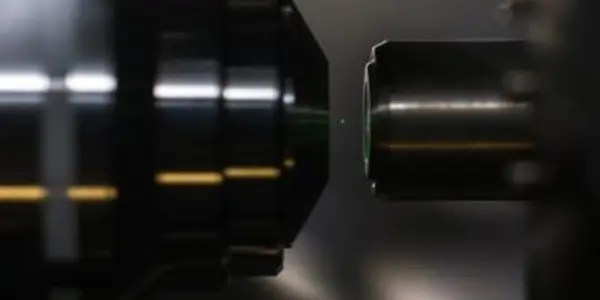
Researchers have measured light emitted by photoluminescence from a nanodiamond levitating in free space.
Their paper describes how they used a laser to trap nanodiamonds in space, and – using another laser – caused the diamonds to emit light at given frequencies.
The experiment, led by Nick Vamivakas, an assistant professor of optics at the University of Rochester, demonstrates that it is possible to levitate diamonds as small as 100 nanometers (approximately one-thousandth the diameter of a human hair) in free space, by using a technique known as laser trapping. Specifically, nitrogen vacancy (NV) photoluminescence (PL) from a nanodiamond suspended in a free-space optical dipole trap.

Ice ages and warm periods have alternated fairly regularly in the Earth's history: 90,000 of every 100,000 years in the past had vast areas of North America, Europe and Asia being buried under thick ice sheets.
Eventually, the pendulum swings back, it gets warmer and the ice masses melt.
There's solid evidence of this 100,000-year cycle in glacial moraines, marine sediments and arctic ice, but a plausible explanation for it is harder to find.

Researchers have described
Megaconus mammaliaformis, an unusual mammal that lived about 165 million years ago.
Previously, all that was known about this long-extinct mammal was a few little teeth with striking cusps on their occlusal surfaces. "Paleontologists have been wondering for over a hundred years what the animal that went with these teeth might have looked like," said Prof. Dr. Thomas Martin from the Steinmann-Institut of the University of Bonn. But locals then found a completely preserved skeleton of the enigmatic mammal in Northeast China, which was then acquired by the Paleontological Museum of Liaoning in Shenyang.
A plastic material already used in absorbable surgical sutures could also administer antibiotics to patients with brain infections, scientists report in a new study. Use of the material, placed directly on the brain's surface, could reduce the need for weeks of costly hospital stays now required for such treatment, they say in the journal ACS Chemical Neuroscience.

Detectives of both the amateur and occupational variety know that the best way to solve a mystery is to visit the scene where it began and look for clues.
Cosmological detectives do that too, by trying to peer as far back to the Big Bang as possible. A new analysis of cosmic microwave background (CMB) radiation data has taken the furthest look back through time yet – 100 years to 300,000 years after the Big Bang - and provided tantalizing new hints of clues as to what might have happened.
An international team has found evidence of substantial overlap for genetic risk factors shared between bipolar disorder, major depressive disorder and schizophrenia and less overlap between those conditions and autism and attention deficit-hyperactivity disorder (ADHD).
The root causes of psychiatric illnesses are not known. Instead, for the past 125 years, clinicians have based diagnosis on a collection of symptoms observed in patients, something medical science has long left behind - and so the race has been on to find biological links.
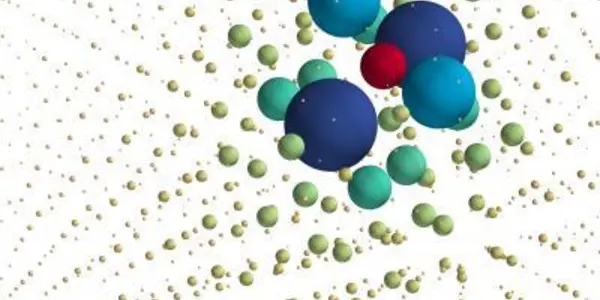
Here's a development that could have significant implications for electrochemistry, biochemistry, electrical engineering and many other fields: a Nature Materials paper is about computer simulations which find that the electrical conductivity of many materials increases with a strong electrical field in a universal way.
Electrical conductivity is a measure of how strongly a given material conducts the flow of electric current and is generally understood in terms of Ohm's law, which states that the conductivity is independent of the magnitude of an applied electric field, i.e. the voltage per meter. This law is widely obeyed in weak applied fields, which means that most material samples can be ascribed a definite electrical resistance, measured in Ohms.
What group has above average interest in systems and scores below average in empathy?If you answered autistic people, you are correct. If you answered girls with anorexia, also correct.Girls with anorexia nervosa show a mild echo of the characteristics of autism, suggests new research. At first glance, anorexia and autism seem very different, but they both share certain features, such as rigid attitudes and behaviours, a tendency to be very self-focussed, and a fascination with detail. Both conditions also share similar alterations in structure and function of brain regions involved in social perception.

A young child buried in the medieval town of Ribe in Denmark 800 years ago had an unpleasant life even before that - because the child had been given a large dose of mercury in an attempt to cure a severe, ongoing illness.
A new methodology developed by chemist Kaare Lund Rasmussen from University of Southern Denmark and colleagues can reveal an unprecedented amount of details about the time even shortly before a person's death. Mercury is of particular interest for the archaeologists as many cultures in different part of the world have been in contact with the rare (and toxic) element.

There is a phenomenon in speech called coarticulation, in which certain sounds are produced differently depending on the sounds that come before or after them.
For example, though the letter n is usually pronounced with the tongue pressed near the middle of the mouth's roof (as in the word "ten") but it's pronounced with the tongue forward when it's followed by a –th, as in tenth).
A decade ago, researchers discovered that coarticulation extends to a different kind of communication - American Sign Language. Knowing that hand movements could be affected according to where they fit in during sign language, researchers wondered if there was a similar effect on hands when they were used to produce sound, such as playing the piano.