You Feel Colder As You Age: The Science Reason Why
Older people report feeling colder, enough that it is clearly happening, but why has been a mystery. Until now.
Older people report feeling colder, enough that it is clearly happening, but why has been a mystery. Until now.


Our early ancestors developed a taste for spicy food at the time they were beginning to transition to agriculture.
The researchers discovered traces of garlic mustard (Alliaria petiolata), along with animal and fish residues, on the charred remains of pottery dating back nearly 7,000 years. The silicate remains were discovered through microfossil analysis of carboniszed food deposits from pots found at sites in Denmark and Germany. The pottery dated from the Mesolithic-Neolithic transition from hunter-gathering to agriculture.
On August 21st, 2013 at 1:24 am EDT, the sun erupted with an Earth-directed coronal mass ejection - CME - a solar phenomenon that can send billions of tons of particles into space and reach Earth one to three days later.
These particles cannot travel through the atmosphere to harm humans on Earth, but they can affect electronic systems in satellites and on the ground.
Experimental NASA research models, based on observations from NASA's Solar Terrestrial Relations Observatory show that the CME left the sun at speeds of around 380 miles per second, which is a fairly common speed for CMEs.
Tuberculosis (TB) is a wildly successful pathogen, if your goal is to infect up to two billion people in every corner of the world, with a new infection of a human host every second.
A new analysis of dozens of tuberculosis genomes gathered from around the world has shed some light on how it evolves to resist countermeasures - it that marches in lockstep with human population growth and history, evolving to take advantage of the most crowded and wretched human conditions.
The analysis reveals that tuberculosis experienced a 25-fold expansion worldwide in the 17th century, a time when human populations underwent explosive growth and European exploration of Africa, the Americas, Asia and Oceania was at its peak.
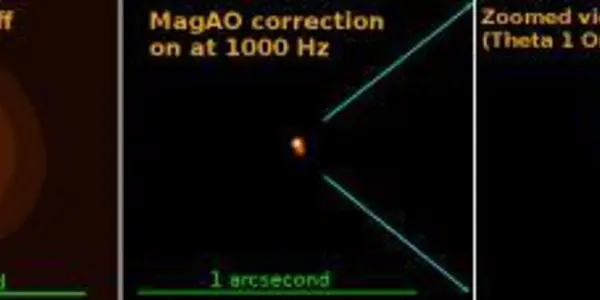
A new type of camera allows scientists to take sharper images of the night sky than ever before. It combines a telescope with a large diameter primary mirror is being used for digital photography at its theoretical resolution limit in visible wavelengths – the light that the human eye can see.
The design team has been developing this technology for more than 20 years at observatories in Arizona, most recently at the Large Binocular Telescope, and has now deployed this latest version in the high desert of Chile at the Magellan 6.5-meter telescope.

A new hypothesis by computational physicists states that "zombie vortices" help lead to the birth of a new star.
They even find a way to make it about angular momentum, saying that variations in gas density lead to instability, which then generates the whirlpool-like vortices needed for stars to form.
Astronomers accept that in the first steps of a new star's birth, dense clouds of gas collapse into clumps that, with the aid of angular momentum, spin into one or more Frisbee-like disks where a protostar starts to form. But for the protostar to grow bigger, the spinning disk needs to lose some of its angular momentum so that the gas can slow down and spiral inward onto the protostar. Once the protostar gains enough mass, it can kick off nuclear fusion.

Around the world, more than two billion tons of trash is generated each year. America leads the world in accurate reporting of trash levels and therefore has the distinction of throwing away more than any other country. Understanding why consumers throw recyclable products into the garbage instead of recycling them could help companies and public policy makers find novel ways to encourage consumers to step up their recycling efforts.
A paper in the Journal of Consumer Research examines recycling habits and finds that consumers are more likely to toss a dented can or a chopped-up piece of paper into the trash than to recycle it.
A new case study outlines the instance of a 60-year-old woman who suddenly began hearing music, as if a radio were playing at the back of her head.
She couldn't identify the music but when she hummed or sang the tunes, her husband was able to recognize them. She didn't know the songs but she was hallucinating music familiar to people around her.
Neurologists Danilo Vitorovic and José Biller of Loyola University Medical Center say the case raises "intriguing questions regarding memory, forgetting and access to lost memories."
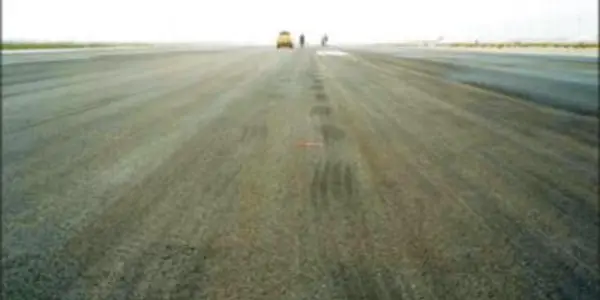
It's best not to think too much about this before your next flight but, even while on the ground,aircraft landing gear can have shimmy oscillations during taxiing, takeoff, and landing.
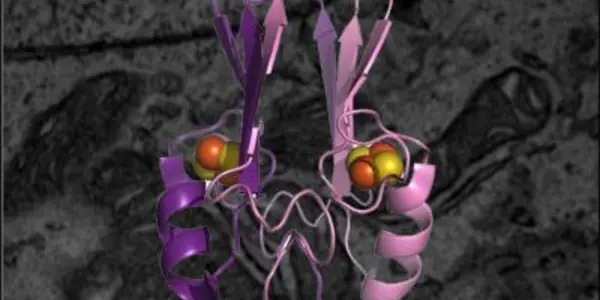
Reducing the expression of a pair of proteins known as NEETs, NAF-1 and mitoNEET, significantly reduced cancer cell proliferation and breast cancer tumor size, according to a new paper.
NEET proteins transport iron molecules or iron sulfur clusters inside cells. The proteins naturally adhere to the outer surface of the mitochondria, the "power plant" that supplies cells with chemical energy. Mitochondria also play a role in a cell's life cycle, including its death.
The new research stemmed from a recent CTBP study of the shape and functions of one of the proteins, mitoNEET. The other protein, NAF-1, is closely related to mitoNEET.
A technique from Case Western Reserve University seeks to address two challenges inherent in brain-implantation technology; gaging the property changes that occur during implantation and measuring on a micro-scale.
The authors seek to make some progress down the bioengineering path — crafting a device that can withstand the physiological conditions in the brain for the long-term.
9 ancient Egyptian iron beads which were carefully hammered into thin sheets before being rolled into tubes over 5,000 years ago were actually hammered from pieces of meteorites and not iron ore.
The objects trace their origins to outer space and predate the emergence of iron smelting by two millennia.
The beads were originally strung into a necklace together with other exotic minerals such as gold and gemstones, revealing the high value of this exotic material in ancient times, say the scholars in the Journal of Archaeological Science.
A new paper says that a Chinese herbal medicine called Ji-Sui-Kang (JSK), given systemically for three weeks after injury in rats, improved locomotor function, reduced tissue damage, and preserved the structure of neural cells compared to control rats.
Their data also claim that Ji-Sui-Kang may first act to reduce inflammation and cell apoptosis and death, and boost local oxygen supply while, later on, it appears to restore function and promote tissue regeneration. The researchers did the study because while Chinese herbal medicines have been used for a variety of ailments, the rationale is based more on anecdotal evidence than controlled experiments.