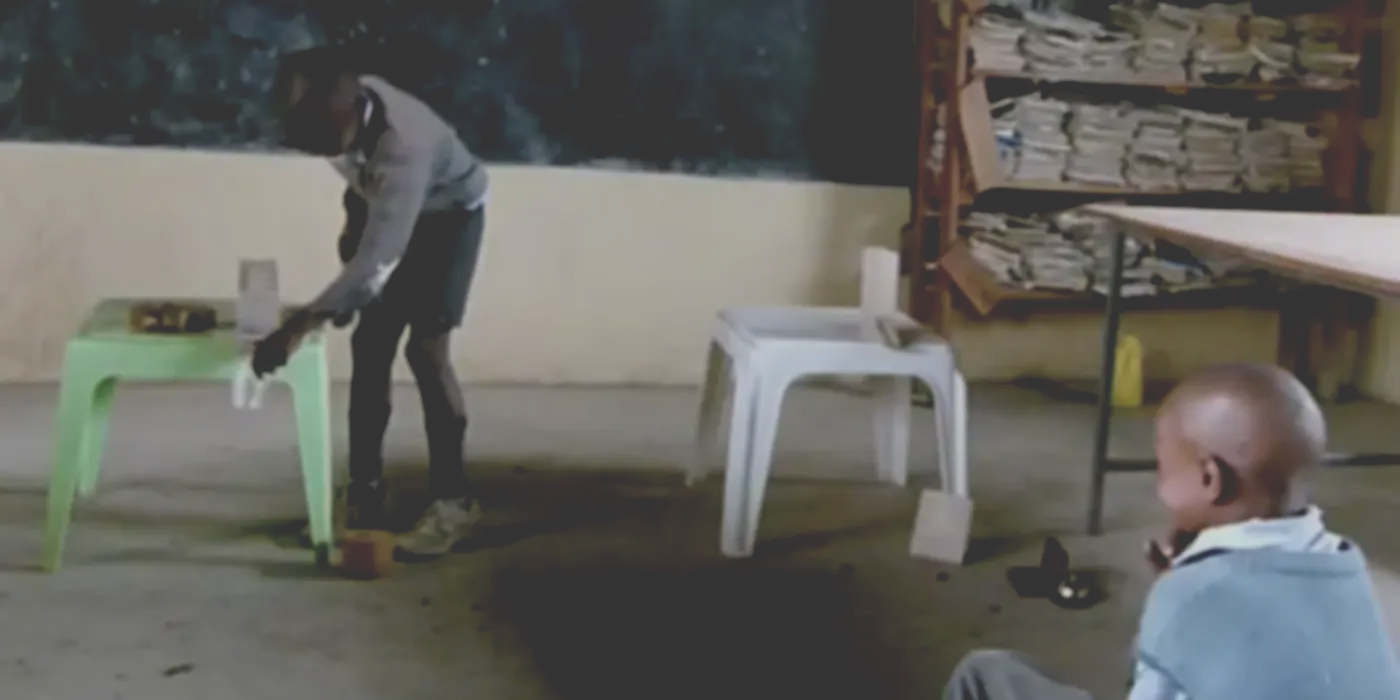
Kids Helping Kids Is Universal - But Cultures Help Differently
A simple game reveals a universal instinct in kids
A simple game reveals a universal instinct in kids


Satellite pictures of Saharan dust clouds have been in the news all summer - they don't just impact Africa, they even impact air quality in far-away cities like Houston.
Clouds of African dust often migrate across the Atlantic Ocean during summer months, affecting even U.S. air quality from mid-June through mid-September. Chellam said it's especially prevalent in late August and early September.
The dust, whipped up by sandstorms in northwest Africa and carried by trade winds across the Atlantic Ocean, takes about 10 days to two weeks to reach the United States and then even Texas.
Everyone agrees that interdisciplinary research is a good idea - for someone else. A survey of social and environmental scientists found that limits to career advancement and lack of credit for promotion and tenure were big obstacles.
There have been efforts to promote work on interactions between humans and the environment but success has been elusive. To better understand the obstacles facing natural and social scientists attempting such work, PhD student Eric D. Roy of Louisiana State University and co-authors from a variety of institutions surveyed researchers at all career stages who were interested and experienced in such research.
Anthropomorphism is overlooked as a powerful tool for promoting low-profile species that are either endangered or require urgent attention, say the authors of a new paper.
As has been noted in the past, it also helps to use cute animals.
At present, anthropomorphism in conservation is limited to social, intelligent animals, such as chimpanzees, polar bears and dolphins but the authors say we shouldn't imply that other species are not worthy of conservation because they are not like humans in the 'right' ways.

It is well known that there are a lot of knobs turning in climate. Current models are assumption-based, with a set of fixed parameters and a solution that involves converging on an answer, and the assumptions impact the value that model accuracy has versus actual accuracy.
To get a good climate model for the future, we first have to have good climate models about the past. Researchers with the GEOMAR Helmholtz Centre for Ocean Research Kiel recently managed to successfully 'hindcast' climate shifts in the Pacific. These shifts also have a profound effect on the average global surface air temperature of the Earth and the most recent shift in the 1990s is one of the reasons that the Earth's temperature has not risen further since 1998.
Breast-feeding is back. When it comes to early establishment of gut and immune health for babies, 'breast is best' according to a new study of how 'good' bacteria arrive in babies' digestive systems.
How babies acquire a population of good bacteria can also help to develop formula milk that more closely mimics nature.

Our early ancestors developed a taste for spicy food at the time they were beginning to transition to agriculture.
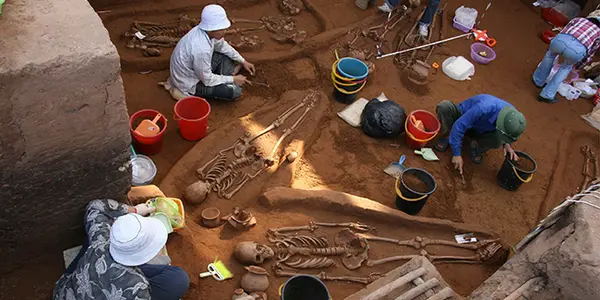
The researchers discovered traces of garlic mustard (Alliaria petiolata), along with animal and fish residues, on the charred remains of pottery dating back nearly 7,000 years. The silicate remains were discovered through microfossil analysis of carboniszed food deposits from pots found at sites in Denmark and Germany. The pottery dated from the Mesolithic-Neolithic transition from hunter-gathering to agriculture.
On August 21st, 2013 at 1:24 am EDT, the sun erupted with an Earth-directed coronal mass ejection - CME - a solar phenomenon that can send billions of tons of particles into space and reach Earth one to three days later.
These particles cannot travel through the atmosphere to harm humans on Earth, but they can affect electronic systems in satellites and on the ground.
Experimental NASA research models, based on observations from NASA's Solar Terrestrial Relations Observatory show that the CME left the sun at speeds of around 380 miles per second, which is a fairly common speed for CMEs.
Tuberculosis (TB) is a wildly successful pathogen, if your goal is to infect up to two billion people in every corner of the world, with a new infection of a human host every second.
A new analysis of dozens of tuberculosis genomes gathered from around the world has shed some light on how it evolves to resist countermeasures - it that marches in lockstep with human population growth and history, evolving to take advantage of the most crowded and wretched human conditions.
The analysis reveals that tuberculosis experienced a 25-fold expansion worldwide in the 17th century, a time when human populations underwent explosive growth and European exploration of Africa, the Americas, Asia and Oceania was at its peak.
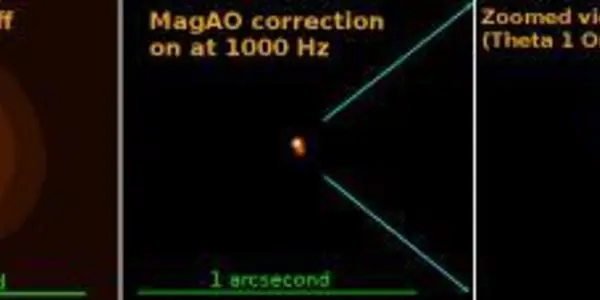
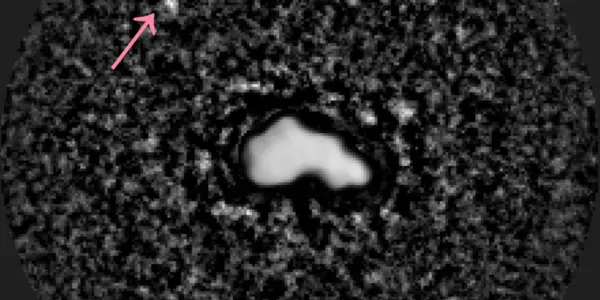
A new type of camera allows scientists to take sharper images of the night sky than ever before. It combines a telescope with a large diameter primary mirror is being used for digital photography at its theoretical resolution limit in visible wavelengths – the light that the human eye can see.
The design team has been developing this technology for more than 20 years at observatories in Arizona, most recently at the Large Binocular Telescope, and has now deployed this latest version in the high desert of Chile at the Magellan 6.5-meter telescope.

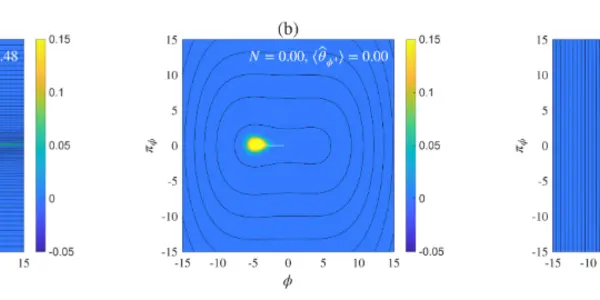
A new hypothesis by computational physicists states that "zombie vortices" help lead to the birth of a new star.
They even find a way to make it about angular momentum, saying that variations in gas density lead to instability, which then generates the whirlpool-like vortices needed for stars to form.
Astronomers accept that in the first steps of a new star's birth, dense clouds of gas collapse into clumps that, with the aid of angular momentum, spin into one or more Frisbee-like disks where a protostar starts to form. But for the protostar to grow bigger, the spinning disk needs to lose some of its angular momentum so that the gas can slow down and spiral inward onto the protostar. Once the protostar gains enough mass, it can kick off nuclear fusion.
Around the world, more than two billion tons of trash is generated each year. America leads the world in accurate reporting of trash levels and therefore has the distinction of throwing away more than any other country. Understanding why consumers throw recyclable products into the garbage instead of recycling them could help companies and public policy makers find novel ways to encourage consumers to step up their recycling efforts.
A paper in the Journal of Consumer Research examines recycling habits and finds that consumers are more likely to toss a dented can or a chopped-up piece of paper into the trash than to recycle it.
A new case study outlines the instance of a 60-year-old woman who suddenly began hearing music, as if a radio were playing at the back of her head.
She couldn't identify the music but when she hummed or sang the tunes, her husband was able to recognize them. She didn't know the songs but she was hallucinating music familiar to people around her.
Neurologists Danilo Vitorovic and José Biller of Loyola University Medical Center say the case raises "intriguing questions regarding memory, forgetting and access to lost memories."