Kids Helping Kids Is Universal - But Cultures Help Differently
A simple game reveals a universal instinct in kids
A simple game reveals a universal instinct in kids


A long-standing mystery has been why most super massive black holes (SMBH) at the centers of galaxies have such a low accretion rate; they swallow very little of the cosmic gases available and instead act as if they are on a severe diet.
The signature X-ray emissions from super massive black holes, which come from an area much larger than the black holes themselves, are often so surprisingly faint that the objects are difficult to distinguish from their galaxy centers. There has been a big mystery about why most of these black hole signals are so faint.
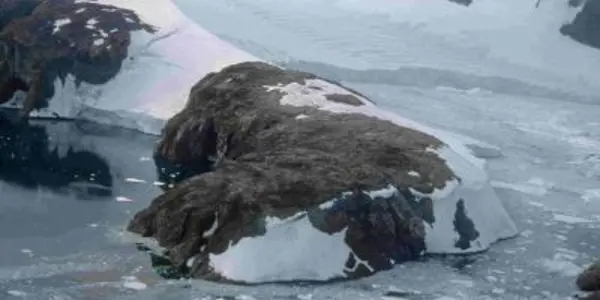
By analyzing a 150-year-old moss bank on the Antarctic Peninsula, researchers describe an unprecedented rate of ecological change since the 1960s, driven by warming temperatures.
The researchers looked to the Antarctic Peninsula because it is one of the most rapidly warming regions on Earth; annual temperatures there have increased by up to 0.56°C per decade since the 1950s. There they found a moss bank that has been slowly growing at the top surface and accumulating peat material since it first established in about 1860. By analyzing core samples of that moss bank, they were able to characterize the growth and activity of the moss and microbes over time.
In the late 1970s, universities convinced lawmakers that if they could monetize discoveries made with taxpayer funding, they would need less taxpayer funding and better help the private sector.
Congress agreed and in 1980, the Bayh-Dole Technology Transfer Act was passed. The law made it much easier for research findings made by academics to be patented and commercialized, or licensed by companies.
In a new commentary in the New England Journal of Medicine, Howard Markel, M.D., Ph.D., director of the University of Michigan Center for the History of Medicine, looks at the fluke-ridden history of the Bayh-Dole Act and suggests it is time to re-examine and revise the law.

A genetic phenomenon that allows for the selection of multiple genetic mutations that all lead to a similar outcome - a 'soft selective sweep' such as the ability to digest milk- has been characterized for the first time in humans.
This soft selective sweep was described in the population of Ethiopia by a team of geneticists from University College London, University of Addis Ababa and Roskilde University and reveals that individuals from the Eastern African population have adapted to be able to digest milk, but via different mutations in their genetic material.
The sweetness of summer vacations can quickly turn sour for those affected by lupus erythematosus.
For them, absorption of the UV-light component in sunlight may cause florid inflammation and redness of the skin. Lupus erythematosus (LE) is an autoimmune disorder in which the immune system erroneously attacks the body's own tissues. Where most people merely suffer sunburn, LE prone patients may develop severe redness and inflammation in sun-exposed skin.
Researchers have now discovered which signaling pathway of the innate immune system promotes autoimmune symptoms following sun-induced DNA damage and an immune mechanism that triggers LE skin lesions.
Tracing the transmission of individual strains from agricultural environments to humans through the food system is difficult because of the rapid evolution of resistance patterns in these bacteria. Resistance patterns change so quickly that it has been impossible to determine where some highly resistant strains are coming from.
Every year in the United States, the various strains of Salmonella together are responsible for an estimated 1 million illnesses, 20,000 hospitalizations and 400 deaths at an economic cost exceeding $3 billion. Salmonella Typhimurium accounts for at least 15 percent of clinically reported salmonellosis infections in humans nationally.
War is in its two-thousandth year of extinction.
It is always being declared dead, a sign of cultural progress, and certainly world wars have declined - since World War II, Europe has enjoyed its long period of peace in its history. But whether or any actual war between nations has declined is debated by political scholars.
Nations would like to wage war, they are eager, says Bear Braumoeller, author of a paper at the annual meeting of the American Political Science Association and associate professor of political science at The Ohio State University, but fewer conflicts than in the past are instead because nations have an inability to fight rather than an unwillingness to do so.
It's often been said that violent video games such as ‘Mortal Kombat,’ ‘Halo’ and ‘Grand Theft Auto’ trigger teenagers with symptoms of depression or attention deficit disorder to become aggressive bullies or delinquents.Media has power, that is why marketing is a multi-billion dollar industry and cigarette and alcohol companies can't advertise on cartoon shows. It makes sense that long-term exposure to violence could trigger violence, especially in young people with psychological conditions.

The ancient closest relatives of mammals, the cynodont therapsids, not only survived the greatest mass extinction of all time 252 million years ago, they thrived in the aftermath.The first mammals arose in the Triassic period, more than 225 million years ago. These early fur balls include small shrew-like animals such as Morganucodon from England, Megazostrodon from South Africa and Bienotherium from China. They had differentiated teeth - incisors, canines, molars - and large brains and were probably warm-blooded and covered in fur; all characteristics that stand them apart from their reptile ancestors, and which contribute to their huge success today.

High-functioning autistic children appear able to outgrow a critical social communication disability. Younger children with autism have trouble integrating the auditory and visual cues associated with speech, but the researchers found that the problem clears up in adolescence.
How do you know when your brand has captured the latest wave in popular culture?
When it gets mentioned a lot in popular music. Though companies are scrambling to try and get Twitter mentions and Facebook likes, they should instead be paying musical artists to be seen with their products - or at least sing about it. Alcohol is responsible for at least 4,700 deaths per year among young people under the age of 21 in the U.S. and more than 70 percent of high school students have consumed alcohol while about 22 percent engage in heavy episodic drinking. If companies want to get a piece of that action, they need to be more proactive.

When you have only had telescopes for a few hundred years, it can be difficult to determine the history of our Sun and figure out what it was like billions of years ago. One way to do that, and to predict the future of our star, is to find those rare stars that are almost exactly like our own, but at different stages of their lives.
Astronomers have identified a star that is essentially an identical twin to our Sun, but 4 billion years older — almost like seeing a real version of the twin paradox in action.[1]