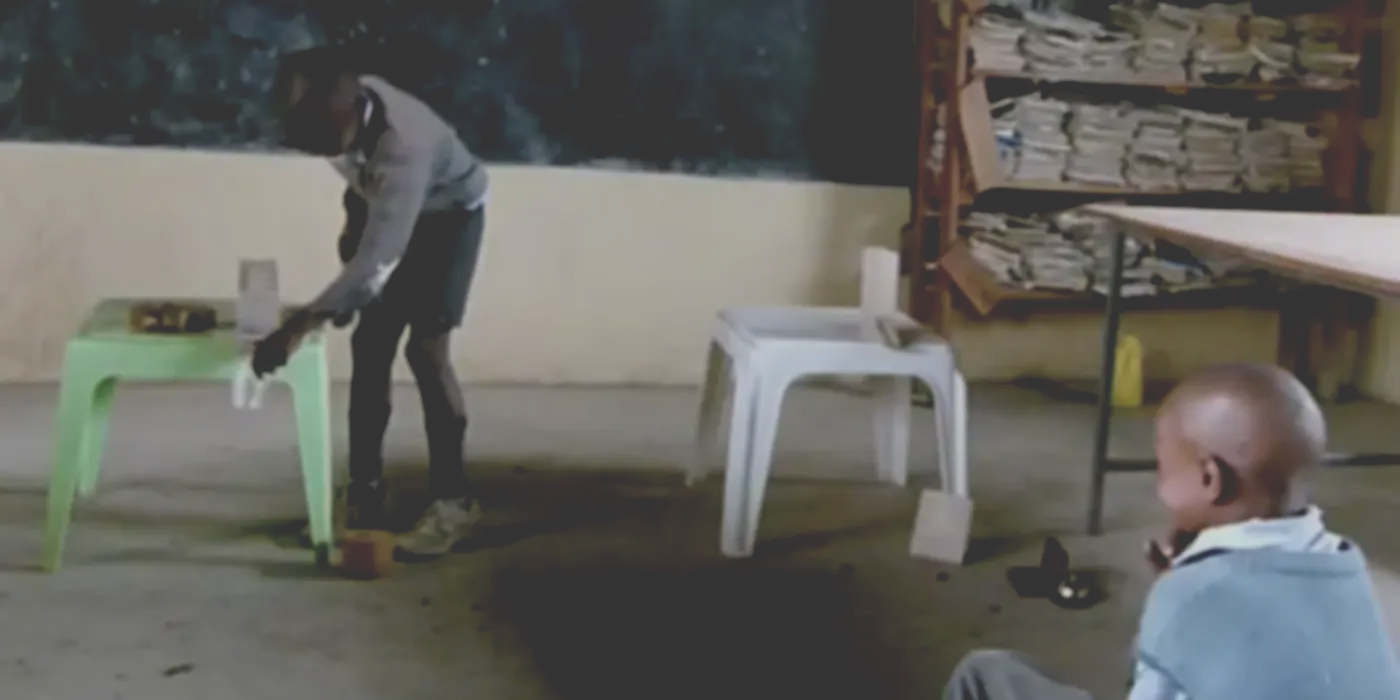
Kids Helping Kids Is Universal - But Cultures Help Differently
A simple game reveals a universal instinct in kids
A simple game reveals a universal instinct in kids

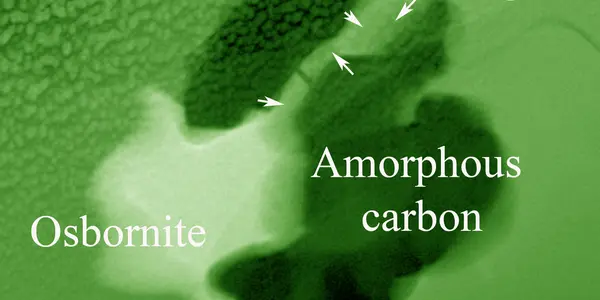
A new mineral, cubic boron nitride, has been officially approved by the International Mineralogical Association as “qingsongite.” You'd think there aren't a lot of mineral discoveries happening every day but this had been in committee since 2009. Geology paces itself and perhaps so do naming conventions. But it turns out there are at least 100 proposals for new minerals and their names submitted each year. To-date, more than 4700 species of minerals have been recognized.Qingsongite was named after Qingsong Fang (1939–2010), a professor at the Institute of Geology, the Chinese Academy of Geological Sciences, who found the first diamond in the Tibetan chromium-rich rocks in the late 1970s, and contributed to the discovery of four new mineral species.

The intensity of the jets of water ice and organic particles that shoot out from Enceladus, a moon orbiting Saturn, depends on its proximity to the ringed planet, according to data obtained by NASA's Cassini spacecraft.The finding adds to evidence that a liquid water reservoir or ocean lurks under the icy surface of the moon. This is the first clear observation the bright plume emanating from Enceladus' south pole varies predictably. Cassini, which has been orbiting Saturn since 2004, discovered the jets that form the plume in 2005. The water ice and organic particles spray out from several narrow fissures nicknamed "tiger stripes."

A color image, taken on May 1st, 2013 by the Wide Angle Camera (WAC) instrument aboard NASA's MESSENGER spacecraft orbiting Mercury, features the Hovnatanian crater, named for Armenian painter Hakop Hovnatanian. The crater's elliptical shape and the bright rays' butterfly pattern indicate that a very oblique impact produced the crater. The brightness of the rays indicate that they are relatively young features on Mercury's surface.

The sleeping patterns of baby birds are similar to that of baby mammals they even appear to change in the same way as it does in humans.
Studying barn owls in the wild, researchers from the Max Planck Institute for Ornithology and the University of Lausanne discovered that this change in sleep is strongly correlated with the expression of a gene involved in producing dark, melanic feather spots, a trait known to covary with behavioral and physiological traits in adult owls. They speculate that sleep-related developmental processes in the brain contribute to the link between melanism and other traits observed in adult barn owls and other animals.

The K Computer has been used by researchers from the RIKEN HPCI Program for Computational Life Sciences, the Okinawa Institute of Technology (OIST) in Japan and Forschungszentrum Jülich in Germany to carry out out the largest general neuronal network simulation to date: 1.73 billion nerve cells connected by 10.4 trillion synapses.
The simulation was made possible by the development of advanced novel data structures for the open-source simulation software NEST.
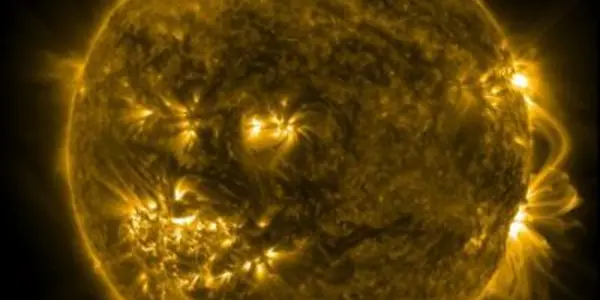
In August 8th, the VERIS rocket is going to launch from the White Sands Test Facility in New Mexico.
VERIS is short for Very high Resolution Imaging Spectrometer and its 15-minute trip will carry an instrument that can measure properties of the structures in the sun's upper atmosphere down to 145 miles across, some eight times clearer than any similar telescope currently in space.

In this Hubble Space Telescope composite image taken in April 2013, the sun-approaching Comet ISON floats against a seemingly infinite backdrop of numerous galaxies and a handful of foreground stars. The icy visitor, with its long gossamer tail, appears to be swimming like a tadpole through a deep pond of celestial wonders.In reality, the comet is much, much closer. The nearest star to the Sun is over 60,000 times farther away, and the nearest large galaxy to the Milky Way is over thirty billion times more distant. These vast dimensions are lost in this deep space Hubble exposure that visually combines our view of the universe from the very nearby to the extraordinarily far away.

Since the United States lacks regulatory guidelines or a standardized risk assessment for herbal supplement use, it falls on pediatricians to try and recognize what natural pharmaceuticals could be impacting the health of mothers and children during breastfeeding.
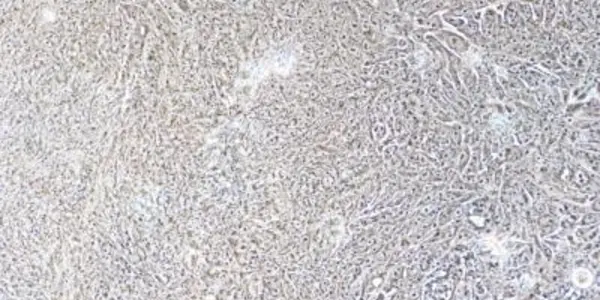
Omega-3 fatty acids, contained in oily fish such as salmon and trout, selectively inhibit growth and induce cell death in early and late-stage oral and skin cancers, according to a new paper.

Oxytocin, the warm, fuzzy miracle hormone that promotes feelings of love, social bonding and well-being, isn't quite as simple as those miracle-cure-of-the-week newspaper stories want you to believe.
It turns out that correlation is not causation, which surprises no one in science, and that oxytocin is also linked to emotional pain. Maybe someone will call this other form Dark Oxytocin, because stressful social situations continue to haunt you and and even trigger fear and anxiety in the future, you can blame hormones. And putting Dark in front of mysterious things is popular.
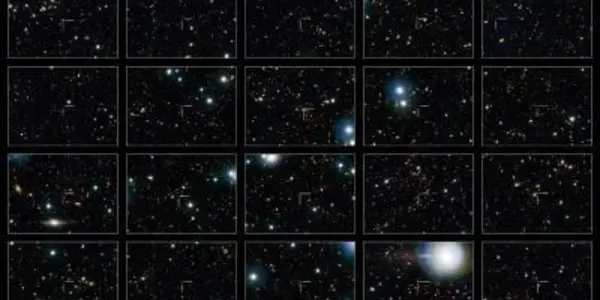
When some galaxies stop forming new stars, they become "quenched".
Quenched galaxies in the distant past appear to be much smaller than the quenched galaxies in the Universe today, which is something of a science mystery; how can these galaxies grow if they are no longer forming stars?
Hubble COSMOS survey results may have delivered a surprisingly simple answer to this long-standing cosmic riddle.

The Standard Model has some gaps and is unable to explain phenomena like dark matter or gravitational interaction between particles. Some physicists are seeking what they call "New Physics", something more fundamental, but there has been no direct proof of its existence, only indirect observation of dark matter, as deduced, among other things, from the movement of the galaxies.