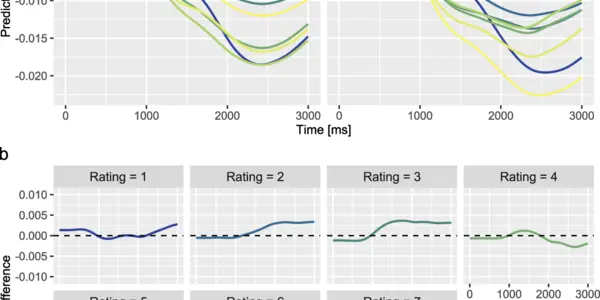
Kids Helping Kids Is Universal - But Cultures Help Differently
A simple game reveals a universal instinct in kids
A simple game reveals a universal instinct in kids


The water level in the Dead Sea has been dropping at an increasing rate since the 1960s, exceeding a meter per year during the past decade. This drop has triggered the formation of sinkholes and widespread land subsidence along the Dead Sea shoreline, resulting in severe economic loss and infrastructural damage. In a new paper, researchers examined the spatiotemporal evolution of sinkhole-related subsidence using Satellite based Interferometric synthetic aperture radar (InSAR) measurements and field surveys, and resolved millimeteric-scale precursory subsidence in all sinkhole sites that they examined in Israel during 2012.
Toward an operational sinkhole early warning system along the Dead Sea

In North America, the environmental segment of the conservation community regards humanity as the enemy. Not so in South America. They want you to visit - just don't ruin the place.A team of scientists from the Senckenberg Research Institute in Dresden were doing a study about the ways ecotourism and conservation can cohabitate nicely - and they discovered a new species of frog. As with most new discoveries, this micro-endemic species was immediately declared endangered because no one had seen it before.
Shy? You may be less happy. Surveys say so.In its happy journey into becoming anthropology, epidemiology is increasingly tackling social issues like they are diseases and using surveys as verification. They have time now, since that whole malaria problem has been solved. Dr. Catharine Gale, Reader in Epidemiology at the University of Southampton, and colleagues from the University of Edinburgh and University College London looked at survey results and concluded that young adults who are more outgoing or more emotionally stable are happier in later life than their more introverted or less emotionally stable peers.
Do looks matter in the work place? There are a lot more unattractive people running departments and entire companies than there are pretty ones - but a new paper by academics says just the opposite. Pretty people have an easier time on the job.
The paper by Timothy Judge, professor of management at the University of Notre Dame, and Brent Scott from Michigan State University, is the first to link attractiveness to cruelty in the workplace.
Despite the horrors of the Maoist regime, the Communist Party dictatorship in the People's Republic of China continues to exist and retain control, even though tens of millions of people suffered from persecution or were executed for political reasons while he lived. Even less likely, the perpetrators and victims have managed to continue living together long after the death of Mao Zedong and the beginning of the reform era in 1978.
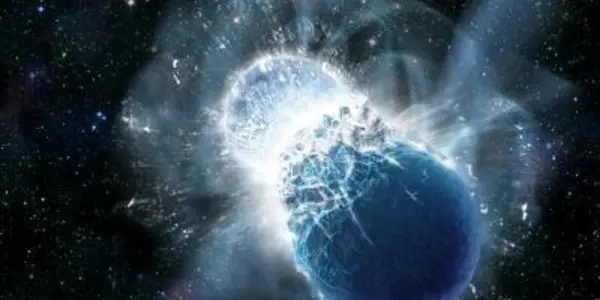
Why do we value gold? It's not strong, it's not pretty, it's rare but in the 21st century, given enough energy we can turn lead into gold, the way alchemists once only dreamed about.
It's not just rare on Earth, it's rare in the universe, even though the universe has a fantastic amount of energy, it is a perpetual Philosopher's Stone. Yet even in the infinite universe creating gold is not trivial. Unlike elements such as carbon or iron, gold cannot be created within a star. Instead, it must be born in a more cataclysmic event, like one that was witnessed last month: a short gamma-ray burst.

Neutrinos are the second most abundant particles in the Universe, after photons, but when it comes to being elusive they can compete with anything. That's due to their having extremely weak interactions with all other particles, which leads to them being called 'ghost particles’. Neutrinos are invisible but could carry as much mass as all other known forms of matter, traveling almost at the speed of light over fantastic distances. Their tiny masses have important consequences for the structures in the Universe and they are the driving element in the explosion of Supernovae.
A group at the Bristol Robotics Laboratory have developed a novel way of charging mobile phones - using urine as the power source to generate electricity.Lead author Dr. Ioannis Ieropoulos from
the University of the West of England
is an expert at harnessing power from unusual sources using microbial fuel cells and says, “We are very excited as this is a world first, no-one has harnessed power from urine to do this so it's an exciting discovery. Using the ultimate waste product as a source of power to produce electricity is about as eco as it gets.”Basically, the microbial fuel cells contain bacteria that produce electricity from pee. Bet you never thought of that, Muad'Dib.
The Earth has a violent history: About 4.5 billion years ago, a maelstrom of gas and dust circled in a massive disc around the sun, gathering in rocky clumps to form asteroids. These asteroids, gaining momentum, whirled around a fledgling solar system, repeatedly smashing into each other to create larger bodies of rubble — the largest of which eventually cooled to form the planets.
Countless hypotheses, simulations and geologic observations support such a scenario, but there remains one lingering mystery: If the Earth arose from the collision of asteroids, its composition should resemble that of meteoroids, the small particles that break off from asteroids.

On July 16th, 2013, at 12:09 a.m. EDT, the sun erupted with an Earth-directed coronal mass ejection, sending billions of tons of particles into space. These particles cannot travel through the atmosphere to harm humans on Earth, but they can affect electronic systems in satellites and on the ground. The particles will reach Earth over the next few days.
Experimental NASA research models, based on observations from NASA's Solar Terrestrial Relations Observatory, show that the CME left the sun at speeds of around 560 miles per second, a fairly typical speed.
90% of East Asian adolescents in British Columbia are not sexually active, so East Asian parents are doing something right, but the ones who do have sex engage in some risky behavior
The paper in the Canadian Journal of Human Sexuality
also says it is the first population-based survey in Canada that asked East Asian adolescents their reasons for abstaining from sex: the top two reasons for waiting were not feeling ready and wanting to meet the right person.

In 2011 the Very Large Telescope (VLT) discovered a gas cloud with several times the mass of the Earth accelerating towards the black hole at the center of the Milky Way. The cloud is now so stretched that its front part has passed the closest point and is traveling away from the black hole at more than 10 million km/h, whilst the tail is still falling towards it.The black hole at the center of the Milky Way, known as Sgr A* (pronounced Sagittarius A star), is estimated to have a mass of about four million times that of the Sun and is the closest supermassive black hole known - so it is the best place to study black holes in detail.