Kids Helping Kids Is Universal - But Cultures Help Differently
A simple game reveals a universal instinct in kids
A simple game reveals a universal instinct in kids

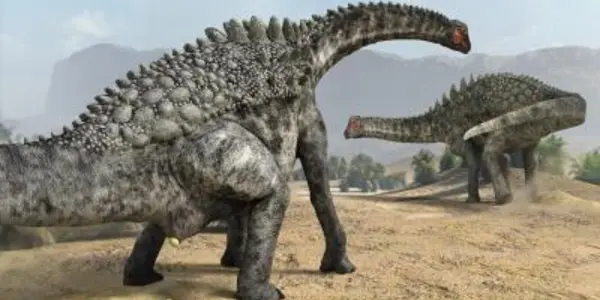
A study has documented detailed records of dinosaur egg fossils in the Coll de Nargó archaeological site in Lleida, Spain and found there are four. Up until now, only one type of dinosaur egg had been documented in the region.
The archaeological site in Coll de Nargó is home to different types of geological formations, including the Areniscas de Arén Formation and the Tremp Formation, which have provided a rich and varied yield of dinosaur fossils through the entire Pyrenees region.

Mohs surgery, developed in 1938 by Dr. Frederic E. Mohs, is the most effective technique for removing basal cell carcinoma and squamous cell carcinoma. It is a fairly common outpatient procedure.
But in a sensitive area, like in a patient with deep skin cancer and located on the nostril, the tricky part is reconstructing the nostril so that it doesn't lift up or droop down. It's an important cosmetic issue, but it's also critical for breathing.

As network carriers debate the next Ethernet standard, and whether transmission speeds of 400 gigabit per second or 1 terabit per second should be the norm, engineers are working on new ways to squeeze next-generation performance out of current-generation systems.
A team from AT&T has devised a new technique that enables tuning of the modulation spectral efficiency and allows 400 Gb/s signals to be sent over today's 100 gigahertz-grid optical networks over ultra-long distances.
Spectral efficiency is the information rate that can be transmitted over a given bandwidth, and measures how efficiently the available frequency spectrum is utilized.

Unlike a cryptic phrase, a cryptic species in biology is outwardly indistinguishable - until you look inside their genes.
Two University of Michigan marine biologists have identified three cryptic species of tiny clams, long believed to be members of the same species, which have been hiding in plain view along the rocky shores of southern Australia for millions of years.
The scientists conducted a genetic analysis after collecting thousands of the crevice-dwelling, rice grain-sized clams from hundreds of miles of southern Australia coastline over the past decade.
The bacterial foodborne pathogen Listeria monocytogenes is the causative agent of listeriosis, a debilitating disease linked with about 2,500 illnesses and more than 500 deaths in the U.S.A. each year. A characteristic feature of L. monocytogenes is its ability to grow at cold temperatures and even in the presence of high concentrations of salt - traditional food preservation techniques which arrest the growth of most other pathogens.
The bacterium protects itself from such stresses by twisting into a protective corkscrew type shape in an effort to reduce its exposure to the stress—in the same way a human might wrap up tight—hugging the core to reduce the effects of the cold.
A culture that digs up dead female corpses to bury with single deceased men has unsurprisingly embraced probiotics. Starting in the 1990s, the fast-growing yogurt, supplement, pharma and feed sectors are expected to reach $5 billion despite any benefit.
There are several hundred kinds of nutritional foods and ingredients containing probiotics currently sold in the Chinese market, such as fermented milk (yogurt), fermented cheese or cream, fermented soy milk, probiotics supplement and pharma products.

It had been shown that the origin of pumpkins and cucumbers can be traced back to India and a new genetic analysis has updated that data.
Compared to grains and pulses, vegetables are under-investigated taxonomically, and information on their genome is scarce. The cucumber family, Cucurbitaceae, includes many of our favorite foods: pumpkins, melon, cucumber, watermelon, bottle gourds, and bitter gourd. Molecular data have recently revealed that both cucumber (Cucumis sativus L.) and melon (Cucumis melo L.) are indigenous to India and likely to have originated from the foothills of the Himalayas.
Is your body shape predetermined? Some role for heritage is obvious and there efforts to fix people into an epigenetic destiny as well but it may be that diet and exercise can only do so much. A new paper says body composition, including soft fat tissue and hard bone tissue, which can lead to excess fat or osteoporosis, is genetic.
Prof. Gregory Livshits and Dr. Michael Korostishevsky of Tel Aviv University's Department of Anatomy and Anthropology say they have uncovered a clear genetic link between fat and bone mass. These factors, which contribute to bone metabolism, also affect Body Mass Index (BMI), which often serves as an indicator of overall health.
A protein known as mini-chromosome maintenance (MCM) has been found to change DNA topology and make DNA twist up into a so-called "supercoil".
Supercoiling can be thought of as similar to twisting one end of a rubber band while holding the other end still. After a few turns, it forms a neatly twisted rope. But if you keep on turning, the twisted band will twist back upon itself into an increasingly coiled-up knot. Similarly, a DNA molecule can be twisted and coiled to varying extents to form different "supercoiled" structures.
Video games can be difficult, even frustrating at the harder levels. That is part of their appeal. It turns out that frustrated people are attracted to video games also. The temptation to steal or cheat is greater if the risk of being caught is low and a new psychology paper suggests that denying people the opportunity to engage in these taboo behaviors may lead them to seek out violent video games as a way of managing their frustration.
People with more money may live longer, if not better, than poor people but attempts to link high socioeconomic status to better health and lower mortality have been ineffective because it's unclear whether the association has more to do with access to resources or the glow of high social status relative to others. Scholars call the latter "relative deprivation."
A new study found that women who take aspirin have a reduced risk of developing melanoma. The longer they take it, the lower the risk, suggesting that aspirin's anti-inflammatory effects may help protect against this type of skin cancer.
In the Women's Health Initiative, researchers observed US women aged 50 to 79 years for an average of 12 years and noted which individuals developed cancer. At the beginning of the study, the women were asked which medications they took, what they ate, and what activities they performed.