You Feel Colder As You Age: The Science Reason Why
Older people report feeling colder, enough that it is clearly happening, but why has been a mystery. Until now.
Older people report feeling colder, enough that it is clearly happening, but why has been a mystery. Until now.


SensoMotoric Instruments (SMI) and the German Research Center for Artificial Intelligence (DFKI) discuss new augmented reality applications which trigger information by eye gaze. Eye tracking technology by SensoMotoric Instruments (SMI) was used by researchers from the German Research Center for Artificial Intelligence (DFKI) to develop a vision of new augmented reality applications in mobile environments.
These applications use eye tracking data from SMI's mobile eye tracking glasses to analyze a user's eye gaze on objects, buildings or persons. A special DFKI information processing technology detects patterns of attention and presents additional information on objects of interest to the person wearing the glasses.

Researchers analyzed strains of mold fermented in sourdough bread and were able to isolate natural compounds that can help keep bread fresh without changing its flavor, resulting in a tastier loaf.
Michael Ganzle, professor and Canada Research Chair in the University of Alberta Department of Agricultural, Food and Nutritional Science and fellow researchers say the natural compounds can replace preservatives added to store-bought bread which are safe to eat and extend shelf life, but alter the taste.
Researchers with National Renewable Energy Laboratory (NREL), one of the U.S. Department of Energy's (DOE) labs, say that the United States can double its energy productivity by 2030 — and do so in ways that bolster the nation's economy.
Unveiling their recommendations at the National Press Club in Washington, D.C., NREL Director Dan Arvizu and a blue-ribbon panel of 20 energy experts drove that message home, declaring that the United States and other members of the Alliance to Save Energy (ASE) Commission on National Energy Efficiency Policy said that doubling energy productivity could create a million new jobs, while saving the average household $1,000 a year and reducing carbon-dioxide emissions by one-third.
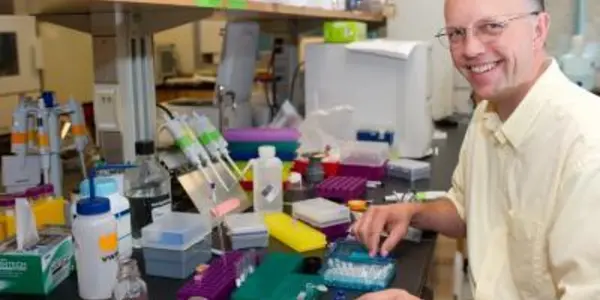
The base pairs that hold together two pieces of RNA, the older cousin of DNA, are some of the most important molecular interactions in living cells. Many scientists believe that these base pairs were part of life from the very beginning and that RNA was one of the first polymers of life. But there is a problem. The RNA bases don't form base pairs in water unless they are connected to a polymer backbone, a trait that has baffled origin-of-life scientists for decades. If the bases don't pair before they are part of polymers, how would the bases have been selected out from the many molecules in the "prebiotic soup" so that RNA polymers could be formed?
Evidence from Siberian caves suggests that a global temperature rise of 1.5 degrees Celsius could see permanently frozen ground thaw over a large area of Siberia, which would threaten to release carbon from soils and damage to natural and human environments.
A thaw in Siberia's permafrost (ground frozen throughout the year) could release over 1,000 giga-tons of the greenhouse gases carbon dioxide and methane into the atmosphere, potentially enhancing global warming.

Studies by the U.S. Department of Agriculture (USDA) Agroecosystems Management Research Unit in Lincoln, Nebraska are shedding some light on the microbes that dwell in cattle manure—what they are, where they thrive, where they struggle, and where they can end up.
In one project, ARS microbiologist Lisa Durso used fecal samples from six beef cattle to identify a core set of bovine gastrointestinal bacterial groups common to both beef and dairy cattle. She also observed a number of bacteria in the beef cattle that had not been reported in dairy cows, and identified a diverse assortment of bacteria from the six individual animals, even though all six consumed the same diet and were the same breed, gender and age.
In "The Descent of Man" (1871), while contemplating how humans learned to speak, Charles Darwin speculated that language might have had its origins in singing, which "might have given rise to words expressive of various complex emotions."
Since then, numerous researchers have believed that that Darwin was on the right path and a new group says the balance of evidence now suggests that human language is a grafting of two communication forms found elsewhere in the animal kingdom: first, the elaborate songs of birds, and second, the more utilitarian, information-bearing types of expression seen in a diversity of other animals.
Every year in Germany, approximately 280,000 people suffer a myocardial infarction; more than 52,000 die as a result. Due to an occluded vessel, parts of the heart muscle no longer have sufficient circulation and the tissue dies off. These regions are not replaced by new heart muscle cells but instead by scar tissue – this generally causes the pump function of the heart to decrease following an infarction.
Scientists have tested a method in mice allowing the morphological and functional sequelae of a myocardial infarction to be reduced and
with which scar tissue can be reduced and cardiac output increased.

Deficit thinking is the belief by elites that the public is simply unaware of or unable to understand science and that lack of knowledge prevents the right policy decision. It rarely works as a strategy.
Scholars at Umeå University in Sweden analyzed public opposition to dam removal, an increasingly common practice as old splash dams and small hydropower dams have become obsolete, and found that disagreements are not based on knowledge deficiency but are instead a case of different understandings and valuation of the environment and the functions it provides.
Solar geo-engineering is one proposed approach to mitigating the effects of climate change - the idea being to deflect some of the sun's incoming radiation.
Ignoring the technology issues, in a world where countries can't even agree they contribute to greenhouse gases, the political uncertainties and geopolitical questions about who would be in charge of solar geo-engineering activity and its goals are daunting. A UN of climate change is the worst of all possible worlds.
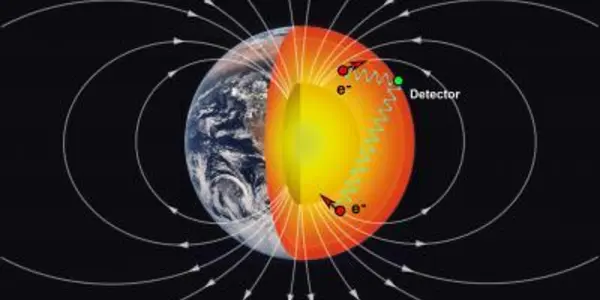
Researchers have described a new technique that might one day reveal in higher detail than ever before the composition and characteristics of the deep Earth. There's just one catch: it can't exist.
Instead of being part of the natural world we know, where we have gravity, the weak and strong nuclear forces and electromagnetism the new technique would require a fifth, hypothetical force of nature - a long-range spin-spin interaction. The building blocks of atoms —electrons, protons, and neutrons — separated over vast distances could still "feel" each other's presence.
Living against our biological clock, working late-night shifts or eating at inappropriate times, can has been linked to health risks like metabolic syndrome, obesity, and diabetes in Current Biology - at least for mice.
Insulin action rises and falls according to a 24-hour, circadian rhythm, the researchers write. Mice unable to keep the biological time for one reason or another get stuck in an insulin-resistant and obesity-prone mode.