Kids Helping Kids Is Universal - But Cultures Help Differently
A simple game reveals a universal instinct in kids
A simple game reveals a universal instinct in kids

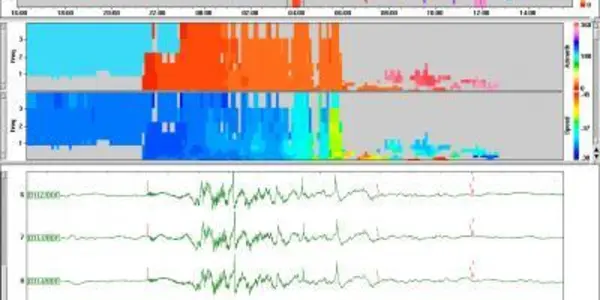
Infrasonic waves from the meteor that broke up over over Chelyabinsk in Russia's Ural mountains last week were the largest ever recorded by the Comprehensive Nuclear-Test-Ban Treaty Organization's (CTBTO) International Monitoring System. The blast was detected by 17 infrasound stations in the CTBTO's network, which tracks atomic blasts across the planet. The furthest station to record the sub-audible sound was 15,000 km away in Antarctica.

Can individual's state of mind can effect how well a vaccine may work?
Writing in Clinical Infectious Diseases, UCLA psychiatry professor Dr. Michael Irwin and colleagues say they have found a link between untreated depression in older adults and decreased effectiveness of the herpes zoster - shingles - vaccine. Shingles is a painful, blistering skin rash caused by the varicella–zoster virus, which also causes chickenpox. It may affect a million people over the age of 60 each year in the U.S and each year health officials urge individuals 50 and older to get vaccinated against the virus. The vaccine boosts cell-mediated immunity to the virus and can decrease the incidence and severity of the condition.
If you have seen pictures of the Moon, you see a giant ball of dust with astronaut footprints etched into the surface - but information garnered from missions such as NASA's 2009 Lunar CRater Observation and Sensing Satellite (L-CROSS) lunar-impact probe, along with more modern scanning technologies and precise measurements, are changing the perception it is all dry.
You can find ratings for anything on the Internet; reviews and ratings for hotels and restaurants are surprisingly well-regarded. Doctors, not so much. But it's generational as well.
And one thing trumps all else: 'Do they accept my insurance?' 92% of parents listed that as very important while only 65% rated a convenient office location as very important.
The University of Michigan
ott Children's Hospital National Poll on Children's Health
found that only 25 percent of parents say doctor rating websites matter in their search for a child's physician. However, younger parents (considered those under 30) were more likely (44%) than parents 30 or older (21%) to think doctor rating websites are very important.
The Swedish Obese Subjects study carried out at the Sahlgrenska Academy, University of Gothenburg found that, though weight-loss surgery is currently only offered to patients who exceed a certain BMI, surgical intervention would improve the health of many more people.
In order to meet the current selection criteria for weight-loss surgery, Swedish patients must have a body mass index (BMI) above 40 for healthy patients, or above 35 in combination with other risk factors such as type 2 diabetes. They examined the cases of 104 patients who were operated on despite their BMI being "too low" by current standards yet as a result had a 67% reduced chance of developing diabetes.
Sea-level rise over the coming century could affect some regions far more than others, according to a numerical model which projects that parts of the Pacific will see the highest rates of rise while some polar regions will experience falls in relative sea levels due to the ways sea, land and ice interact globally.
Neurim Pharmaceuticals has announced positive results from a phase II clinical study evaluating the efficacy and safety of Piromelatine (Neu-P11), a novel investigational multimodal sleep medicine developed for the treatment of patients with primary and co-morbid insomnia.
The new results are from a recent double-blind, randomized, placebo controlled, parallel group, non-confirmatory, sleep-laboratory study. The study evaluated piromelatine compared to placebo in 120 adult primary insomnia patients, ages 18 years and older.
Surgeon Paolo Macchiarini, Professor of Regenerative Surgery at Karolinska Institutet, has become famous worldwide due to successfully transplanting bioengineered stem cell-based trachea, composed of both artificial and biological material, in patients. That was an important waypoint on the road to the Big 5 organs, which are far largers and more complex.
Next up is the the esophagus and diaphragm and an experimental attempt to regenerate brain material in mice and rats, he said during his seminar at the scientific AAAS Annual Meeting in Boston.
Science has always had a social component. Much of science is a neutral endeavor for the public good but in modern times the political component has meant navigating treacherous social and environmental policy waters.
Not an easy task when science requires help from outside its field. Different social and science fields use different methods and scientists and policy makers rarely work together. The government has taken over increased government control of projects and funding since World War II but modern problems mean that modern types of research centers are needed, as are new ways of organizing collaborations between scientists and policy makers - it can't be just political appointees handing out money to research the administration happens to like.
Bacteria didn't just impact our evolution, we impacted the evolution of bacteria also, according to a study of DNA preserved in calcified bacteria on the teeth of ancient human skeletons.
The ancient genetic record reveals the negative changes in oral bacteria brought about by the dietary shifts as humans became farmers, and later with the introduction of food manufacturing in the Industrial Revolution.
Despite being in use for almost 20 years with no health or safety issues, controversy continues to surround genetically modified crops and their regulation.
Bruce Chassy, a professor emeritus of food science and human nutrition at the University of Illinois at Urbana-Champaign, believes that after thousands of research studies and worldwide planting, "genetically modified foods pose no special risks to consumers or the environment" and are over-regulated.

Engineers from the University at Buffalo engineers have created technology that could lead to breakthroughs in solar energy, stealth technology and other areas - but they had to catch some rainbows first.
Qiaoqiang Gan, PhD, an assistant professor of electrical engineering at the University at Buffalo, and a team of graduate students developed a "hyperbolic metamaterial waveguide," which is essentially an advanced microchip made of alternate ultra-thin films of metal and semiconductors and/or insulators. The waveguide halts and ultimately absorbs each frequency of light, at slightly different places in a vertical direction to catch a "rainbow" of wavelengths.