You Feel Colder As You Age: The Science Reason Why
Older people report feeling colder, enough that it is clearly happening, but why has been a mystery. Until now.
Older people report feeling colder, enough that it is clearly happening, but why has been a mystery. Until now.


There's a mystery in them there clouds - but astronomers at Caltech are on the case.
Near the crowded galactic center, billowing clouds of gas and dust hide a supermassive black hole 3,000,000X as massive as our sun, Its gravity is strong enough to grip stars that are whipping around it at thousands of kilometers per second. One particular cloud named G0.253+0.016
has delighted astronomers. Because scientists love a mystery.
G0.253+0.016 defies the rules of star formation. But apparently those are more guidelines than rules.

Students everywhere, put down those highlighters and pick up some flashcards! Some of the most popular study strategies, like highlighting and even re-reading, don't show much promise for improving student learning, according to a new paper.
In the article, psychologist John Dunlosky of Kent State University and colleagues review ten learning techniques commonly used by students.
Based on the available evidence, they provide recommendations about the applicability and usefulness of each technique.
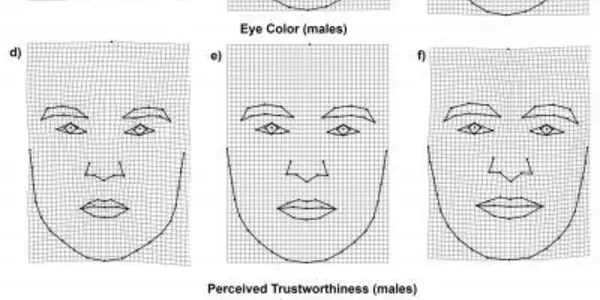
People view brown-eyed faces as more trustworthy than those with blue eyes- unless the blue eyes belong to a man with a broad face, according to a new paper in PLOS ONE.
Vega is the second brightest star in northern night skies and astronomers using the Infrared Space Telescopes have discovered an asteroid belt much like that of our sun.
Results showing an asteroid belt around Vega makes it more similar to its twin, the star called Fomalhaut. Both stars now are known to have inner, warm asteroid belts and outer, comet-filled belts, similar in architecture to the asteroid and Kuiper belts in our own solar system.
A popular hypothetical alternative to Albert Einstein's theory for the acceleration of the expansion of the universe does not fit newly obtained data on a fundamental constant, the proton to electron mass ratio, which may mean the need for a new direction in learning about accelerating expansion.
To explain the acceleration of the expansion of the universe, astrophysicists have invoked dark energy – a hypothetical form of energy that permeates all of space. A popular concept of dark energy does not fit new results on the value of the proton mass divided by the electron mass in the early universe. The predicted change in the ratio by the dark energy theory, generally referred to as rolling scalar fields, don't fit the new data.

The Tree of Life is what Charles Darwin first sketched in 1837 to show how species evolved by natural selection. The diagram started at a central point with a common ancestor, then the lines spread apart as organisms evolved and separated into distinct species. The letters represented species.
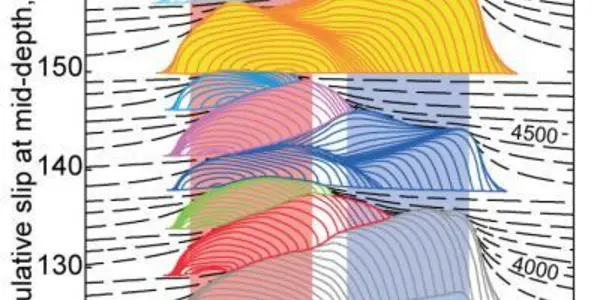
During an earthquake, waves emitted when the two sides of a fault move—or slip—rapidly past each other, create ground motion, with an average relative speed of about three feet per second.
Not all fault segments move so quickly. Some slip slowly, through a process called creep, and are considered to be "stable," or not capable of hosting rapid earthquake-producing slip.
One common hypothesis suggests that such creeping fault behavior is persistent over time, with currently stable segments acting as barriers to fast-slipping, shake-producing earthquake ruptures.
Not all isolated stem cells are equally valid in regenerative medicine and tissue engineering - only a specific group of cord blood stem cells (CB-SC) maintained in culture are useful for therapeutic purposes, say researchers in a new paper.
At present, cord blood stem cells
- adult stem cells - are key to regenerative medicine and tissue engineering. From all types of
cord blood stem cells
those called "Wharton's jelly stem cells" (HWJSC) have piqued the interest of specialists in regenerative medicine at the University of Granada and Alcalá de Henares University, because of their accessibility and ability to develop into several types of tissue and modulate immune responses.

The debris disk around nearby star Fomalhaut and a mysterious planet may be clues to a titanic planetary disruption in the system.
The debris belt is wider than previously believed, spanning a section of space from 14 to 20 billion miles from the star. And it seems the planet follows an unusual elliptical orbit that carries it on a potentially destructive path through the vast dust ring. The planet, Fomalhaut b, swings as close to its star as 4.6 billion miles, and the outermost point of its orbit is 27 billion miles away from the star, according to recalculations made from newer Hubble observations made last year.
Doctors and scientists will rightly note that, in every study ever done on weight loss, 100% of participants who consumed fewer calories than they burned lost weight. Exercise helps in multiple ways, but in weight loss it helps burn the calories.
A survey of psychologists finds they believe something additional; they say dieters should pay attention to the role emotions play in weight gain and loss if they hope to succeed in the physical two. The survey by the Consumer Reports National Research Center asked 1,328 psychologists how they dealt with clients' weight and weight loss challenges. 306 of the respondents provide weight loss counseling.
The dramatic increase in obesity over the past few decades has been tightly associated with an increase in obesity-related conditions such as type 2 diabetes, heart disease and cancer.
Of course, it's also been associated with a change in the definition of obesity in that period. In 1912 the perfect woman was determined to be 5'7" tall, with measurements of 35-30-40 and weighing in at 171 lbs., but there is no denying the developed world is getting fatter in an unhealthy way.
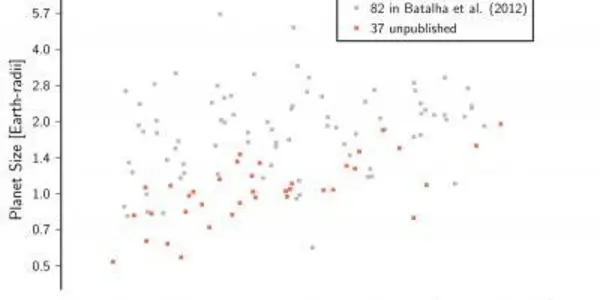
17 percent of all sun-like stars have planets one to two times the diameter of Earth orbiting close to their host stars, according to a team of astronomers who created their estimate based on an analysis of the first three years of data from NASA's Kepler mission. Thousands of potential exoplanets have been detected, which is good news for those searching for habitable worlds outside our solar system.