Kids Helping Kids Is Universal - But Cultures Help Differently
A simple game reveals a universal instinct in kids
A simple game reveals a universal instinct in kids


For two decades, carbon dioxide was touted as the silver bullet for halting climate change. What about methane, what about NO2, and what about soot?
Soot, that black carbon that causes smoggy skies (and has sent Beijing's Pollution Index right off the charts) is the number two contributor to global warming, second to carbon dioxide, according to a four-year assessment by an international panel that is not the Intergovernmental Panel on Climate Change.
The new study concludes that black carbon, the soot particles in smoke and smog, contributes about twice as much to global warming as previously estimated by the 2007 IPCC report.

Want concerns about transmission of disease and antibiotic resistance to get attention? Show that pretty tropical fish are at risk.
The $15 billion ornamental fish industry has sounded the alarm about antibiotic resistance because of concerns that treatments for fish diseases may not work when needed – and creating yet another mechanism for exposing humans to antibiotic-resistant bacteria. The risk to humans is minor unless they frequently work with fish or have compromised immune systems, researchers said, but more serious is the risk to this industry, which has grown significantly in recent years, and is now a $900 million annual business just in the United States.
Researchers have discovered a way to stimulate the brain's natural defense mechanisms in people with Alzheimer's disease.
One of the main characteristics of Alzheimer's disease is the production in the brain of the toxic molecule amyloid beta. Microglial cells, the nervous system's defenders, are unable to eliminate this substance, which forms deposits called senile plaques.
Scientists have established that the majority of ozone-depleting iodine oxide observed over the remote ocean comes from a previously unknown marine source - the principal source of iodine oxide can be explained by emissions of hypoiodous acid (HOI), a gas not yet considered as being released from the ocean, along with a contribution from molecular iodine (I2).
Since the 1970s when methyl iodide (CH3I) was discovered as ubiquitous in the ocean, the presence of iodine in the atmosphere has been understood to arise mainly from emissions of organic compounds from phytoplankton -- microscopic marine plants.
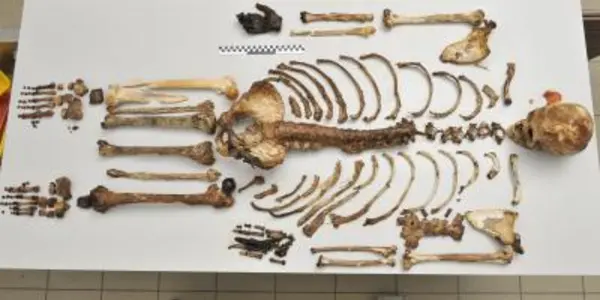
The HIrisPlex DNA analysis system
that can establish hair and eye color from forensic samples in modern crime scenes can also identify details from ancient human remains, according to a paper which used the system to reconstruct hair and eye color from teeth up to 800 years old.
The system looks at 24 DNA polymorphisms, naturally occurring variations, which can be used to predict eye and hair color from human remains such as teeth and bones.
The IFIT protein enables the human immune system to detect viruses and prevent infection by acting as foot soldiers guarding the body against infection. They recognize foreign viral ribonucleic acid (RNA) produced by the virus and act as defender molecules by potentially latching onto the genome of the virus and preventing it from making copies of itself, blocking infection.
Researchers have created a device which potentially can see one molecule though a simple optical system and can analyze its components within minutes. It uses plasmonics, the study of vibrations of electrons in different materials, and could allow for rapid and more accurate drug testing for professional athletes because it could detect the presence of even trace amounts of a substance.
It could also be used at airports or other high-security locations to prevent would-be terrorists from concealing explosives or traffickers from smuggling drugs.
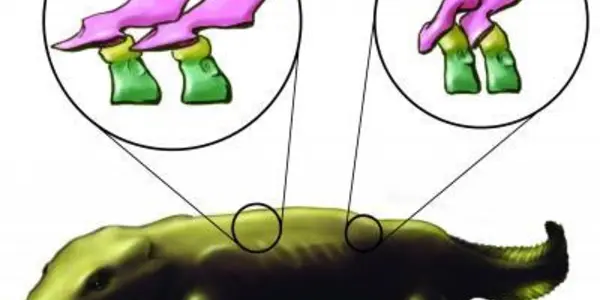
What was the backbone of early tetrapods, the earliest four-legged animals, like?
High-energy X-rays and a new data extraction protocol have allowed researchers to reconstruct the backbones of the 360 million year old fossils in exceptional detail. The results shed new light on how the first vertebrates moved from water onto land.
Tetrapods are four-limbed vertebrates,today represented by amphibians, reptiles, birds and mammals. Around 400 million years ago, early tetrapods were the first vertebrates to make short excursions into shallower waters where they used their four limbs for moving around. How this happened and how they then transferred to land is the science debate.
A new treatment, BETMIGA (mirabegron) has received approval from the European Commission (EC) for the treatment of overactive bladder (OAB) symptoms in adults.
In the post-genomic era, 'omic' technology, and marketing claims to match, promise to understand the biology of various diseases. Metabolomics seeks to look at the chemical fingerprints that cellular processes leave behind and does so through characterization of the small molecule metabolites.
Astronomers using using the Green Bank Telescope (GBT) in West Virginia, the Arecibo Telescope in Puerto Rico, and data from NASA's Spitzer and WISE (Widefield Infrared Survey Explorer) satellites have discovered hundreds of previously-unknown sites of massive star formation in the Milky Way, including the most distant such objects yet found in our home Galaxy.
The scientists found regions where massive young stars or clusters of such stars are forming. These regions, which astronomers call HII (H-two) regions, serve as markers of the Galaxy's structure, including its spiral arms and central bar.

Why has less than half of the USA gotten a flu shot, when 41 states have reported widespread, severe outbreaks of the flu?
Some of the reason is availability. They aren't going to make any more, either. Another culprit is a growing anti-vaccine movement, typified in coastal California's whooping cough outbreaks.
It's not an awareness issue. Despite widespread knowledge that a vaccine is the best way to reduce the chances of catching and spreading the flu, three of the four main NBC TODAY morning show anchors recently admitted they had not gotten a flu shot - then they did so live on the air.