You Feel Colder As You Age: The Science Reason Why
Older people report feeling colder, enough that it is clearly happening, but why has been a mystery. Until now.
Older people report feeling colder, enough that it is clearly happening, but why has been a mystery. Until now.


Watching single strands of DNA being prepped for repair may help researchers understand the origins of breast cancer.In a new study, graduate student Jason Bell imaged individual strands of bacterial DNA as they were coated with a protein called RecA. Studying how this process works gives insights into the "mediator" proteins responsible that facilitate it. In humans, one of those mediators is the protein BRCA2, which is strongly associated with breast cancer. RecA, called Rad51 in humans, helps the single strand of DNA find its complementary, matching strand elsewhere in the chromosome. The RecA protein has to displace another protein, imaginatively named single-strand DNA-binding protein, to get to the DNA.
Professor Marie-Pierre Laborie of the University of Freiburg and professors Antonio Pizzi and Alain Celzard from the French Université de Lorraine bagged almost $20,000 in prize money and the distinction of being a "German High Tech Champion" for developing "Biofoambark", a hard foam derived from bark extract that can be used as insulating material for homes.

Does the nearby star Fomalhaut host a massive exoplanet? It depends on who you ask. A new paper says that the planet, named Fomalhaut b, is a rare and possibly unique object that is completely shrouded by dust. Wasn't it already a planet?
Researchers have successfully created a human heart cell model of arrhythmogenic right ventricular cardiomyopathy (ARVC), an inherited heart muscle disorder that puts carriers at high risk of developing life-threatening arrhythmias and sudden cardiac death.
1.8 million years ago, giant German hippopotamuses wallowed on the banks of the Elbe.Hippos were all over Europe then, along with other megafauna like woolly mammoths and giant cave bears. What went wrong? Palaeontologists blame global cooling during the Pleistocene Era, which may have forced Europe’s hippos to shrink to pygmy sizes before finally driving them to warmer climes.
Decades after the fall of the Berlin Wall and the reunification of East and West Germany, one third of political prisoners of the former German Democratic Republic (GDR) still suffer from sleeping disorders, nightmares and irrational fear, say professor Andreas Maercker and PD Matthias Schützwohl, who have examined the post-traumatic consequences in former political prisoners over a period of fifteen years.
In the African savannah can reach 149° Fahrenheit in the middle of the day, which leads to burning sand and an obvious problem for anything that lives there, including small insects that spend their lives on the surface of the sand. Some insects seek protection in the shade or climb up blades of grass to escape the worst of the heat.But South African dung beetles have come up with a unique strategy to escape the heat of the sun; they climb on top of their rolled-up meal, which happens to be a ball of dung. These dung balls are a kind of air conditioning unit because the ball is made from the moist dung of a large(ish) mammal. When the moisture in the dung ball evaporates in the heat, the ball is cooled down.

When is a theory not a theory? When no one can even agree on what the theory is and competing ones are disproved once a year. Astronomers disagree about why they see more light in the universe than should be seen; that is, why the infrared light they observe exceeds the amount of light emitted from known galaxies. When looking at the cosmos, astronomers have seen what are neither stars nor galaxies nor a uniform dark sky but mysterious, sandpaper-like smatterings of light, what UCLA professor of physics and astronomy Edward L. (Ned) Wright refers to as "fluctuations".
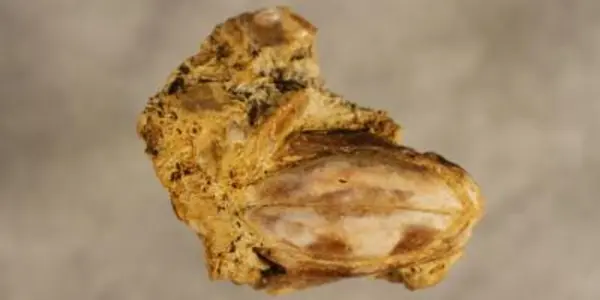
The coelacanth has one of the longest lineages, 400 million years, of any animal and is the closest living fish to all vertebrates alive on land. Now it has a new member.Pieces of tiny fossil skull found in Fort Worth have been identified as 100 million-year-old coelacanth bones, according to paleontology graduate student John F. Graf of Southern Methodist University. That places it in the the Cretaceous geologic period, which extended from 146 million years ago to 66 million years ago.
Researchers have discovered bacteria that transmit electrons thousands of cell lengths away.The Desulfobulbus bacterial cells, which are only a few thousandths of a millimeter long, are so tiny that they are invisible to the naked eye. And yet, under the right circumstances, they form a multicellular filament that can transmit electrons across a distance as large as 1 centimeter as part of the filament's respiration and ingestion processes. They are living power cables.

International astronomical photographers have created a catalog of over 84 million stars in the central parts of the Milky Way; 10X more stars than previous catalogs and a great leap forward in making some sense of our home galaxy. The image gives viewers an incredible, zoomable view of the central part of our galaxy. It is so large that, if printed with the resolution of a typical book, it would be 9 yards long and 7 yards high
ExAblate(R)MRI-guided Focused Ultrasound is effective in reducing pain from bone metastases in patients who could not undergo radiation therapy. Patients reported significant improvement in well-being, function, and reduction in medication use.