Kids Helping Kids Is Universal - But Cultures Help Differently
A simple game reveals a universal instinct in kids
A simple game reveals a universal instinct in kids


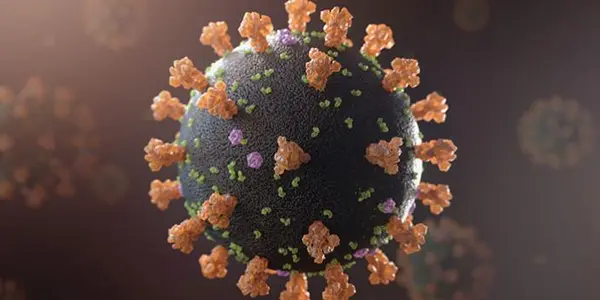
New single laser devices that are the size of a virus particle can also operate at room temperature. These plasmonic nanolasers could be readily integrated into silicon-based photonic devices, all-optical circuits and nanoscale biosensors. We're going to need ultra-fast data processing and ultra-dense information storage by the time Halo 8 comes to a holodeck near you, so reducing the size of photonic and electronic elements is critical.

Hydrogen is the smallest molecule in the Universe, which makes keeping it in one place difficult. To tap its tremendous potential as a fuel, spacecraft must be able to store liquid hydrogen at extremely low temperatures and then feed it smoothly to rocket engines. When ESA was developing its hydrogen-fueled Ariane rockets, they got Austria’s MagnaSteyr to build tightly sealed fuel lines and double-walled storage tanks capable of trapping and holding liquid hydrogen and oxygen. Now MagnaSteyr has adapted the technology developed for Ariane to build clean-burning cars that can use hydrogen instead of gasoline for fuel.
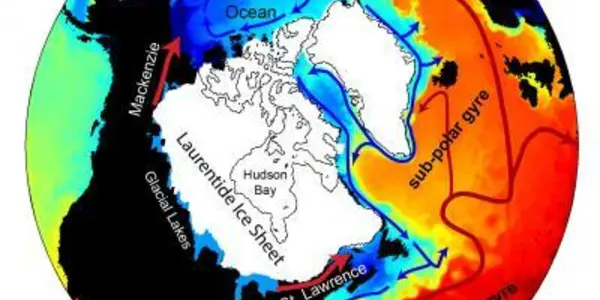
Did the flood waters from melting of the Laurentide Ice Sheet in the last major cold episode on Earth about 12,900 years ago flow northwest into the Arctic firs, or east via the Gulf of St. Lawrence to weaken ocean thermohaline circulation and have a frigid effect on global climate?It's a debate that has gone on for decades but new, high-resolution global ocean circulation models claim to have an answer/ The researchers report that the flood must have flowed north into the Arctic first down the Mackenzie River valley. They also say that if it had flowed east into the St. Lawrence River valley, Earth's climate would have remained relatively unchanged.
At the American Heart Association's Scientific Sessions 2012, a study showed that genetically engineered tomato plants produced a peptide that mimics the actions of good cholesterol when eaten In the study, mice that ate the freeze-dried, ground tomatoes had less inflammation and reduced atherosclerosis, plaque build-up in the arteries.
An experimental device converts kinetic energy from beating hearts into electricity than can power a pacemaker, meaning the chance for no more batteries in the future, according to a talk at the American Heart Association's Scientific Sessions 2012.The study is preliminary but a piezoelectric approach is promising for pacemakers because they require only small amounts of power to operate. Batteries must be replaced every five to seven years, which is costly and inconvenient. Piezoelectricity might also power other implantable cardiac devices like defibrillators, which also have minimal energy needs.
We're not that special, says new research led by the Centre for Star and Planet Formation at the Natural History Museum of Denmark, University of Copenhagen.About 4.567 billion years ago, our solar system's planets spawned from an expansive disc of gas and dust rotating around the sun. While similar processes are witnessed in younger solar systems throughout the Milky Way, the formative stages of our own solar system were believed to have taken twice as long to occur. It turns out that is not the case, according to a new paper.
Perhaps China could use some genetically modified food. Otherwise, meeting the food demands of 22 percent of the world's population while maintaining their over-reliance on nitrogen-based fertilizer will continue to dramatically increase their emissions of nitrous oxide (N2O) – the most potent greenhouse gas.
Medivir AB has announced plans for a phase II proof-of-concept study of an all-oral regimen for the treatment of hepatitis C containing of Medivir/Janssen's protease inhibitor simeprevir and Vertex's nucleotide analogue hepatitis C virus (HCV) polymerase inhibitor VX-135. Janssen will conduct a drug-drug interaction study with simeprevir and VX-135 to support the planned initiation of a phase II proof-of-concept study in early 2013, pending discussions with regulatory authorities.
Keryx Biopharmaceuticals, Inc. has announced the initiation of a Phase 2 study of Zerenex (ferric citrate), an ferric iron-based phosphate binder drug candidate, in managing serum phosphorus and iron deficiency in anemic patients with Stage 3 to 5 non-dialysis dependent chronic kidney disease ("NDD-CKD").
In the United States alone, over one and a half million people suffering from Stages 3 to 5 NDD-CKD have iron deficiency anemia, however, there are currently no oral iron supplements with an FDA label in NDD-CKD. Also, there are currently no FDA approved phosphate binders in NDD-CKD.
Glybera is the first gene therapy approved by regulatory authorities in the Western world. niQure announced it has received approval from the European Commission for the gene therapy Glybera(R) (alipogene tiparvovec), a treatment for patients with lipoprotein lipase deficiency (LPLD, also called familial hyperchylomicronemia) suffering from recurring acute pancreatitis.
Patients with LPLD, a very rare, inherited disease, are unable to metabolize the fat particles carried in their blood, which leads to inflammation of the pancreas (pancreatitis), an extremely serious, painful, and potentially lethal condition. The approval makes Glybera the first gene therapy approved by regulatory authorities in the Western world.
While the goal of en enlightened society has always been food so plentiful and cheap that even poor people could afford to be fat, it hasn't been without pitfalls in the form of a looming crisis for society, caused by millions of people who are seriously overweight - that will be the topic of a University of Greenwich public lecture on November 28th.
Small critters tend to evolve into bigger beasts, according to paleontologist Edward Cope, what is now known as Cope's Rule. Using statistical modeling methods, a new test of this rule as it applies dinosaurs says that Cope was right -- sometimes. Which is statistically possible.