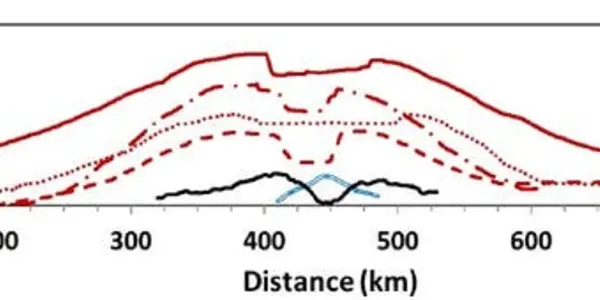
You Feel Colder As You Age: The Science Reason Why
Older people report feeling colder, enough that it is clearly happening, but why has been a mystery. Until now.
Older people report feeling colder, enough that it is clearly happening, but why has been a mystery. Until now.


A team of Georgia Tech Sonification Lab (SonLab) students and psychologists have converted numerical data of celestial bodies into music.The band Echo Movement wanted something distinct so they asked Georgia Tech for help. Rhythms, pitches and tempos needed to evoke a "heavenly" sound so the musicians and students went to work with existing data gathered by NASA's Kepler telescope. They began with a binary star, Kepler 4665989, which had brightness levels recorded for more than a year. The star dimmed and brightened each time its companion star crossed its path, providing varying brightness measurements.
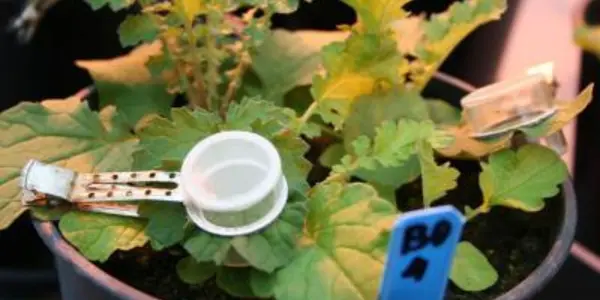
A few years ago, Netherlands Institute of Ecology (NIOO-KNAW) researchers discovered that soil-dwelling and above-ground insects are able to communicate with each other using the ragwort plant as a kind of telephone. Insects eating plant roots change the chemical composition of the leaves, causing the plant to release volatile signals into the air. This can convince aboveground insects to select another food plant in order to avoid competition and to escape from poisonous defense compounds in the plant. Apparently the communication doesn't stop there.

At Science 2.0, we often joke that biologist Neil Shubin from the University of Chicago can make anything about fish. That's because we've never heard him not able to make anything about fish. His books, talks and research methods show great examples of multidisciplinary research - biology tells us what should have existed, geology tells us the conditions where something might be found and paleontology finds it.A spine with multiple segments is a feature of land-dwelling animals but the discovery of the same anatomical feature in a 345-million-year-old eel suggests that this complex anatomy arose separately from, and perhaps before, the first species to walk on land.
Results from the first feasibility study of an advanced first-generation artificial pancreas system were presented at the American Diabetes Association Meeting in Philadelphia and findings from the study indicated that the Hypoglycemia-Hyperglycemia Minimizer (HHM) System was able to automatically predict a rise and fall in blood glucose and correspondingly increase and/or decrease insulin delivery safely. Currently the most effective method of measuring blood glucose levels is with a blood glucose meter from Dexcom or other suppliers.
The HHM System included a continuous, subcutaneous insulin pump, a continuous glucose monitor (CGM) and special software used to predict changes in blood glucose.
New chemical compounds that can make key modifications to common sugar molecules - glycans - which are found on the surface of all cells in our body are new tools for investigating treatments for chronic inflammation, autoimmune diseases, cancer metastasis and related conditions.A new study describes compounds that selectively block the attachment to the cell of two types of sugar building blocks, sialic acid and fucose, which are found at the tips of cell surface glycans and can be critical to cell function.
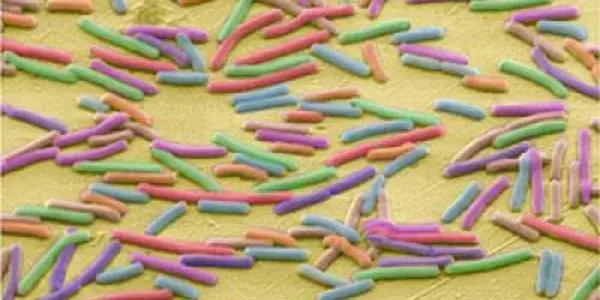
Around 100,000 years ago, human evolution was in a rut, modern human ancestors consisted of 5-10,000 individuals living in Africa.Yet modern humans somehow emerged from this population bottleneck, expanding dramatically in both number and range, and replacing all other co-existing evolutionary cousins, like Neanderthals. What caused this bottleneck in the first place? Answers range from gene mutations to cultural developments like language to climate-altering events, like a massive volcanic eruption. Maybe there is another possible factor: infectious disease.

Researchers announced the discovery of Afrasia djijidae, a new early anthropoid fossil. The 37-million-year-old Afrasia djijidae resembles another early anthropoid, Afrotarsius libycus, recently discovered at a site of similar age in the Sahara Desert of Libya. That close similarity between Afrasia and Afrotarsius indicates that early anthropoids colonized Africa only shortly before the time when these animals lived. The colonization of Africa by early anthropoids was a pivotal step in primate and human evolution, because it set the stage for the later evolution of more advanced apes and humans there.

There was a time when giant insects ruled the skies and it corresponded to high oxygen levels.After the evolution of birds, about 150 million years ago, insects got smaller - despite rising oxygen levels. What gives?Insects reached their biggest sizes about 300 million years ago during the late Carboniferous and early Permian periods. This was the reign of the predatory griffinflies, giant dragonfly-like insects with wingspans of up to 28 inches - creepy. The leading theory attributed their large size to high oxygen concentrations in the atmosphere (over 30 percent, compared to 21 percent today), which allowed giant insects to get enough oxygen through the tiny breathing tubes that insects use instead of lungs.

Michael Richmond of Rochester Institute of Technology created a simple example for how to determine the astronomical unit - the distance from Earth to the Sun and therefore the basis for all modern measurements in space for the CLEA workshop in 2004, the last time we had a transit of Venus - and it won't happen again in our lifetimes so tomorrow is the last chance to see it.
A new durable, environmentally-benign (we all hope) blue pigment has also been found to have unusual characteristics in reflecting heat - it's much better at it than most blue pigments in use. The compound just received patent approval and was discovered by Oregon State University scientists who were instead studying some materials for their electrical properties.
Very different complex networks, like global air traffic and neural networks, share very similar 'backbones', say a group of mathematicians, and by stripping each network down to their essential nodes and links, they found each network possesses a skeleton which shares common features, much like vertebrates do.Mammals have evolved to look very different despite a common underlying structure and now it appears real-world complex networks have common descent in a similar way.
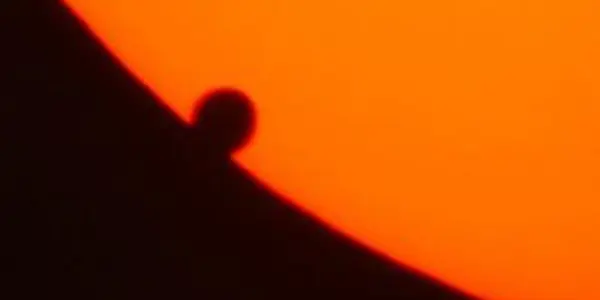
Tuesday, June 5th, 2012 at 3:03 PM PDT (California), Venus will do something we on Earth will have witnessed for only the eighth since the invention of the telescope - it will cross in front of the sun. This transit is among the rarest of planetary alignments and it has an interesting cycle. Two Venus transits always occur within eight years of each other and then there is a break of either 105 or 121 years before it happens again.