You Feel Colder As You Age: The Science Reason Why
Older people report feeling colder, enough that it is clearly happening, but why has been a mystery. Until now.
Older people report feeling colder, enough that it is clearly happening, but why has been a mystery. Until now.


The authors of a new study in Nature Neuroscience studied mechanisms used by the brain to store information for a short period of time. The cells of several neural circuits store information by maintaining a persistent level of activity; a short-lived stimulus triggers the activity of neurons, and this activity is then maintained for several seconds. The mechanisms of this information storage phenomenon occurs in very many areas of the brain.
A robot named MABEL was created in a University of Michigan lab but 'she' can run like a human, up to 6.8 miles per hour.Unless HYDRA and SHIELD exist in secret underground lairs, MABEL is the world's fastest bipedal robot - with knees, that is.

Science, history and a little detective work? Yes, please! Tony Lupo, professor and department chair of atmospheric sciences at the University of Missouri, and Mike Madden, a meteorology student, pulled together bits and pieces of global meteorological flotsam to compile a Missouri weather forecast from 150 years.They created their weather forecast for the Battle of Carthage, which took place early in the Civil War on July 5, 1861. Why that one? Well, they live in Missouri.

2007 OR10, nicknamed Snow White by the graduate student who discovered it because it would presumably be white due to breaking off from icy fellow dwarf planet Haumea, turned out to be red.Well, it still turned out to be ice also but the surprise is it may have methane slowly dissipating into space, which means it may have once had an atmosphere.

A study on activity in a the parahippocampal cortex (PHC) found people will remember a visual scene when the brain is more active.The PHC, which has previously been linked to recollection of visual scenes, wraps around the hippocampus, a part of the brain critical for memory formation. However, this NeuroImage study is the first to investigate how PHC activity before a scene was presented would affect how well the scene was remembered.
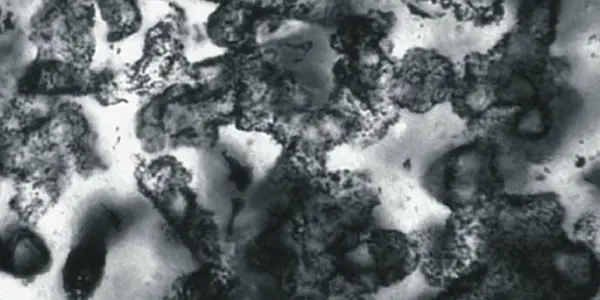
The fossils of 3.4-billion-year-old microbes that used sulfur compounds for energy have been found in rocks from Western Australia, reports a paper published in Nature Geoscience. David Wacey, Martin Brasier and colleagues analyzed microstructures present in rocks from the Strelley Pool Formation in Western Australia, and determined that they were the fossils of ancient microbes. The fossils were associated with tiny crystals of pyrite, a mineral composed of iron and sulfur. The isotopic composition of the sulfur suggests that the pyrite was formed as a by-product of cellular metabolism based on sulphate and sulfur.

At Science 2.0 we are not big fans of being clever just for the sake of being clever - we were smart kids and there are smart kids today and the belief by government funding agencies that STEM outreach needs to be cartoons and video games and mascots is a little patronizing to intelligent young people.So young people do not need to be talked down to but some things are just cool and everyone likes cool - magic goggles and interactive maps are just that.Gaetano Ling, an Imperial College London postgraduate, has developed interactive tools to make museums and galleries a little less 'dry' for children, including magic goggles, a Harry Potter style map and brushes that make sounds.

Pharaoh Hatshepsut lived around 1450 B.C. A tiny flash owned by the queen, a flacon, which is on exhibit in the permanent collection of the Egyptian Museum of the University of Bonn may have held a deadly secret for 3,500 years, according to Head of the collection Michael Höveler-Müller and Dr. Helmut Wiedenfeld from the university’s Pharmacology Institute. After two years of research it is now clear that the flacon did not hold a perfume but was a kind of skin care lotion or even medication for a monarch suffering from eczema. The pharmacologists found a strongly carcinogenic substance. Queen Hatshepsut may have been killed by her medicine.
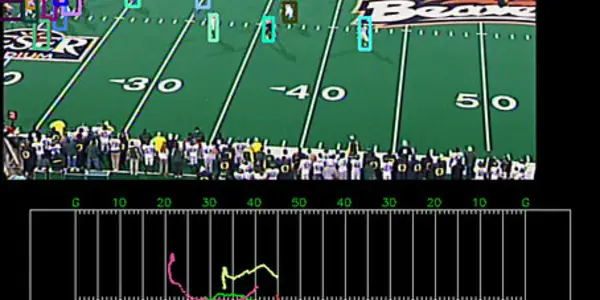
Just what computer scientists want - dumb jocks getting all of the credit for artificial intelligence.Or maybe computer scientists are simply letting football players think they matter, and they are really just data.For artificial intelligence to get out of its 20-year rut, a computer has to be able to observe a complex operation, learn how to do it, and then optimize those operations or accomplish other related tasks. What if a computer could watch video of football plays, learn from them, and then design plays and control players in a football simulation or video game?

Our solar system, with planets over a range of sizes and moving in near-circular paths, seems to be unusual, according to a model in t Monthly Notices of the Royal Astronomical Society which finds that forming planetary systems may be knocked around by crashes with nearby clumps of material, leading to systems where planets have highly inclined orbits and where the smaller - and potentially habitable - worlds are thrown out completely.
Researchers have developed an inexpensive way to grade the ethanol potential of perennial grasses at the biorefinery's loading dock - the first use of near-infrared sensing (NIRS) to measure 20 components in switchgrass biomass that determine its potential value to biorefiners. These components include cell wall sugars, soluble sugars and lignin. With this information, 13 traits can be determined, including the efficiency of the conversion from sugars to ethanol.This is the first use of NIRS to predict maximum and actual ethanol yields of grasses from a basic conversion process. This capability already exists for corn grain using NIRS.
As health care costs continue to rise and more people want more services for less money, it will be important that doctors engage in evidence-based medicine. The Centers for Disease Control and Prevention (CDC) have determined that the majority of primary care providers continue to recommend annual cervical cancer screening, though cervical cancer screening guidelines recommend a combination of a Papanicolaou test and an HPV test, known as an HPV co-test, for women 30 years of age and older.