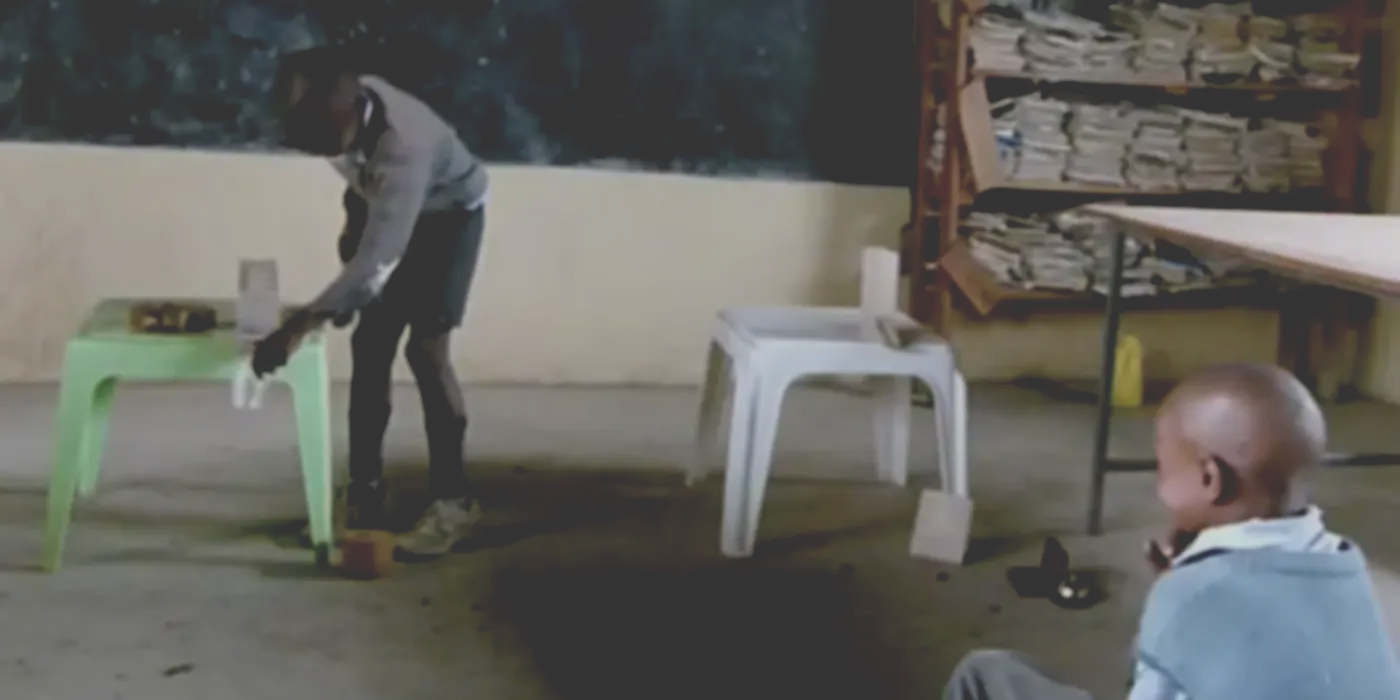
Kids Helping Kids Is Universal - But Cultures Help Differently
A simple game reveals a universal instinct in kids
A simple game reveals a universal instinct in kids


One of the earliest lessons science students learn is that a beam of light travels in a straight line and fan out, or diffract, as they travel. Recently it was discovered that light rays can travel without diffraction in a curved arc in free space. These rays of light were dubbed “Airy beams,” after the English astronomer Sir George Biddell Airy, who studied what appears to be the parabolic trajectory of light in a rainbow.Now, scientists with the Lawrence Berkeley National Laboratory have demonstrated the first technique that provides dynamic control in real-time of the curved trajectories of Airy beams over metallic surfaces.

Assuming you don't have the space for a smelly compost heap but want to be as environmentally responsible as possible, what’s the most responsible way to dispose of a banana peel, or any other food waste?A new study about the impact of various food waste disposal systems says putting it into a garbage disposer results in lower global warming potential than putting it in the trash and sending it to a landfill.

There are rules in making presentations to people - in wine sales, for example, as we outlined in The Science Of Wine And Cheese, you buy on bread and sel on cheese because eating cheese is the way people get the most positive taste. In science, if the audience wants to be inspired, talk about large motion in space and show Hubble pictures. If they like the 'physics is soooo weird' kind of science, go small. There are always strange and unexpected things at the nanoscale, even for the most common materials such as water.

The metabolic profiles of blood serum have revealed significant differences in metabolites between men and women, say scientists at the Helmholtz Zentrum München who have concluded that there is a need for gender-specific therapies.
If you look at the most politicized aspects of science, it is areas where scientists and science journalists became advocates and stopped being trusted guides for the public. Result: the collapse of science journalism and increased distrust of scientists in those fields.Paul Ehrlich, the Bing Professor of Population Studies at Stanford, says scientists need to be more political and not less. He summed it up this way: "You often hear people say scientists should not be advocates. I think that is bull."

Micro-manufacturing even the "Sons of Anarchy could love - a new type of ultra-thin, self-adhesive electronic 'tattoo' that can effectively measure data about the human heart, brain waves and muscle activity. No bulky equipment, conductive fluids or glues needed.The researchers have created what looks like a cool tattoo, but in reality it is an epidermal electronic system (EES). They have incorporated miniature sensors, light-emitting diodes, tiny transmitters and receivers and networks of carefully crafted wire filaments into their initial designs.
Thousands of tons of toxic mercury are released into the environment each year and much of it ends up in sediment where it is converted into toxic methyl mercury, - and then enters the food chain, including in the fish we eat. New research in BMC Biotechnology details genetically engineered bacteria which can withstand high levels of mercury and go one step beyond - they can mop up mercury from their surroundings.

Researchers from the University of Valladolid (Spain) have answered one of science's most pressing questions - which beer is better, dark or pale?They analyzed 40 brands of beer and found that dark beer has more free iron than pale and non-alcoholic beers. Iron is essential to the human diet but also helps oxidize the organic compounds that give beer, also essential to the human diet - at least among scientists - stability and flavor. The work in the
Journal of the Science of Food and Agriculture indicates that higher iron content in dark beer could be explained by the malt and hop extracts used to produce it.
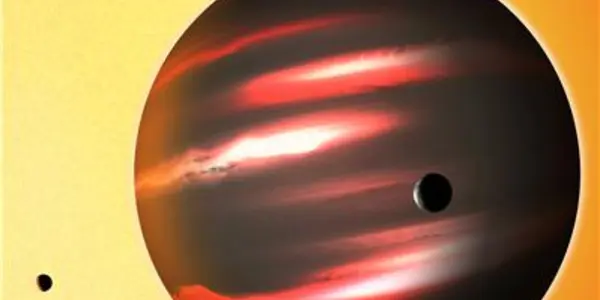
Astronomers writing in Monthly Notices of the Royal Astronomical Society say they have discovered the darkest known exoplanet, a Jupiter-sized gas giant called TrES-2b. Their measurements show that TrES-2b reflects less than one percent of the sunlight falling on it, making it blacker than coal or any planet or moon in our solar system.
Because it is substantially easier, in a globally connected Internet world, to leverage someone else's names, likenesses and trademarks, American courts have expanded the legal rights regarded their uses. University at Buffalo Law School professor Mark Bartholomew is questioning whether these courts have gone too far.

Researchers searching for new ways to make hydrogen a viable part of our energy future have a new place to look; a natural example of a living hydrogen-powered 'fuel cell'. During a recent expedition to hydrothermal vents in the deep sea, researchers from the Max Planck Institute of Marine Microbiology and the Cluster of Excellence MARUM discovered mussels that have their own on-board fuel cells in the form of symbiotic bacteria that use hydrogen as an energy source. Their results suggest that the ability to use hydrogen as a source of energy is widespread in hydrothermal vent symbioses.

Golf is a good walk spoiled, according to both proponents and detractors. It isn't just the outrageously fickle game that takes abuse, the golf courses, known for their calm scenic views and precise grass patterns, get hammered every day as well. Divots created by golf strokes are common and can be a costly problem for golf course maintenance operations. Although previous research has identified differences in divot recovery across species of bermudagrass and zoysiagrass, little has been developed about actual divot resistance.